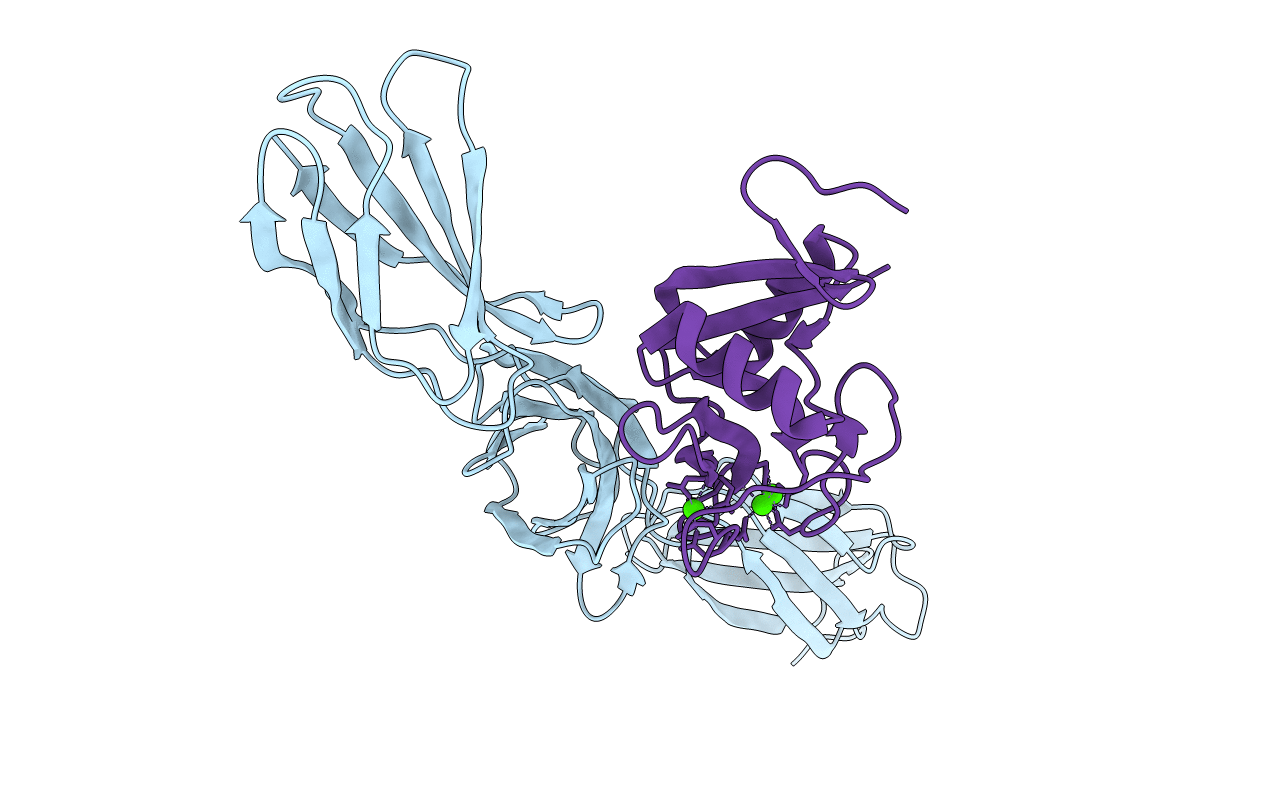
1TDQ image
Deposition Date 2004-05-24
Release Date 2004-08-31
Last Version Date 2024-10-30
Entry Detail
PDB ID:
1TDQ
Title:
Structural basis for the interactions between tenascins and the C-type lectin domains from lecticans: evidence for a cross-linking role for tenascins
Biological Source:
Source Organism:
Host Organism:
Method Details:
Experimental Method:
Resolution:
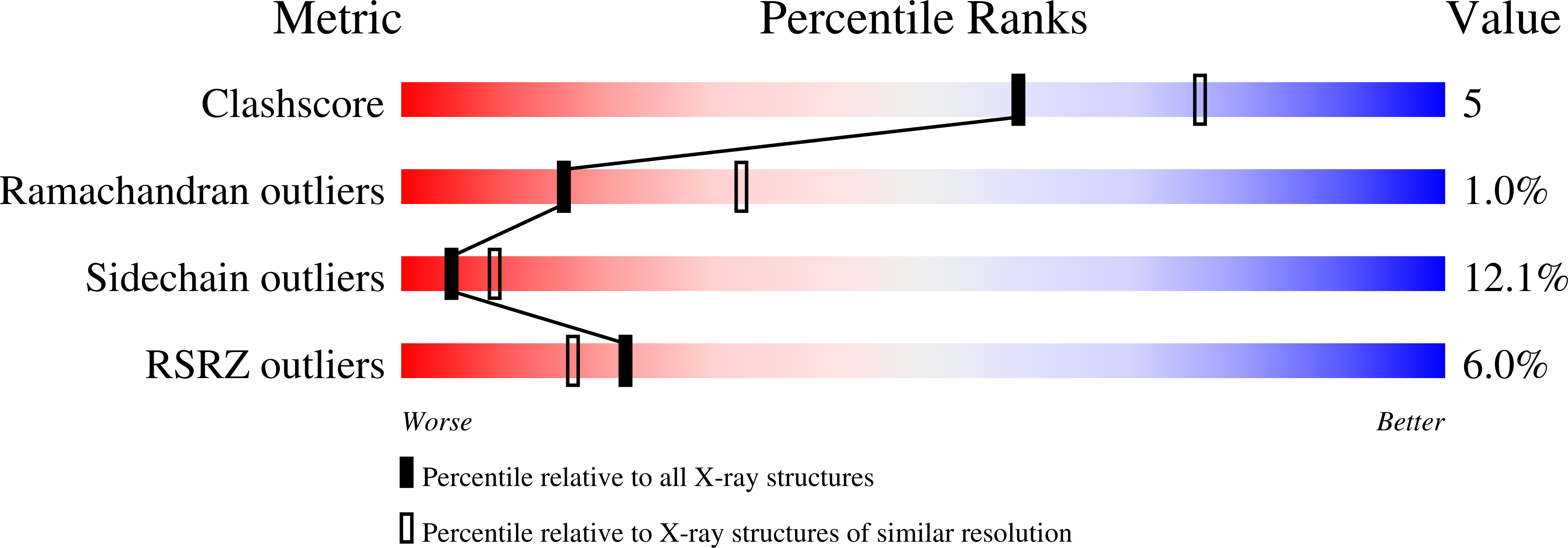
2.60 Å
R-Value Free:
0.23
R-Value Work:
0.20
R-Value Observed:
0.20
Space Group:
P 21 21 2
Macromolecular Entities
Structures with similar UniProt ID
Protein Blast
Polymer Type:polypeptide(L)
Molecule:Tenascin-R
Gene (Uniprot):Tnr
Chain IDs:A
Chain Length:283
Number of Molecules:1
Biological Source:Rattus norvegicus
Structures with similar UniProt ID
Protein Blast
Polymer Type:polypeptide(L)
Molecule:Aggrecan core protein
Gene (Uniprot):Acan
Chain IDs:B
Chain Length:130
Number of Molecules:1
Biological Source:Rattus norvegicus
Ligand Molecules
Primary Citation
Structural basis for interactions between tenascins and lectican C-type lectin domains: evidence for a crosslinking role for tenascins
Structure 12 1495 1506 (2004)
PMID: 15296743 DOI: 10.1016/j.str.2004.05.021

Abstact

The C-terminal G3 domains of lecticans mediate crosslinking to diverse extracellular matrix (ECM) proteins during ECM assembly, through their C-type lectin (CLD) subdomains. The structure of the rat aggrecan CLD in a Ca(2+)-dependent complex with fibronectin type III repeats 3-5 of rat tenascin-R provides detailed support for such crosslinking. The CLD loops bind Ca2+ like other CLDs, but no carbohydrate binding is observed or possible. This is thus the first example of a direct Ca(2+)-dependent protein-protein interaction of a CLD. Surprisingly, tenascin-R does not coordinate the Ca2+ ions directly. Electron microscopy confirms that full-length tenascin-R and tenascin-C crosslink hyaluronan-aggrecan complexes. The results are significant for the binding of all lectican CLDs to tenascin-R and tenascin-C. Comparison of the protein interaction surface with that of P-selectin in complex with the PGSL-1 peptide suggests that direct protein-protein interactions of Ca(2+)-binding CLDs may be more widespread than previously appreciated.

Legend

Protein

Chemical

Disease

Primary Citation of related structures
Feedback Form
Name
Email
Institute
Feedback