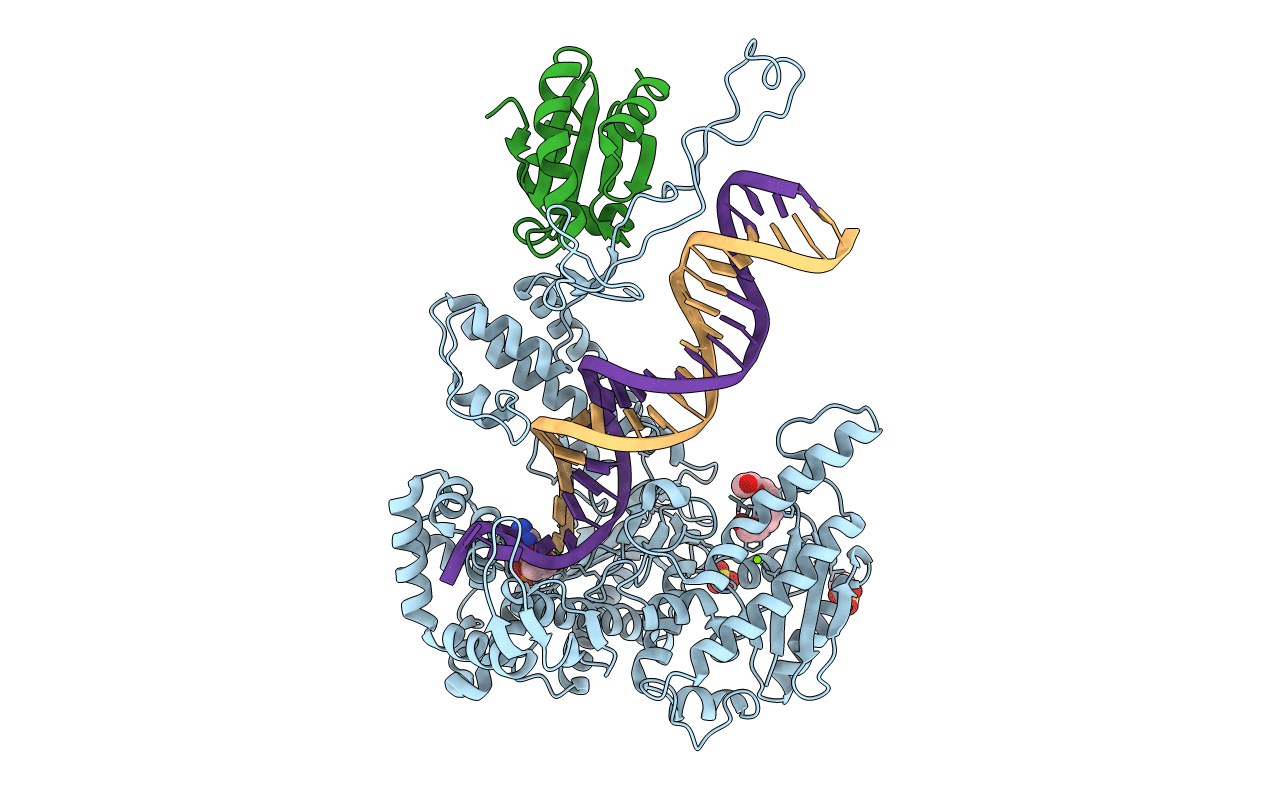
1T8E image
Deposition Date 2004-05-12
Release Date 2004-10-12
Last Version Date 2024-02-14
Entry Detail
PDB ID:
1T8E
Title:
T7 DNA Polymerase Ternary Complex with dCTP at the Insertion Site.
Biological Source:
Source Organism:
Method Details:
Experimental Method:
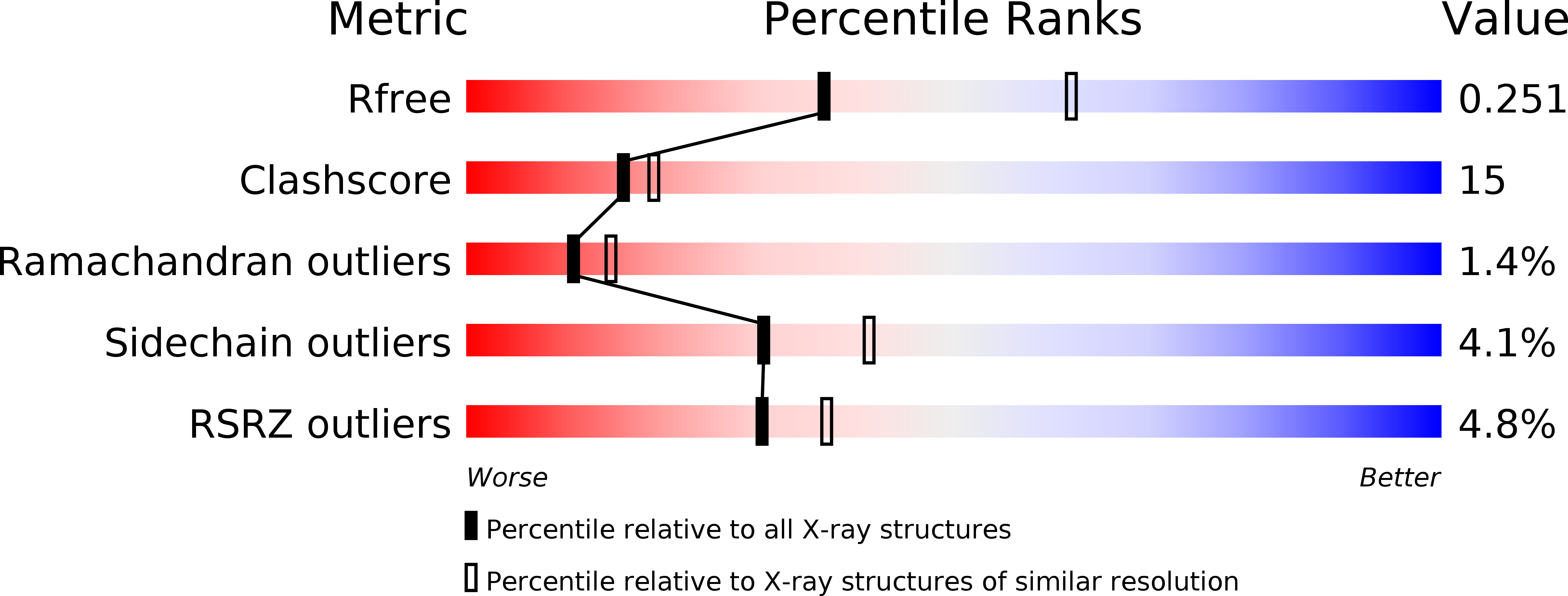
Resolution:
2.54 Å
R-Value Free:
0.25
R-Value Work:
0.22
R-Value Observed:
0.22
Space Group:
P 21 21 2
Macromolecular Entities
Structures with similar UniProt ID
Protein Blast
Polymer Type:polypeptide(L)
Molecule:DNA polymerase
Gene (Uniprot):5
Chain IDs:C (auth: A)
Chain Length:698
Number of Molecules:1
Biological Source:Enterobacteria phage T7
Structures with similar UniProt ID
Protein Blast
Polymer Type:polypeptide(L)
Molecule:thioredoxin 1
Gene (Uniprot):trxA
Chain IDs:D (auth: B)
Chain Length:108
Number of Molecules:1
Biological Source:Escherichia coli
Modified Residue
Compound ID Chain ID Parent Comp ID Details 2D Image
2DT A DT 3'-DEOXYTHYMIDINE-5'-MONOPHOSPHATE
Primary Citation
Structural basis for the dual coding potential of 8-oxoguanosine by a high-fidelity DNA polymerase.
Embo J. 23 3452 3461 (2004)
PMID: 15297882 DOI: 10.1038/sj.emboj.7600354

Abstact

Accurate DNA replication involves polymerases with high nucleotide selectivity and proofreading activity. We show here why both fidelity mechanisms fail when normally accurate T7 DNA polymerase bypasses the common oxidative lesion 8-oxo-7, 8-dihydro-2'-deoxyguanosine (8oG). The crystal structure of the polymerase with 8oG templating dC insertion shows that the O8 oxygen is tolerated by strong kinking of the DNA template. A model of a corresponding structure with dATP predicts steric and electrostatic clashes that would reduce but not eliminate insertion of dA. The structure of a postinsertional complex shows 8oG(syn).dA (anti) in a Hoogsteen-like base pair at the 3' terminus, and polymerase interactions with the minor groove surface of the mismatch that mimic those with undamaged, matched base pairs. This explains why translesion synthesis is permitted without proofreading of an 8oG.dA mismatch, thus providing insight into the high mutagenic potential of 8oG.

Legend

Protein

Chemical

Disease

Primary Citation of related structures
Feedback Form
Name
Email
Institute
Feedback