1T6U image
Deposition Date 2004-05-07
Release Date 2004-07-13
Last Version Date 2023-08-23
Entry Detail
PDB ID:
1T6U
Keywords:
Title:
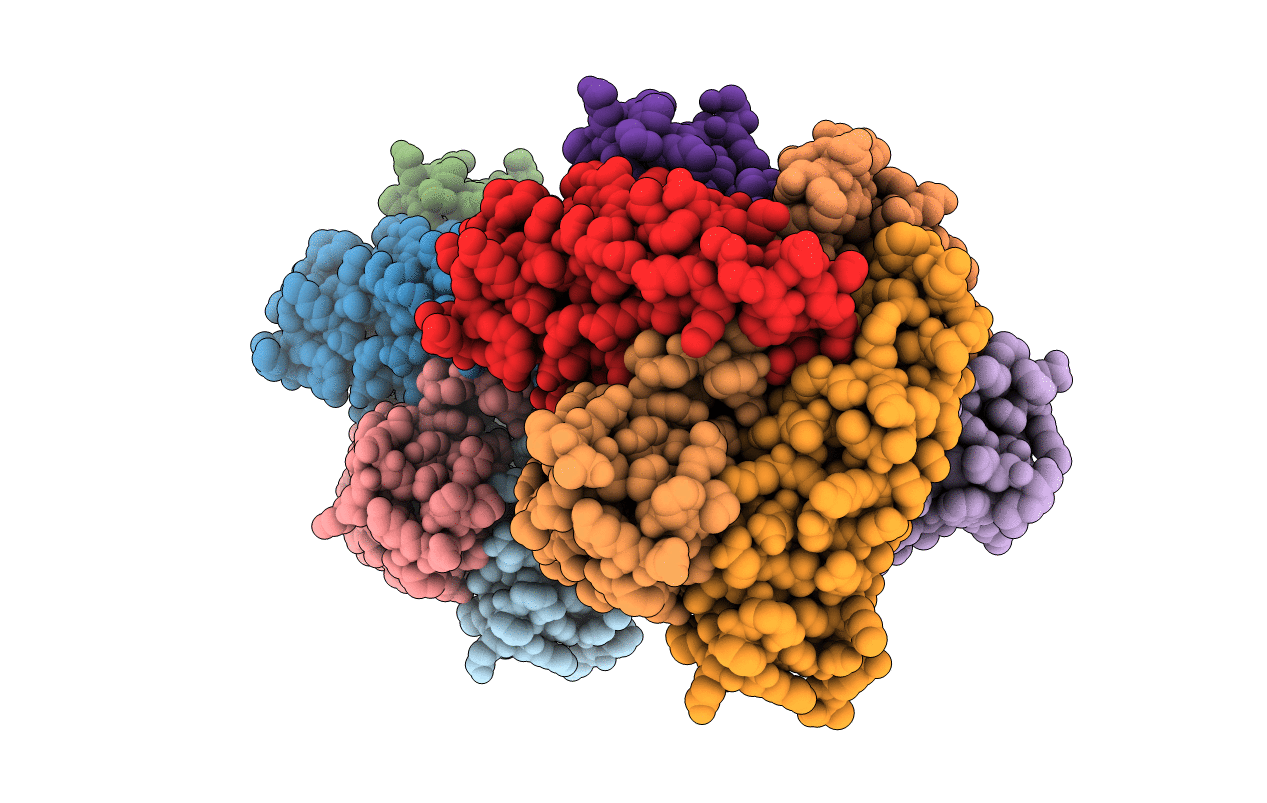
Nickel Superoxide Dismutase (NiSOD) Native 1.30 A Structure
Biological Source:
Source Organism:
Host Organism:
Method Details:
Experimental Method:
Resolution:
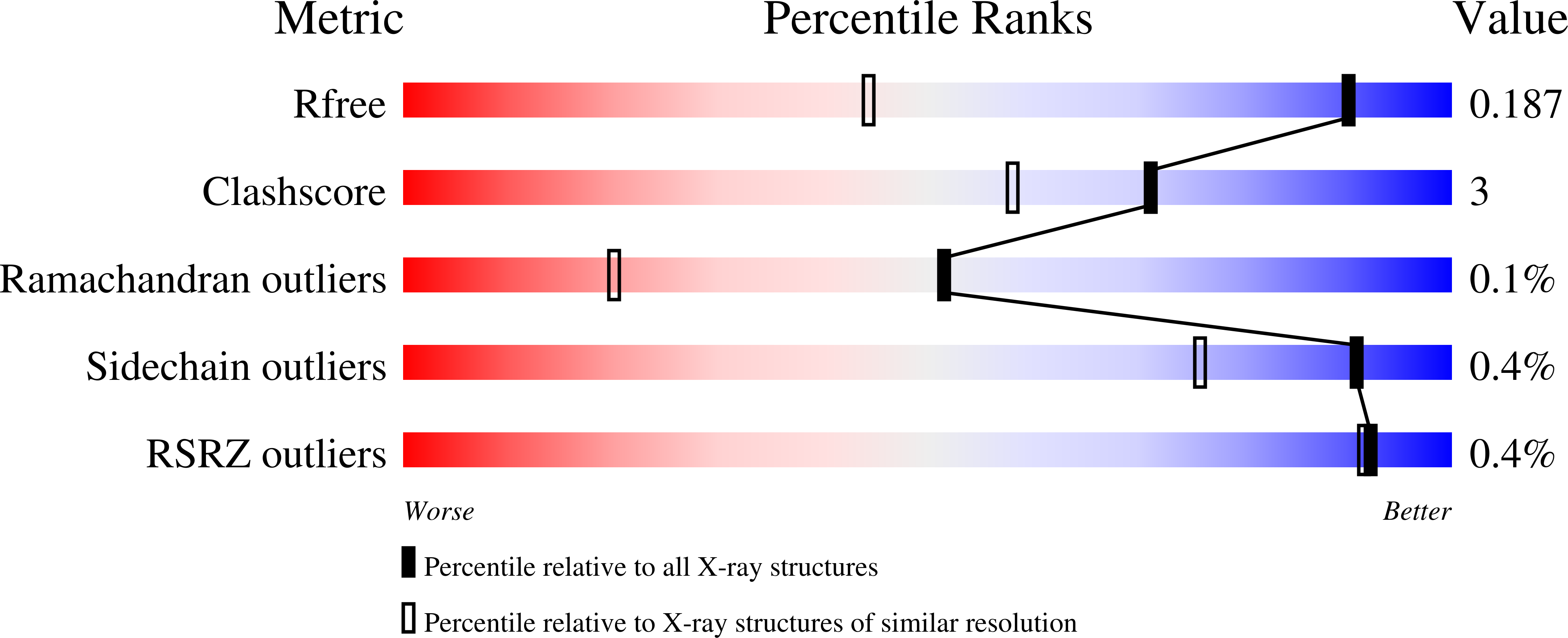
1.30 Å
R-Value Free:
0.20
R-Value Work:
0.15
Space Group:
P 1 21 1
Macromolecular Entities
Structures with similar UniProt ID
Protein Blast
Polymer Type:polypeptide(L)
Molecule:Superoxide dismutase [Ni]
Gene (Uniprot):sodN
Mutagens:L85M
Chain IDs:A, B, C, D, E, F, G, H, I, J, K, L
Chain Length:117
Number of Molecules:12
Biological Source:Streptomyces coelicolor
Ligand Molecules
Primary Citation
Nickel superoxide dismutase structure and mechanism.
Biochemistry 43 8038 8047 (2004)
PMID: 15209499 DOI: 10.1021/bi0496081

Abstact

The 1.30 A resolution crystal structure of nickel superoxide dismutase (NiSOD) identifies a novel SOD fold, assembly, and Ni active site. NiSOD is a hexameric assembly of right-handed 4-helix bundles of up-down-up-down topology with N-terminal hooks chelating the active site Ni ions. This newly identified nine-residue Ni-hook structural motif (His-Cys-X-X-Pro-Cys-Gly-X-Tyr) provides almost all interactions critical for metal binding and catalysis, and thus will likely be diagnostic of NiSODs. Conserved lysine residues are positioned for electrostatic guidance of the superoxide anion to the narrow active site channel. Apo structures show that the Ni-hook motif is unfolded prior to metal binding. The active site Ni geometry cycles from square planar Ni(II), with thiolate (Cys2 and Cys6) and backbone nitrogen (His1 and Cys2) ligands, to square pyramidal Ni(III) with an added axial His1 side chain ligand, consistent with electron paramagentic resonance spectroscopy. Analyses of the three NiSOD structures and comparisons to the Cu,Zn and Mn/Fe SODs support specific molecular mechanisms for NiSOD maturation and catalysis, and identify important structure-function relationships conserved among SODs.

Legend

Protein

Chemical

Disease

Primary Citation of related structures
Feedback Form
Name
Email
Institute
Feedback