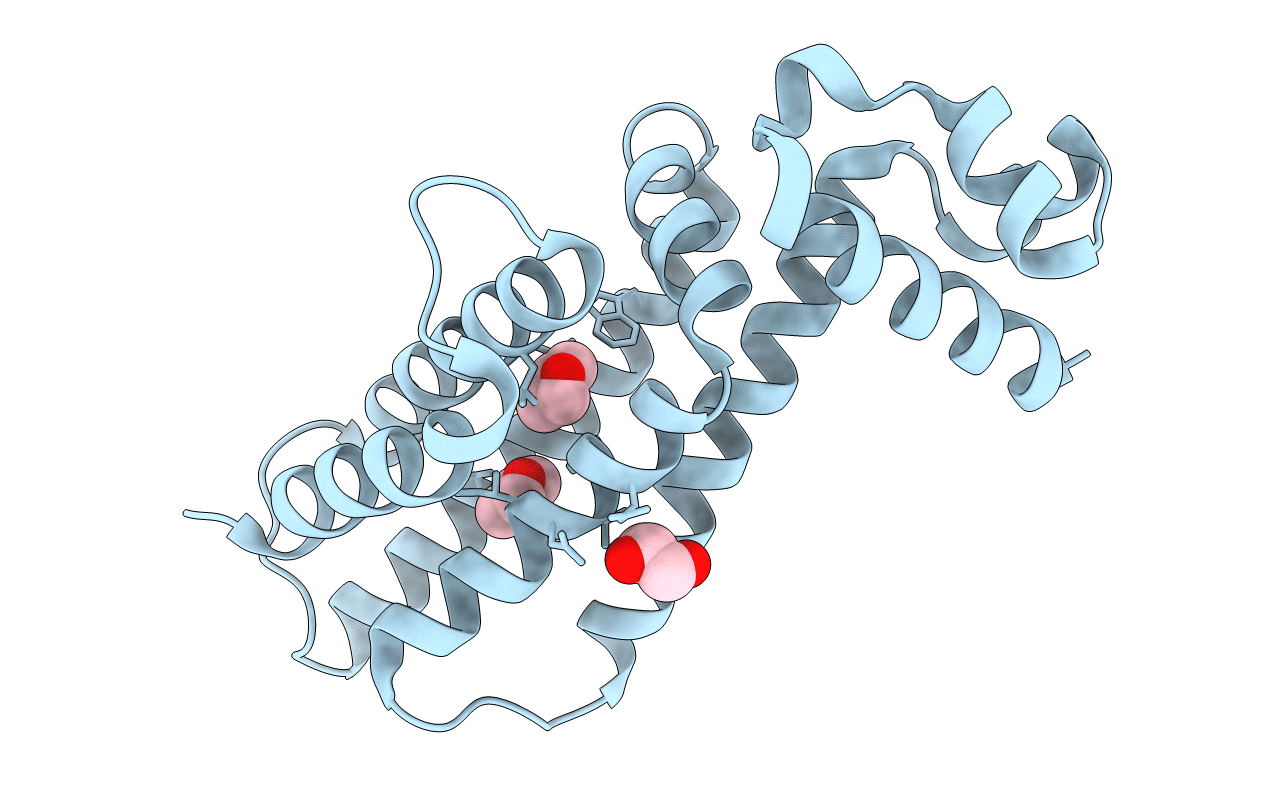
1T56 image
Deposition Date 2004-05-03
Release Date 2004-07-27
Last Version Date 2024-02-14
Entry Detail
PDB ID:
1T56
Keywords:
Title:
Crystal structure of TetR family repressor M. tuberculosis EthR
Biological Source:
Source Organism(s):
Expression System(s):
Method Details:
Experimental Method:
Resolution:
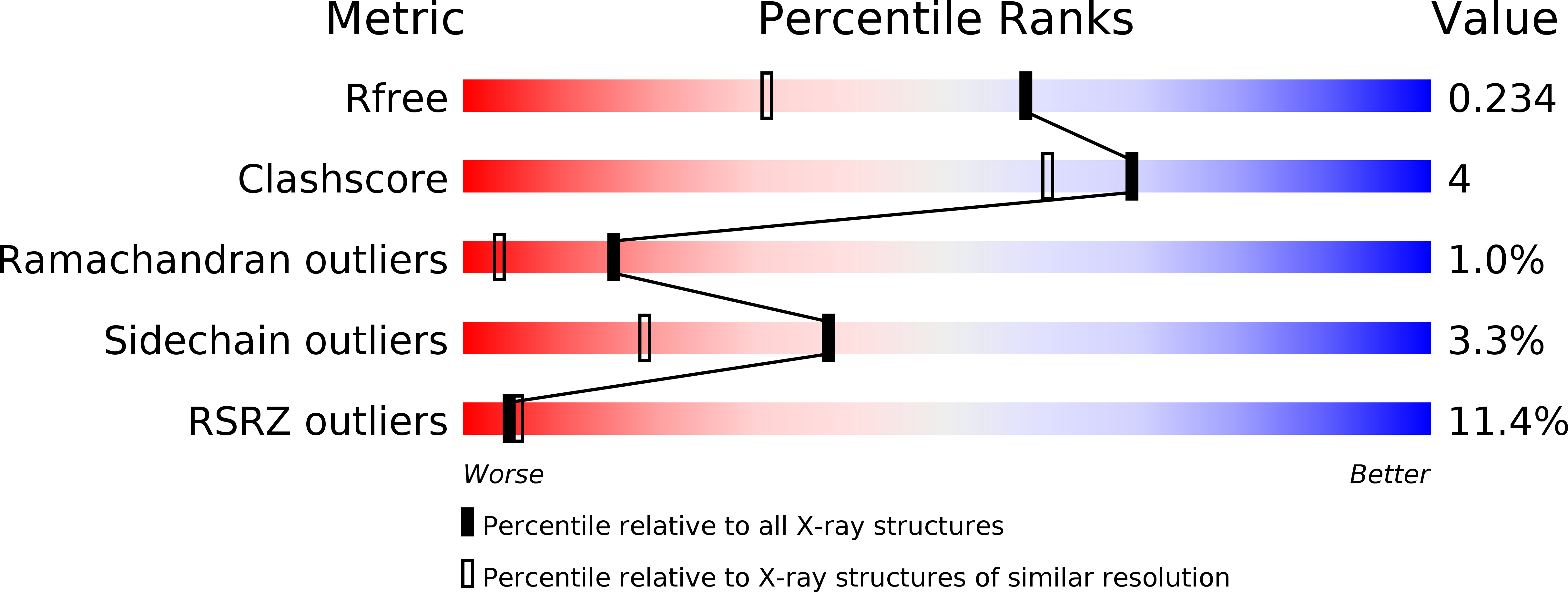
1.70 Å
R-Value Free:
0.22
R-Value Work:
0.20
R-Value Observed:
0.20
Space Group:
P 41 21 2
Macromolecular Entities
Structures with similar UniProt ID
Protein Blast
Polymer Type:polypeptide(L)
Molecule:EthR repressor
Chain IDs:A
Chain Length:216
Number of Molecules:1
Biological Source:Mycobacterium tuberculosis
Primary Citation
Crystal Structure of the TetR/CamR Family Repressor Mycobacterium tuberculosis EthR Implicated in Ethionamide Resistance.
J.Mol.Biol. 340 1095 1105 (2004)
PMID: 15236969 DOI: 10.1016/j.jmb.2004.06.003

Abstact

Ethionamide has been used for more than 30 years as a second-line chemotherapeutic to treat tuberculosis patients who have developed resistance to first-line drugs, such as isoniazid (INH) and rifampicin. Activation of the pro-drug ethionamide is regulated by the Baeyer-Villiger monooxygenase EthA and the TetR/CamR family repressor EthR, whose open reading frames are separated by 75 bp on the Mycobacterium tuberculosis genome. EthR has been shown to repress transcription of the activator gene ethA by binding to this intergenic region, thus contributing to ethionamide resistance. We have determined the crystal structure of EthR, to 1.7A resolution, revealing a dimeric two-domain molecule with an overall architecture typical for TetR/CamR repressor proteins. A 20A long hydrophobic tunnel-like cavity in the "drug-binding" domain of EthR is occupied by two 1,4-dioxane molecules, a component of the crystallisation buffer. Comparing the present structure to those of the homologues Staphylococcus aureus QacR and Escherichia coli TetR leads to the hypothesis that the hydrophobic cavity constitutes a binding site for an as yet unknown ligand that might regulate DNA-binding of EthR.

Legend

Protein

Chemical

Disease

Primary Citation of related structures
Feedback Form
Name
Email
Institute
Feedback