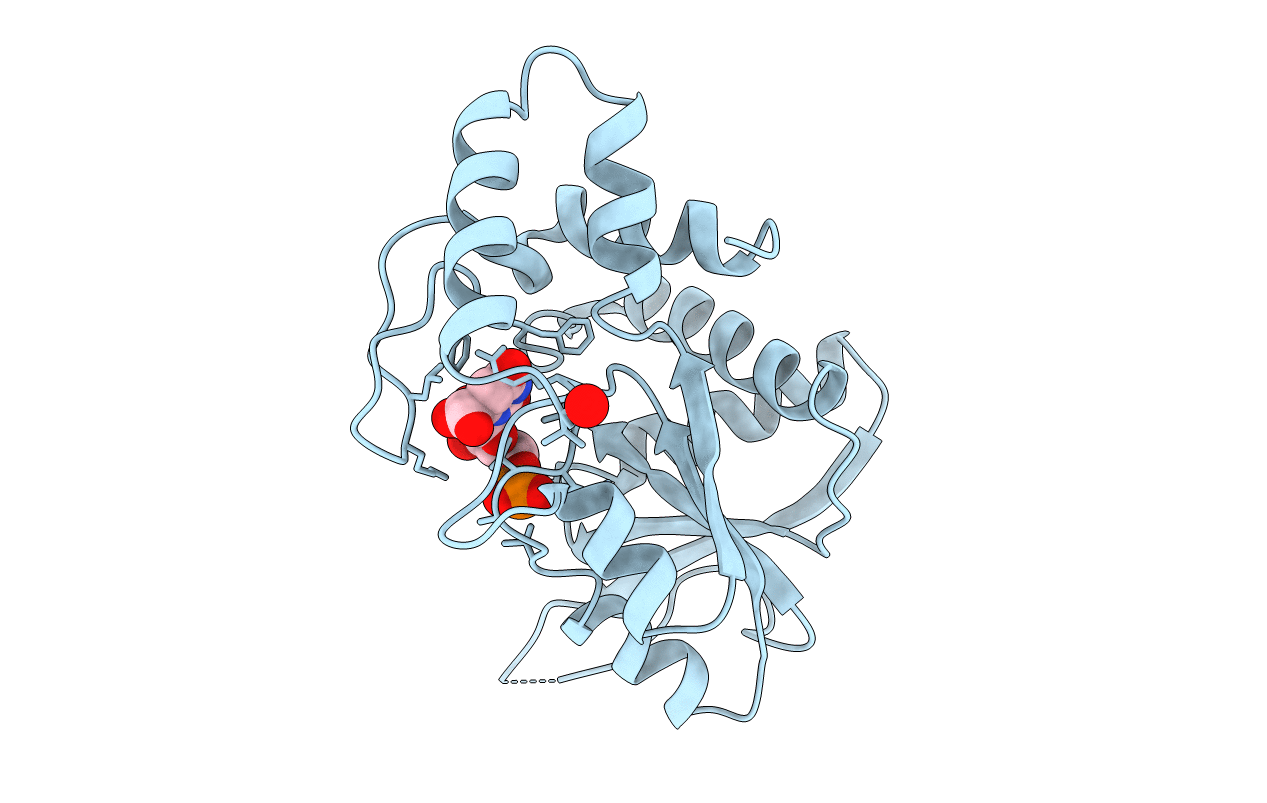
1STO image
Deposition Date 1993-12-20
Release Date 1994-05-31
Last Version Date 2024-09-25
Entry Detail
PDB ID:
1STO
Title:
CRYSTAL STRUCTURE OF OROTATE PHOSPHORIBOSYLTRANSFERASE
Biological Source:
Source Organism:
Method Details:
Experimental Method:
Resolution:
2.60 Å
R-Value Work:
0.17
R-Value Observed:
0.17
Space Group:
P 41 21 2

Macromolecular Entities
Structures with similar UniProt ID
Protein Blast
Polymer Type:polypeptide(L)
Molecule:OROTATE PHOSPHORIBOSYLTRANSFERASE
Gene (Uniprot):pyrE
Chain IDs:A
Chain Length:213
Number of Molecules:1
Biological Source:Salmonella typhimurium
Ligand Molecules
Primary Citation
Crystal structure of orotate phosphoribosyltransferase.
Biochemistry 33 1287 1294 (1994)
PMID: 8312245 DOI: 10.1021/bi00172a001

Abstact

Phosphoribosyltransferases (PRTases) are enzymes involved in the synthesis of purine, pyrimidine, and pyridine nucleotides. They utilize alpha-D-5-phosphoribosyl-1-pyrophosphate (PRPP) and a nitrogenous base to form a beta-N-riboside monophosphate and pyrophosphate (PPi), and their functional significance in nucleotide homeostasis is evidenced by the devastating effects of inherited diseases associated with the decreased activity and/or stability of these enzymes. The 2.6-A structure of the Salmonella typhimurium orotate phosphoribosyltransferase (OPRTase) complexed with its product orotidine monophosphate (OMP) provides the first detailed image of a member of this group of enzymes. The OPRTase three-dimensional structure was solved using multiple isomorphous replacement methods and reveals two major features: a core five-stranded alpha/beta twisted sheet and an N-terminal region that partially covers the C-terminal portion of the core. PRTases show a very high degree of base specificity. In OPRTase, this is determined by steric constraints and the position of hydrogen bond donors/acceptors of a solvent-inaccessible crevice where the orotate ring of bound OMP resides. Crystalline OPRTase is a dimer, with catalytically important residues from each subunit available to the neighboring subunit, suggesting that oligomerization is necessary for its activity. On the basis of the presence of a common PRPP binding motif among PRTases and the similar chemistry these enzymes perform, we propose that the alpha/beta core found in OPRTase will represent a common feature for PRTases. This generality is demonstrated by construction of a model of the human hypoxanthine-guanine phosphoribosyltransferase (HGPRTase) from secondary structure predictions for HGPRTase and the three-dimensional structure of OPRTase.

Legend

Protein

Chemical

Disease

Primary Citation of related structures
Feedback Form
Name
Email
Institute
Feedback