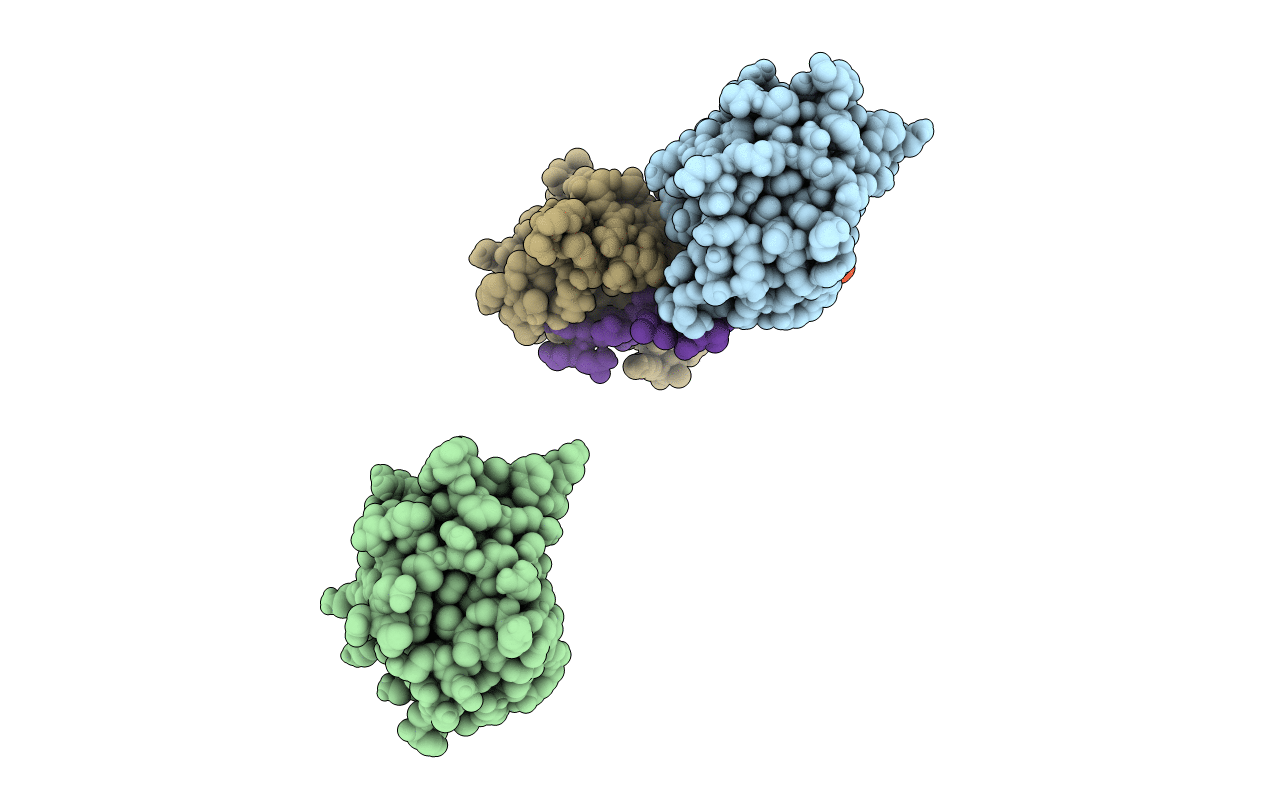
1SPS image
Deposition Date 1993-03-05
Release Date 1994-05-31
Last Version Date 2024-10-30
Entry Detail
PDB ID:
1SPS
Title:
BINDING OF A HIGH AFFINITY PHOSPHOTYROSYL PEPTIDE TO THE SRC SH2 DOMAIN: CRYSTAL STRUCTURES OF THE COMPLEXED AND PEPTIDE-FREE FORMS
Biological Source:
Source Organism:
Method Details:
Experimental Method:
Resolution:
2.70 Å
R-Value Work:
0.18
R-Value Observed:
0.18
Space Group:
P 41
Macromolecular Entities
Structures with similar UniProt ID
Protein Blast
Polymer Type:polypeptide(L)
Molecule:SRC SH2 DOMAIN
Gene (Uniprot):V-SRC
Chain IDs:A, C (auth: B), E (auth: C)
Chain Length:104
Number of Molecules:3
Biological Source:Rous sarcoma virus
Structures with similar UniProt ID
Protein Blast
Polymer Type:polypeptide(L)
Molecule:PEPTIDE YEEI
Chain IDs:B (auth: D), D (auth: E), F
Chain Length:11
Number of Molecules:3
Biological Source:Hamster polyomavirus
Modified Residue
Compound ID Chain ID Parent Comp ID Details 2D Image
PTR B TYR O-PHOSPHOTYROSINE
Primary Citation
Binding of a high affinity phosphotyrosyl peptide to the Src SH2 domain: crystal structures of the complexed and peptide-free forms.
Cell(Cambridge,Mass.) 72 779 790 (1993)
PMID: 7680960 DOI: 10.1016/0092-8674(93)90405-F

Abstact

The crystal structure of the Src SH2 domain complexed with a high affinity 11-residue phosphopeptide has been determined at 2.7 A resolution by X-ray diffraction. The peptide binds in an extended conformation and makes primary interactions with the SH2 domain at six central residues: PQ(pY)EEI. The phosphotyrosine and the isoleucine are tightly bound by two well-defined pockets on the protein surface, resulting in a complex that resembles a two-pronged plug engaging a two-holed socket. The glutamate residues are in solvent-exposed environments in the vicinity of basic side chains of the SH2 domain, and the two N-terminal residues cap the phosphotyrosine-binding site. The crystal structure of Src SH2 in the absence of peptide has been determined at 2.5 A resolution, and comparison with the structure of the high affinity complex reveals only localized and relatively small changes.

Legend

Protein

Chemical

Disease

Primary Citation of related structures
Feedback Form
Name
Email
Institute
Feedback