1SJX image
Deposition Date 2004-03-04
Release Date 2005-03-15
Last Version Date 2024-11-13
Entry Detail
PDB ID:
1SJX
Keywords:
Title:
Three-Dimensional Structure of a Llama VHH Domain OE7 binding the cell wall protein Malf1
Biological Source:
Source Organism:
Lama glama (Taxon ID: 9844)
Method Details:
Experimental Method:
Resolution:
2.20 Å
R-Value Free:
0.20
R-Value Work:
0.19
R-Value Observed:
0.19
Space Group:
P 32 2 1
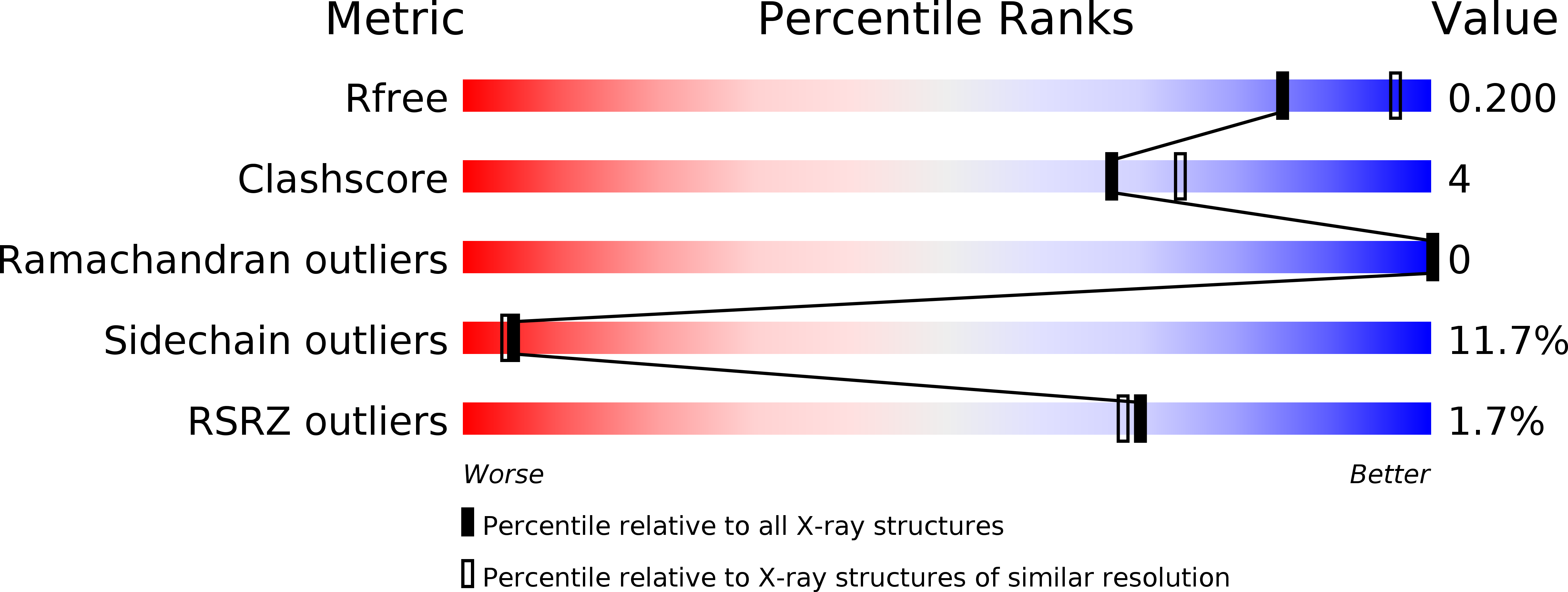
Macromolecular Entities
Polymer Type:polypeptide(L)
Molecule:immunoglobulin VH domain
Chain IDs:A
Chain Length:122
Number of Molecules:1
Biological Source:Lama glama
Ligand Molecules
Primary Citation
Isolation of llama antibody fragments for prevention of dandruff by phage display in shampoo.
Appl.Environ.Microbiol. 71 442 450 (2005)
PMID: 15640220 DOI: 10.1128/AEM.71.1.442-450.2005

Abstact

As part of research exploring the feasibility of using antibody fragments to inhibit the growth of organisms implicated in dandruff, we isolated antibody fragments that bind to a cell surface protein of Malassezia furfur in the presence of shampoo. We found that phage display of llama single-domain antibody fragments (VHHs) can be extended to very harsh conditions, such as the presence of shampoo containing nonionic and anionic surfactants. We selected several VHHs that bind to the cell wall protein Malf1 of M. furfur, a fungus implicated in causing dandruff. In addition to high stability in the presence of shampoo, these VHHs are also stable under other denaturing conditions, such as high urea concentrations. Many of the stable VHHs were found to contain arginine at position 44. Replacement of the native amino acid at position 44 with arginine in the most stable VHH that lacked this arginine resulted in a dramatic further increase in the stability. The combination of the unique properties of VHHs together with applied phage display and protein engineering is a powerful method for obtaining highly stable VHHs that can be used in a wide range of applications.

Legend

Protein

Chemical

Disease

Primary Citation of related structures
Feedback Form
Name
Email
Institute
Feedback