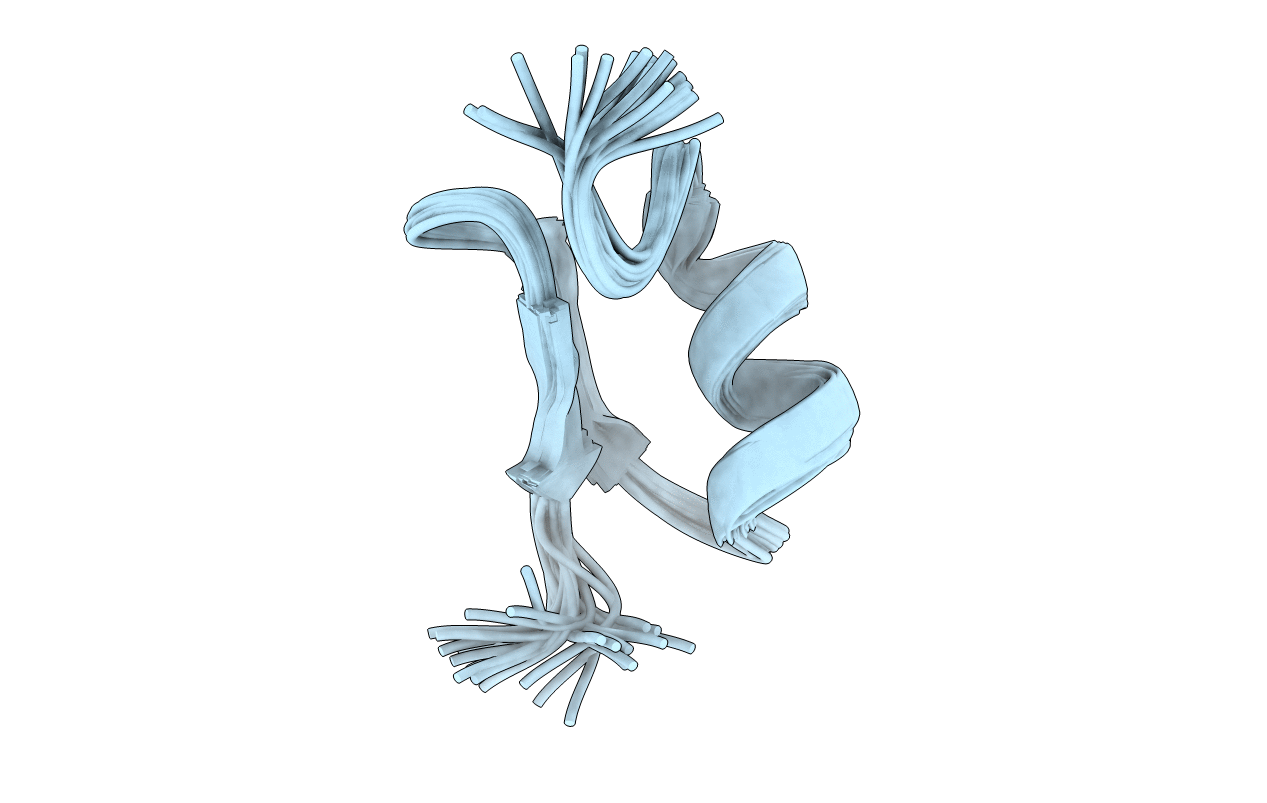
1S8K image
Deposition Date 2004-02-02
Release Date 2005-02-08
Last Version Date 2024-10-30
Entry Detail
PDB ID:
1S8K
Keywords:
Title:
Solution Structure of BmKK4, A Novel Potassium Channel Blocker from Scorpion Buthus martensii Karsch, 25 structures
Biological Source:
Source Organism:
Method Details:
Experimental Method:
Conformers Calculated:
200
Conformers Submitted:
25
Selection Criteria:
structures with the lowest energy
Macromolecular Entities
Structures with similar UniProt ID
Protein Blast
Polymer Type:polypeptide(L)
Molecule:Toxin BmKK4
Chain IDs:A
Chain Length:31
Number of Molecules:1
Biological Source:Mesobuthus martensii
Modified Residue
Compound ID Chain ID Parent Comp ID Details 2D Image
PCA A GLN PYROGLUTAMIC ACID
Ligand Molecules
Primary Citation
Solution structure of BmKK4, the first member of subfamily alpha-KTx 17 of scorpion toxins
Biochemistry 43 12469 12476 (2004)
PMID: 15449936 DOI: 10.1021/bi0490643

Abstact

BmKK4 is a 30 amino acid peptide purified from the venom of the Chinese scorpion Buthus martensi Karsch. It has been classified as the first member of scorpion toxin subfamily alpha-KTx 17. The 3D structure of BmKK4 in solution has been determined by 2D NMR spectroscopy. This toxin adopts a common alpha/beta-motif, but shows a distinctive local conformation. The most novel feature is that the regular arrangements of the side chains of the residues involved in the beta-sheet of BmKK4 are distorted by a classic beta-bulge structure, which involves two residues (Asp18 and Arg19) in the first strand opposite a single residue (Tyr26) in the second strand. The bulge produces two main changes in the structure of the antiparallel beta-sheet: (1) It disrupts the normal alteration of the side chain direction; the side chain of Asp18 turns over to form a salt bridge with that of Arg19. (2) It accentuates the twist of the sheet, and alters the direction of the antiparallel beta-sheet. The unusual structural feature of the toxin is attributed to the shorter peptide segment (Leu15-Arg19) between the third and fourth Cys residues and two unique residues (Asp18 and Arg19) at the position preceding the fourth Cys. In addition, the lower affinity of the peptide for the Kv channel is correlated to the structural features: residue Arg19 instead of a Lys residue at the critical position for binding and the salt bridge formed between residues Arg19 and Asp18.

Legend

Protein

Chemical

Disease

Primary Citation of related structures
Feedback Form
Name
Email
Institute
Feedback