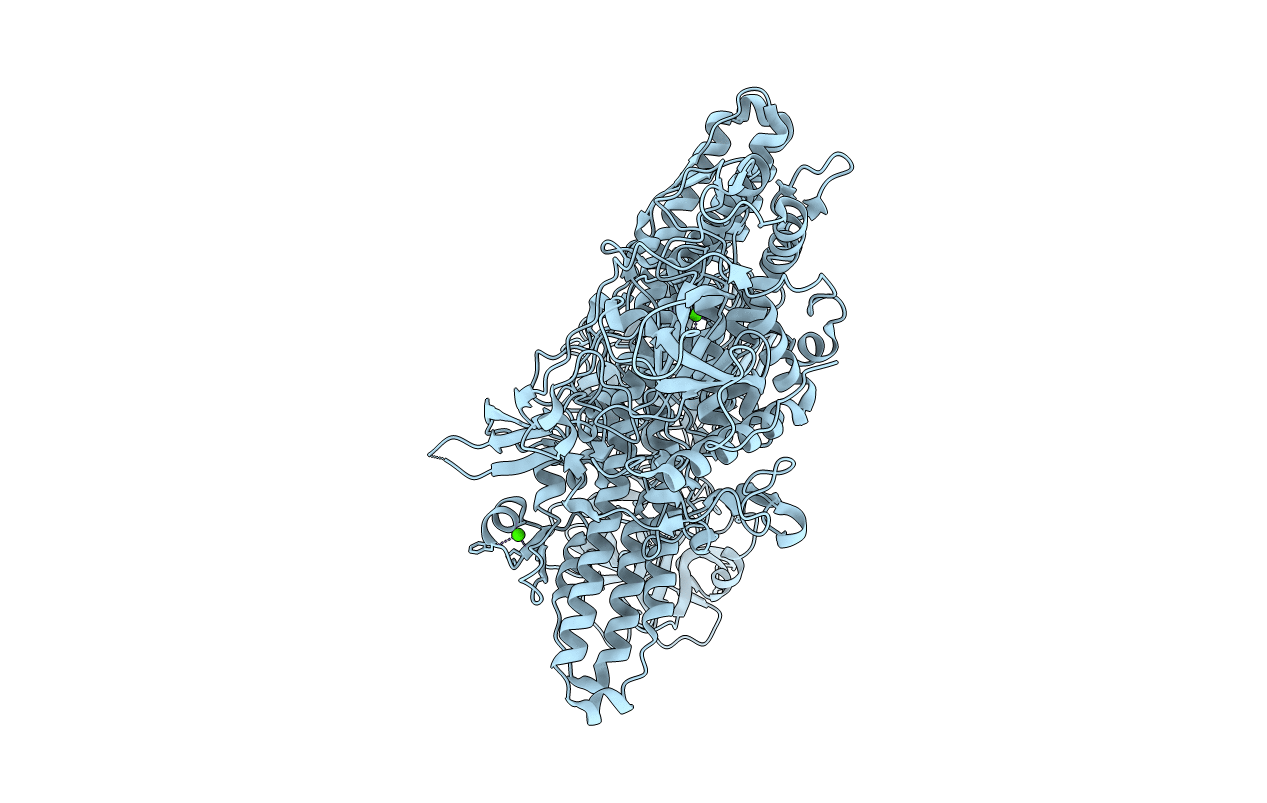
1S0B image
Deposition Date 2003-12-30
Release Date 2004-03-16
Last Version Date 2023-08-23
Entry Detail
PDB ID:
1S0B
Title:
Crystal structure of botulinum neurotoxin type B at pH 4.0
Biological Source:
Source Organism:
Method Details:
Experimental Method:
Resolution:
2.00 Å
R-Value Free:
0.23
R-Value Work:
0.20
R-Value Observed:
0.20
Space Group:
P 1 21 1

Macromolecular Entities
Structures with similar UniProt ID
Protein Blast
Polymer Type:polypeptide(L)
Molecule:Botulinum neurotoxin type B
Gene (Uniprot):botB
Chain IDs:A
Chain Length:1290
Number of Molecules:1
Biological Source:Clostridium botulinum
Ligand Molecules
Primary Citation
Role of metals in the biological activity of Clostridium botulinum neurotoxins
Biochemistry 43 2209 2216 (2004)
PMID: 14979717 DOI: 10.1021/bi035844k

Abstact

Clostridium botulinum neurotoxins are the most potent toxins to humans and cause paralysis by blocking neurotransmitter release at the presynaptic nerve terminals. The toxicity involves four steps, viz., binding to neuronal cells, internalization, translocation, and catalytic activity. While the catalytic activity is a zinc endopeptidase activity on the SNARE complex proteins, the translocation is believed to be a pH-dependent process allowing the translocation domain to change its conformation to penetrate the endosomal membrane. Here, we report the crystal structures of botulinum neurotoxin type B at various pHs and of an apo form of the neurotoxin, and discuss the role of metal ions and the effect of pH variation in the biological activity. Except for the perturbation of a few side chains, the conformation of the catalytic domain is unchanged in the zinc-depleted apotoxin, suggesting that zinc's role is catalytic. We have also identified two calcium ions in the molecule and present biochemical evidence to show that they play a role in the translocation of the light chain through the membrane.

Legend

Protein

Chemical

Disease

Primary Citation of related structures
Feedback Form
Name
Email
Institute
Feedback