Planned Maintenance: Some services may turn out to be unavailable from 15th January, 2026 to 16th January, 2026. We apologize for the inconvenience!

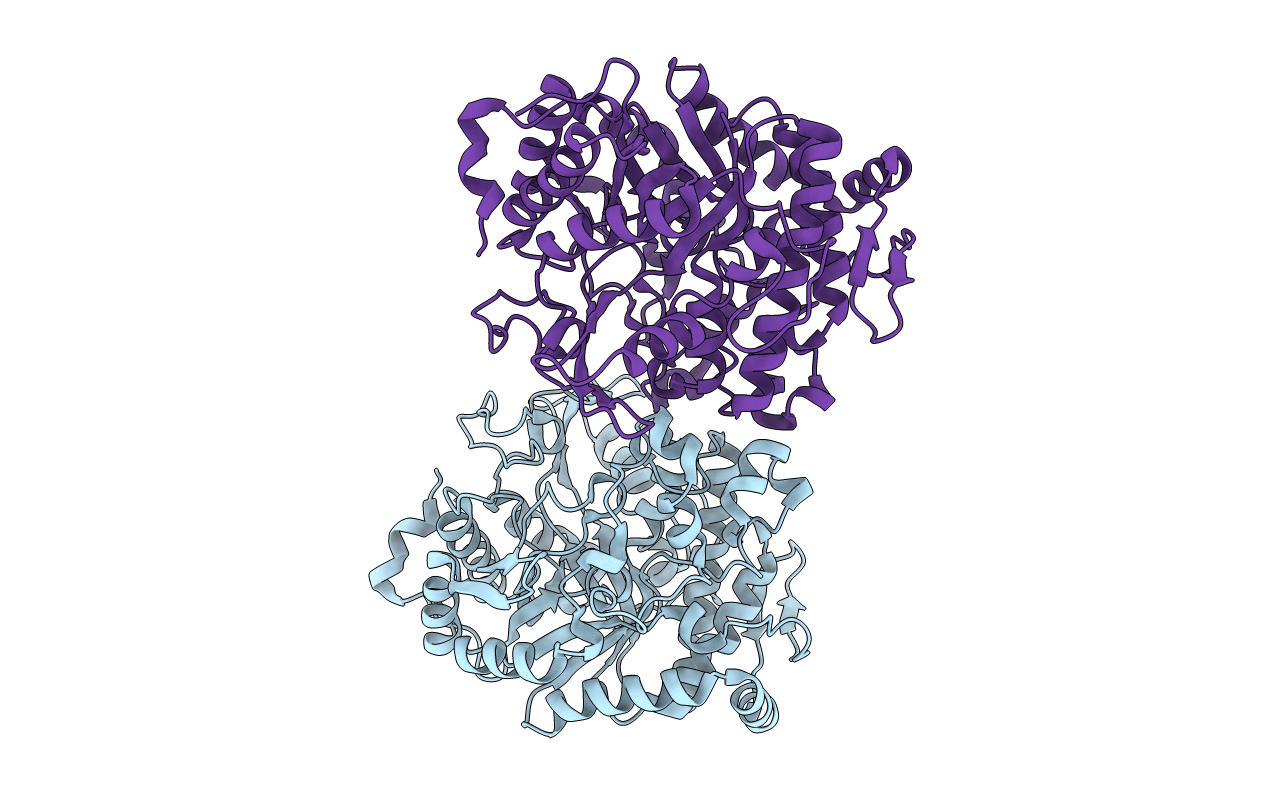
1QVB image
Deposition Date 1999-07-07
Release Date 1999-07-13
Last Version Date 2024-02-14
Entry Detail
PDB ID:
1QVB
Keywords:
Title:
CRYSTAL STRUCTURE OF THE BETA-GLYCOSIDASE FROM THE HYPERTHERMOPHILE THERMOSPHAERA AGGREGANS
Biological Source:
Source Organism(s):
Expression System(s):
Method Details:
Experimental Method:
Resolution:
2.40 Å
R-Value Free:
0.24
R-Value Work:
0.21
R-Value Observed:
0.21
Space Group:
P 21 21 2

Macromolecular Entities
Structures with similar UniProt ID
Protein Blast
Polymer Type:polypeptide(L)
Molecule:BETA-GLYCOSIDASE
Chain IDs:A, B
Chain Length:481
Number of Molecules:2
Biological Source:Thermosphaera aggregans
Primary Citation
Crystal structure of the beta-glycosidase from the hyperthermophile Thermosphaera aggregans: insights into its activity and thermostability.
FEBS Lett. 445 375 383 (1999)
PMID: 10094493 DOI: 10.1016/S0014-5793(99)00090-3

Abstact

The glycosyl hydrolases are an important group of enzymes that are responsible for cleaving a range of biologically significant carbohydrate compounds. Structural information on these enzymes has provided useful information on their molecular basis for the functional variations, while the characterization of the structural features that account for the high thermostability of proteins is of great scientific and biotechnological interest. To these ends we have determined the crystal structure of the beta-glycosidase from a hyperthermophilic archeon Thermosphaera aggregans. The structure is a (beta/alpha)8 barrel (TIM-barrel), as seen in other glycosyl hydrolase family 1 members, and forms a tetramer. Inspection of the active site and the surrounding area reveals two catalytic glutamate residues consistent with the retaining mechanism and the surrounding polar and aromatic residues consistent with a monosaccharide binding site. Comparison of this structure with its mesophilic counterparts implicates a variety of structural features that could contribute to the thermostability. These include an increased number of surface ion pairs, an increased number of internal water molecules and a decreased surface area upon forming an oligomeric quaternary structure.

Legend

Protein

Chemical

Disease

Primary Citation of related structures
Feedback Form
Name
Email
Institute
Feedback