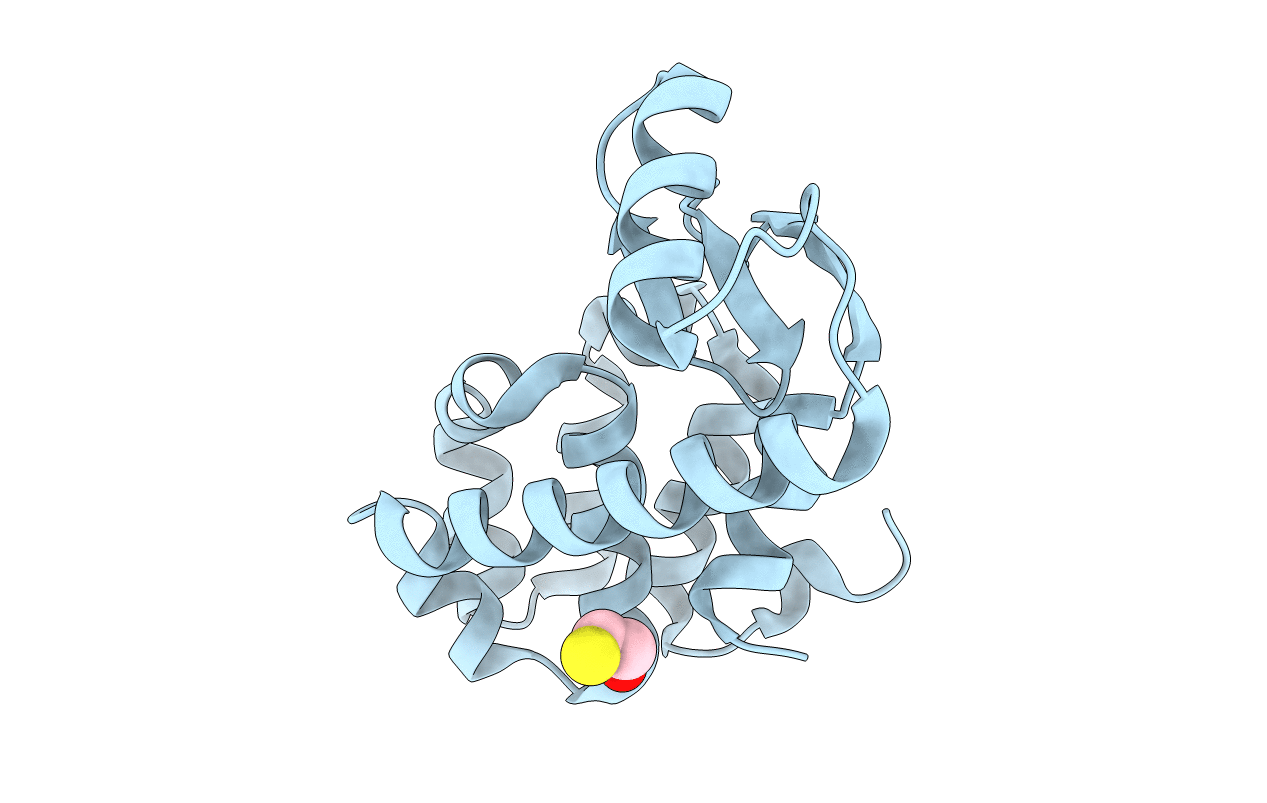
1QTZ image
Deposition Date 1999-06-29
Release Date 1999-07-08
Last Version Date 2024-02-14
Entry Detail
PDB ID:
1QTZ
Keywords:
Title:
D20C MUTANT OF T4 LYSOZYME
Biological Source:
Source Organism:
Host Organism:
Method Details:
Experimental Method:
Resolution:
2.00 Å
R-Value Observed:
0.16
Space Group:
P 32 2 1
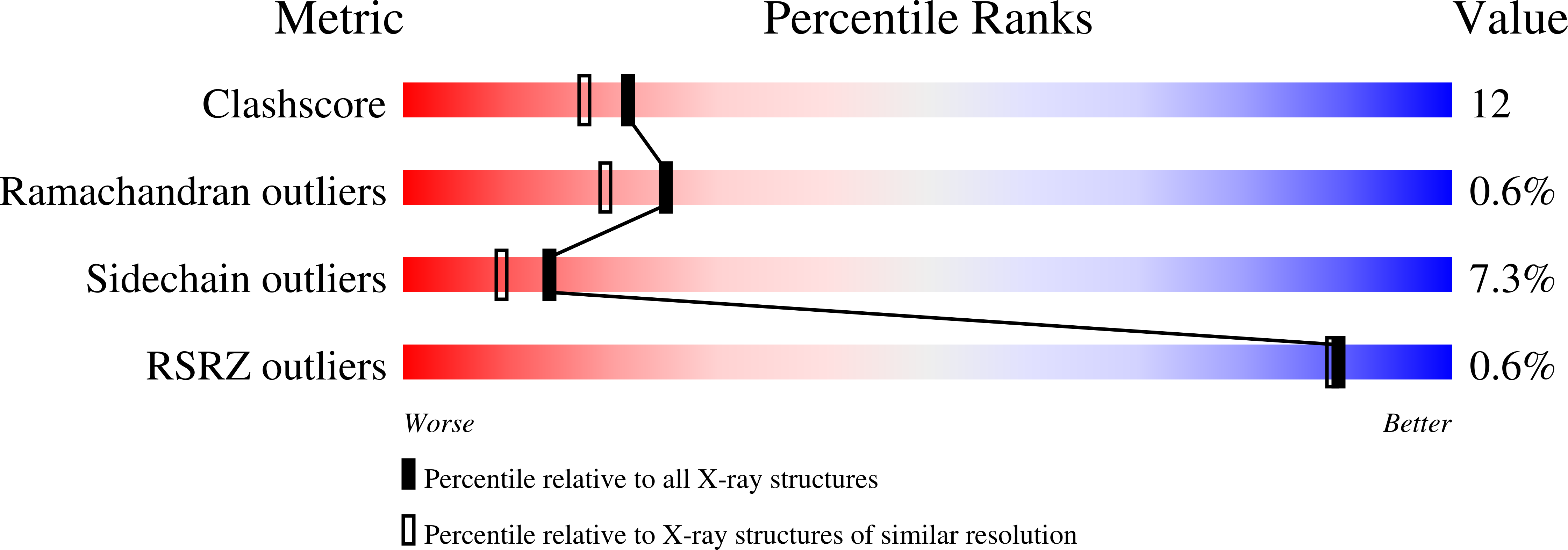
Macromolecular Entities
Structures with similar UniProt ID
Protein Blast
Polymer Type:polypeptide(L)
Molecule:PROTEIN (T4 LYSOZYME)
Gene (Uniprot):E
Mutagens:D20C, C54T, C97A
Chain IDs:A
Chain Length:164
Number of Molecules:1
Biological Source:Enterobacteria phage T4
Ligand Molecules
Primary Citation
Structural basis of the conversion of T4 lysozyme into a transglycosidase by reengineering the active site.
Proc.Natl.Acad.Sci.USA 96 8949 8954 (1999)
PMID: 10430876 DOI: 10.1073/pnas.96.16.8949

Abstact

In contrast to hen egg-white lysozyme, which retains the beta-configuration of the substrate in the product, T4 lysozyme (T4L) is an inverting glycosidase. The substitution Thr-26 --> His, however, converts T4L from an inverting to a retaining enzyme. It is shown here that the Thr-26 --> His mutant is also a transglycosidase. Indeed, the transglycosylation reaction can be more effective than hydrolysis. In contrast, wild-type T4L has no detectable transglycosidase activity. The results support the prior hypothesis that catalysis by the Thr-26 --> His mutant proceeds via a covalent intermediate. Further mutations (Glu-11 --> His, Asp-20 --> Cys) of the T26H mutant lysozyme indicate that the catalytic mechanism of this mutant requires Glu-11 as a general acid but Asp-20 is not essential. The results help provide an overall rationalization for the activity of glycosidases, in which a highly conserved acid group (Glu-11 in T4L, Glu-35 in hen egg-white lysozyme) on the beta-side of the substrate acts as a proton donor, whereas alterations in the placement and chemical identity of residues on the alpha-side of the substrate can lead to catalysis with or without retention of the configuration, to transglycosidase activity, or to the formation of a stable enzyme-substrate adduct.

Legend

Protein

Chemical

Disease

Primary Citation of related structures
Feedback Form
Name
Email
Institute
Feedback