1Q6X image
Deposition Date 2003-08-14
Release Date 2004-06-01
Last Version Date 2023-08-16
Entry Detail
PDB ID:
1Q6X
Keywords:
Title:
Crystal structure of rat choline acetyltransferase
Biological Source:
Source Organism:
Host Organism:
Method Details:
Experimental Method:
Resolution:
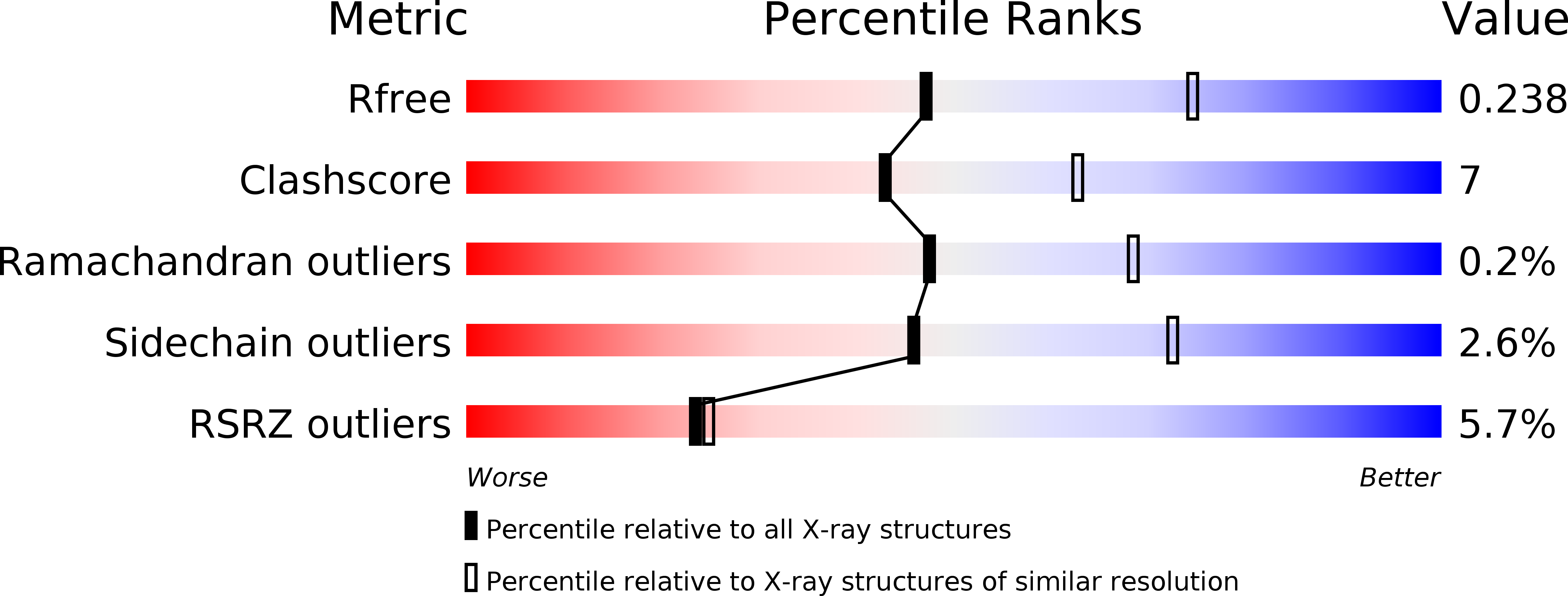
2.50 Å
R-Value Free:
0.25
R-Value Work:
0.22
R-Value Observed:
0.22
Space Group:
P 1 21 1
Macromolecular Entities
Structures with similar UniProt ID
Protein Blast
Polymer Type:polypeptide(L)
Molecule:choline O-acetyltransferase
Gene (Uniprot):Chat
Chain IDs:A, B
Chain Length:644
Number of Molecules:2
Biological Source:Rattus norvegicus
Ligand Molecules
Primary Citation
Choline acetyltransferase structure reveals distribution of mutations that cause motor disorders.
Embo J. 23 2047 2058 (2004)
PMID: 15131697 DOI: 10.1038/sj.emboj.7600221

Abstact

Choline acetyltransferase (ChAT) synthesizes acetylcholine in neurons and other cell types. Decreases in ChAT activity are associated with a number of disease states, and mutations in ChAT cause congenital neuromuscular disorders. The crystal structure of ChAT reported here shows the enzyme divided into two domains with the active site in a solvent accessible tunnel at the domain interface. A low-resolution view of the complex with one substrate, coenzyme A, defines its binding site and suggests an additional interaction not found in the related carnitine acetyltransferase. Also, the preference for choline over carnitine as an acetyl acceptor is seen to result from both electrostatic and steric blocks to carnitine binding at the active site. While half of the mutations that cause motor disorders are positioned to affect enzyme activity directly, the remaining changes are surprisingly distant from the active site and must exert indirect effects. The structure indicates how ChAT is regulated by phosphorylation and reveals an unusual pattern of basic surface patches that may mediate membrane association or macromolecular interactions.

Legend

Protein

Chemical

Disease

Primary Citation of related structures
Feedback Form
Name
Email
Institute
Feedback