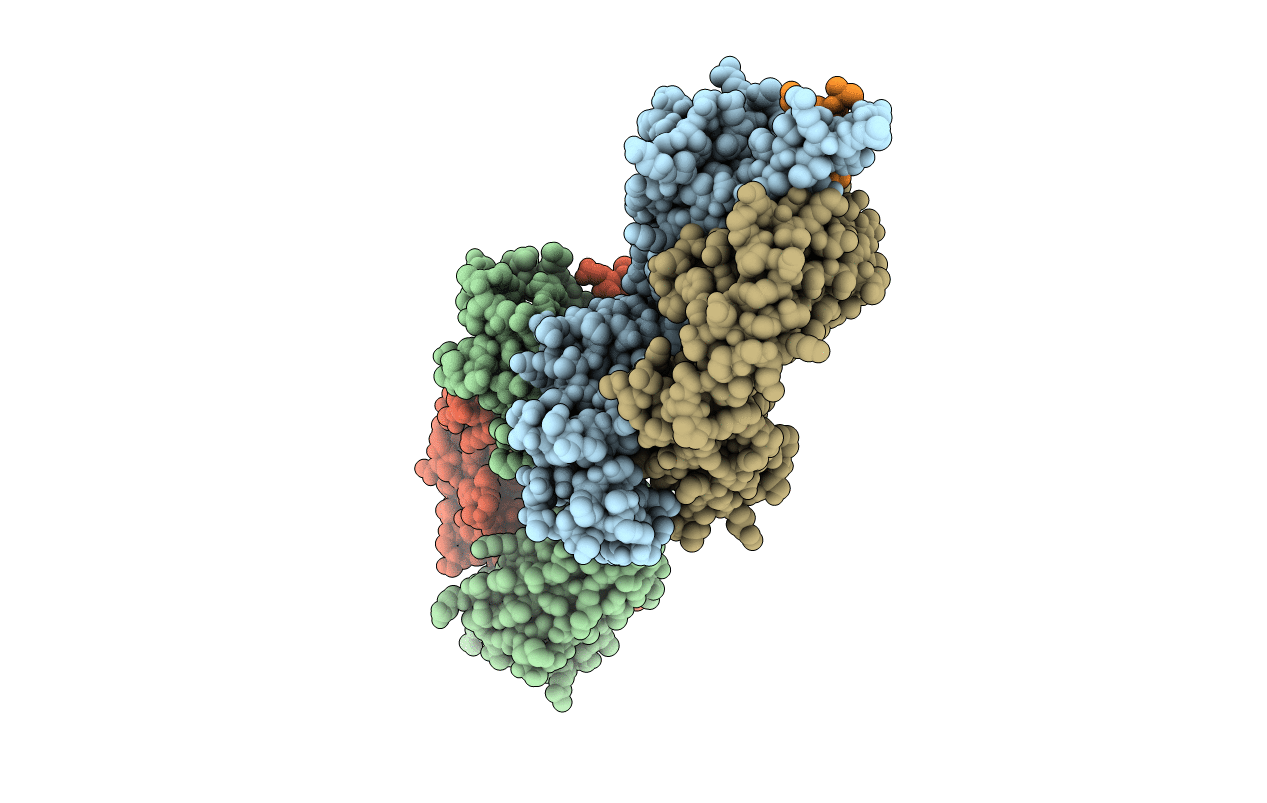
1Q1J image
Deposition Date 2003-07-21
Release Date 2004-02-17
Last Version Date 2024-11-06
Entry Detail
PDB ID:
1Q1J
Keywords:
Title:
Crystal Structure Analysis of anti-HIV-1 Fab 447-52D in complex with V3 peptide
Biological Source:
Source Organism(s):
Homo sapiens (Taxon ID: 9606)
Method Details:
Experimental Method:
Resolution:
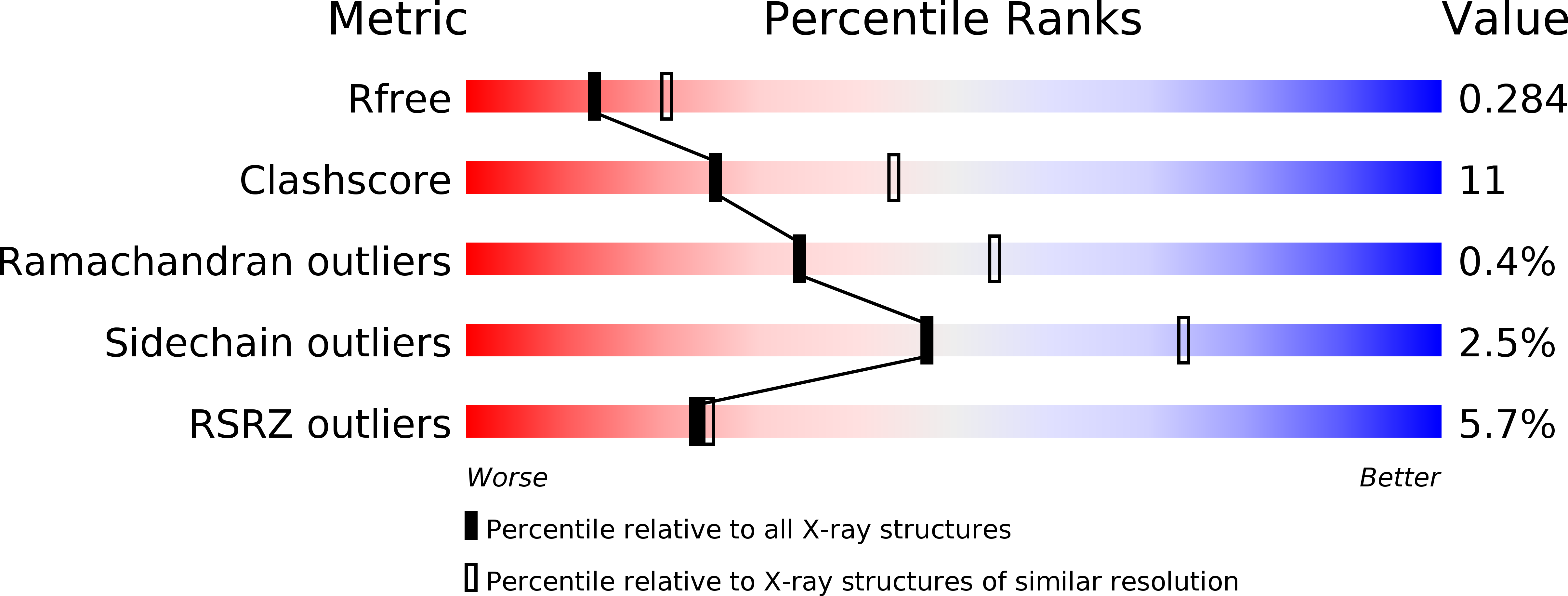
2.50 Å
R-Value Free:
0.28
R-Value Work:
0.25
R-Value Observed:
0.25
Space Group:
P 1 21 1
Macromolecular Entities
Polymer Type:polypeptide(L)
Molecule:Fab 447-52D, heavy chain
Chain IDs:B (auth: H), E (auth: I)
Chain Length:231
Number of Molecules:2
Biological Source:Homo sapiens
Polymer Type:polypeptide(L)
Molecule:Fab 447-52D, light chain
Chain IDs:A (auth: L), D (auth: M)
Chain Length:215
Number of Molecules:2
Biological Source:Homo sapiens
Structures with similar UniProt ID
Protein Blast
Polymer Type:polypeptide(L)
Molecule:gp120 V3 peptide
Chain IDs:C (auth: P), F (auth: Q)
Chain Length:16
Number of Molecules:2
Biological Source:
Primary Citation
Structural rationale for the broad neutralization of HIV-1 by human monoclonal antibody 447-52D.
Structure 12 193 204 (2004)
PMID: 14962380 DOI: 10.1016/j.str.2004.01.003

Abstact

447-52D is a human monoclonal antibody isolated from a heterohybridoma derived from an HIV-1-infected individual. This antibody recognizes the hypervariable gp120 V3 loop, and neutralizes both X4 and R5 primary isolates, making it one of the most effective anti-V3 antibodies characterized to date. The crystal structure of the 447-52D Fab in complex with a 16-mer V3 peptide at 2.5 A resolution reveals that the peptide beta hairpin forms a three-stranded mixed beta sheet with complementarity determining region (CDR) H3, with most of the V3 side chains exposed to solvent. Sequence specificity is conferred through interaction of the type-II turn (residues GPGR) at the apex of the V3 hairpin with the base of CDR H3. This novel mode of peptide-antibody recognition enables the antibody to bind to many different V3 sequences where only the GPxR core epitope is absolutely required.

Legend

Protein

Chemical

Disease

Primary Citation of related structures
Feedback Form
Name
Email
Institute
Feedback