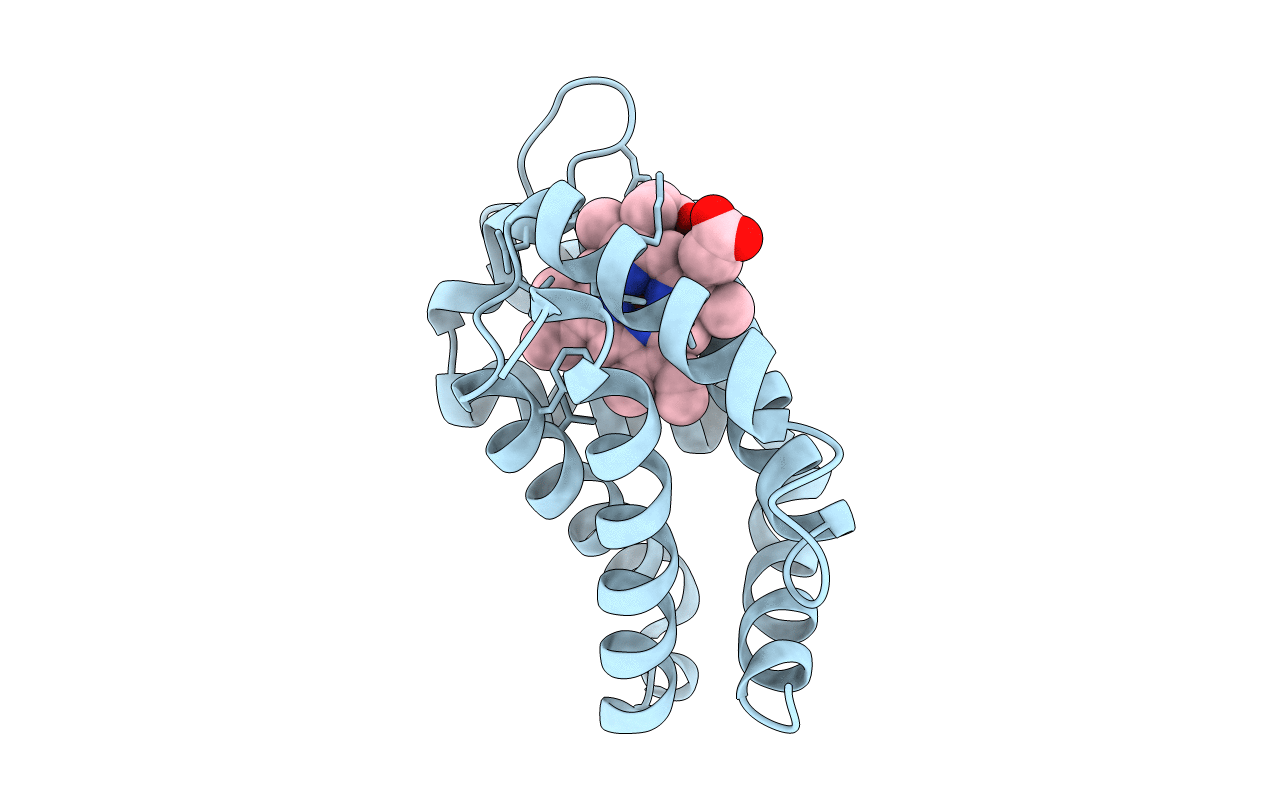
1Q1F image
Deposition Date 2003-07-19
Release Date 2004-06-08
Last Version Date 2024-02-14
Entry Detail
PDB ID:
1Q1F
Title:
Crystal structure of murine neuroglobin
Biological Source:
Source Organism:
Mus musculus (Taxon ID: 10090)
Host Organism:
Method Details:
Experimental Method:
Resolution:
1.50 Å
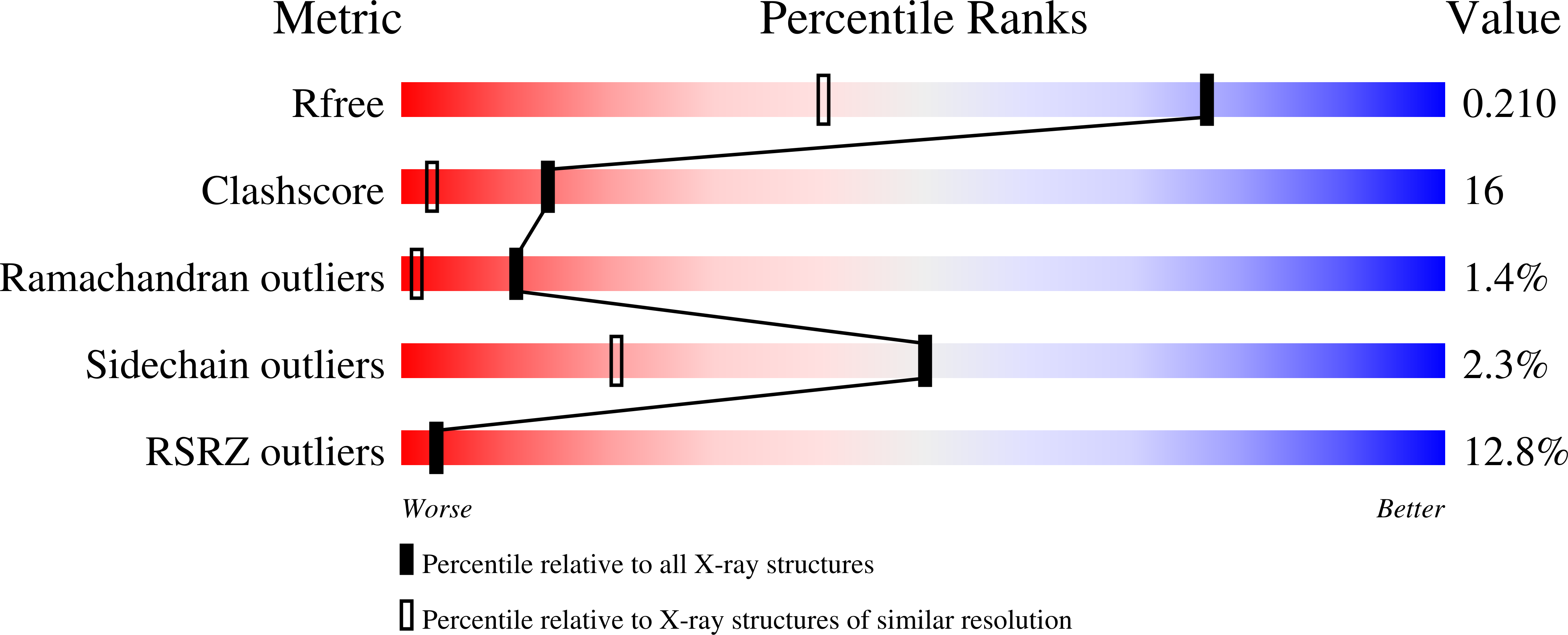
R-Value Free:
0.20
R-Value Work:
0.18
R-Value Observed:
0.21
Space Group:
H 3 2
Macromolecular Entities
Structures with similar UniProt ID
Protein Blast
Polymer Type:polypeptide(L)
Molecule:Neuroglobin
Gene (Uniprot):Ngb
Mutagens:C55S, C120S
Chain IDs:A
Chain Length:151
Number of Molecules:1
Biological Source:Mus musculus
Ligand Molecules
Primary Citation
The structure of murine neuroglobin: Novel pathways for ligand migration and binding.
Proteins 56 85 92 (2004)
PMID: 15162488 DOI: 10.1002/prot.20113

Abstact

Neuroglobin, a recently discovered globin predominantly expressed in neuronal tissue of vertebrates, binds small, gaseous ligands at the sixth coordination position of the heme iron. In the absence of an exogenous ligand, the distal histidine (His64) binds to the heme iron in the ferrous and ferric states. The crystal structure of murine ferric (met) neuroglobin at 1.5 A reveals interesting features relevant to the ligand binding mechanism. Only weak selectivity is observed for the two possible heme orientations, the occupancy ratio being 70:30. Two small internal cavities are present on the heme distal side, which enable the His64(E7) side chain to move out of the way upon exogenous ligand binding. Moreover, a third, huge cavity (volume approximately 290 A3) connecting both sides of the heme, is open towards the exterior and provides a potential passageway for ligands. The CD and EF corners exhibit substantial flexibility, which may assist ligands in entering the protein and accessing the active site. Based on this high-resolution structure, further structure-function studies can be planned to elucidate the role of neuroglobin in physiological responses to hypoxia.

Legend

Protein

Chemical

Disease

Primary Citation of related structures
Feedback Form
Name
Email
Institute
Feedback