Abstact
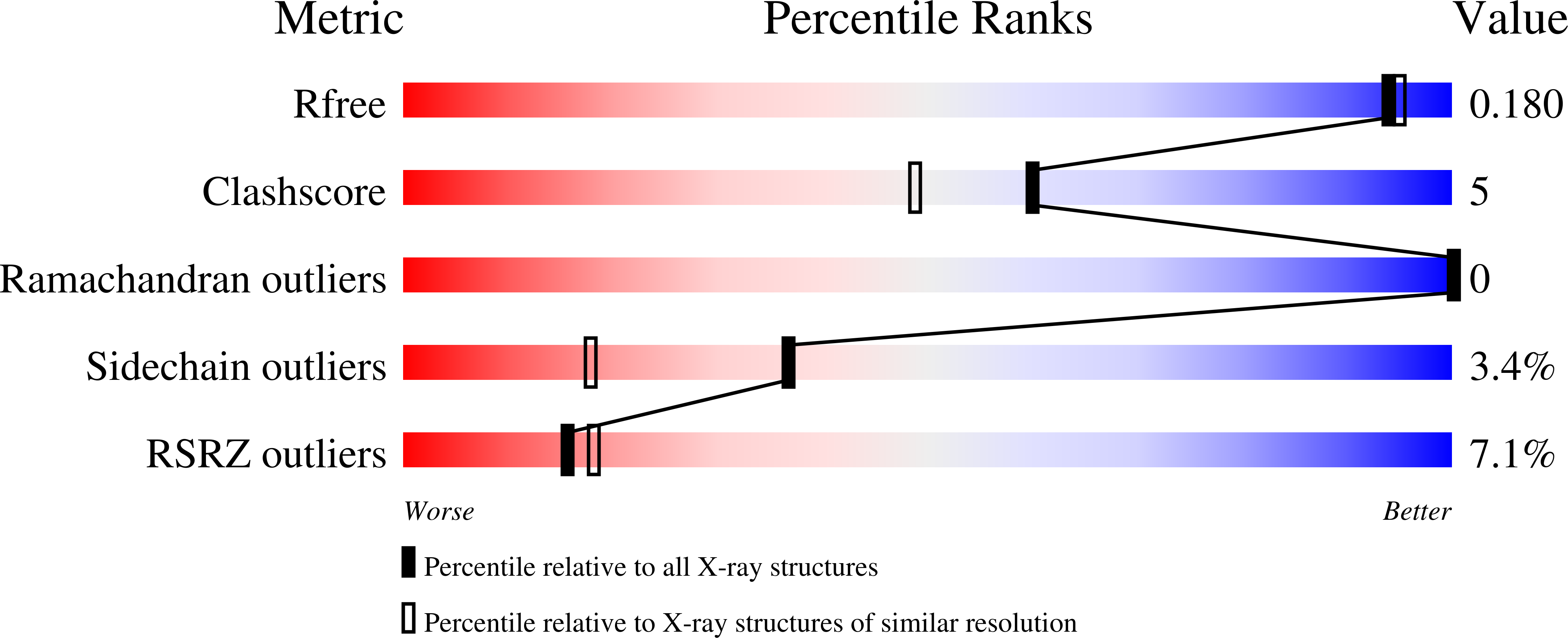
tRNA-guanine transglycosylase (TGT) catalyzes a post-transcriptional base-exchange reaction involved in the incorporation of the modified base queuine (Q) into the wobble position of certain tRNAs. Catalysis by TGT occurs through a double-displacement mechanism that involves the formation of a covalent enzyme-RNA intermediate (Kittendorf, J. D., Barcomb, L. M., Nonekowski, S. T., and Garcia, G. A. (2001) Biochemistry 40, 14123-14133). The TGT chemical mechanism requires the protonation of the displaced guanine and the deprotonation of the incoming heterocyclic base. Based on its position in the active site, it is likely that aspartate 264 is involved in these proton transfer events. To investigate this possibility, site-directed mutagenesis was employed to convert aspartate 264 to alanine, asparagine, glutamate, glutamine, lysine, and histidine. Biochemical characterization of these TGT mutants revealed that only the conservative glutamate mutant retained catalytic activity, with Km values for both tRNA and guanine 3-fold greater than those for wild-type, whereas the kcat was depressed by an order of magnitude. Furthermore, of these six TGT mutants, only the TGT(D264E) was capable of forming a TGT.RNA covalent intermediate; however, unlike wild-type TGT, only hydroxylamine is capable of cleaving the TGT(D264E).RNA covalent complex. In an effort to better understand the unique biochemical properties of the D264E TGT mutant, we solved the crystal structure of the Zymomonas mobilis TGT with the analogous mutation (D280E). The results of these studies support two roles for aspartate 264 in catalysis by TGT, protonation of the leaving guanine and deprotonation of the incoming preQ1.