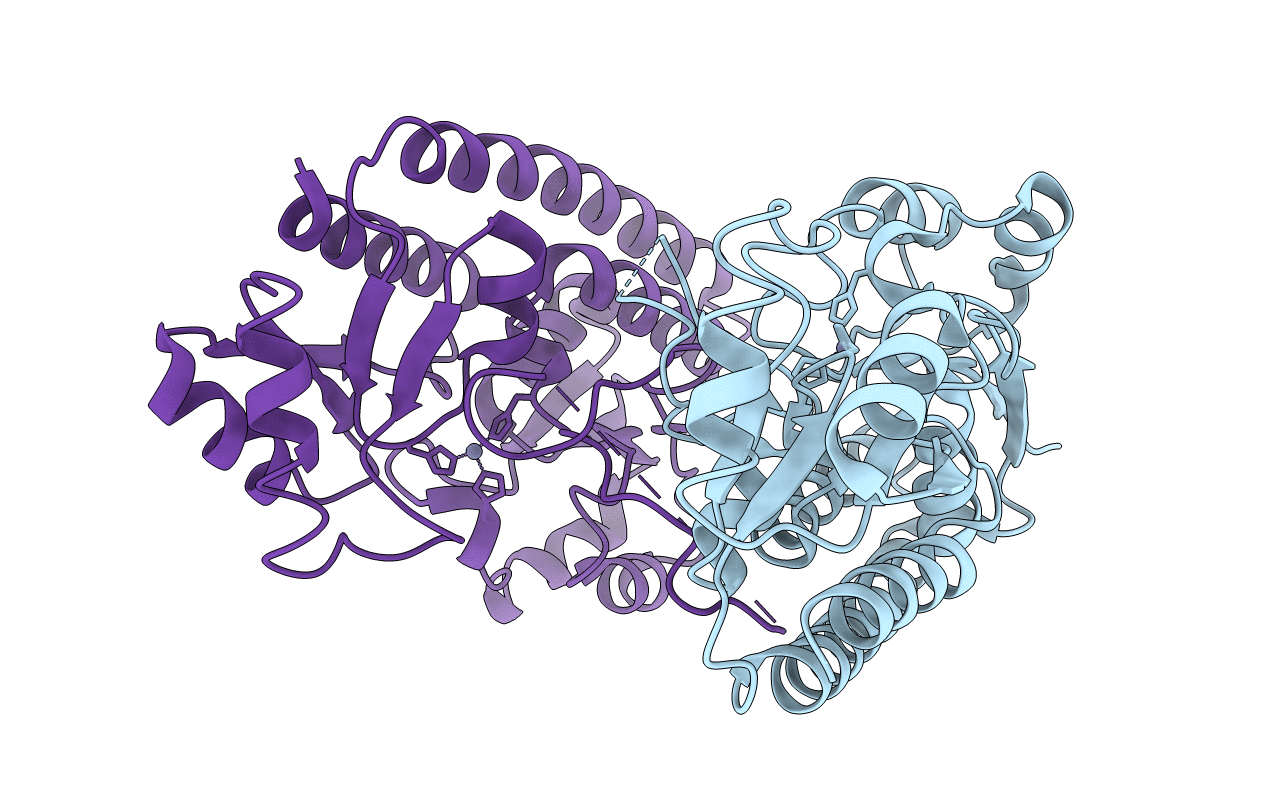
1PQ4 image
Deposition Date 2003-06-17
Release Date 2003-11-04
Last Version Date 2024-02-14
Entry Detail
PDB ID:
1PQ4
Title:
Crystal structure of ZnuA
Biological Source:
Source Organism:
Method Details:
Experimental Method:
Resolution:
1.90 Å
R-Value Free:
0.20
R-Value Work:
0.17
R-Value Observed:
0.17
Space Group:
P 1 21 1

Macromolecular Entities
Structures with similar UniProt ID
Protein Blast
Polymer Type:polypeptide(L)
Molecule:periplasmic binding protein component of an ABC type zinc uptake transporter
Gene (Uniprot):zntC
Chain IDs:A, B
Chain Length:291
Number of Molecules:2
Biological Source:Synechocystis sp.
Ligand Molecules
Primary Citation
Structural Determinants of Metal Specificity in the Zinc Transport Protein ZnuA from Synechocystis 6803.
J.Mol.Biol. 333 1061 1069 (2003)
PMID: 14583199 DOI: 10.1016/j.jmb.2003.09.008

Abstact

A number of bacterial metal transporters belong to the cluster 9 family of ABC transporters. The residues in the periplasmic domain thought to be involved in metal binding seem highly conserved and yet the transporters have varying metal specificity. To solve this seeming paradox and ascertain how metal specificity is exacted, the structure of ZnuA, the periplasmic domain of a zinc transporter from Synechocystis 6803, has been determined to a resolution of 1.9A. In previously determined structures of homologous proteins, four residues chelate the bound metal. From sequence alignments of the cluster 9 metal transporters, the fourth residue in this metal-binding site, an aspartate, is also present in the appropriate position in the ZnuA sequence. However, this result is misleading, since our structural data indicate that zinc binds via only three histidine residues and the aspartate is replaced by a large hydrophobic cavity. We propose that ZnuA binds zinc over manganese by providing only three ligating residues. ZnuA has a highly charged and mobile loop that protrudes from the protein in the vicinity of the metal-binding site. Similar loops are found in other types of zinc transporters but not manganese transporters. Therefore, we propose that the function of this domain is to act as a zinc chaperone to facilitate acquisition. Therefore, while Mn2+ transporters can bind Zn2+ in vitro they may not be able to acquire it in vivo without this structure because of the low concentration of free Zn2+.

Legend

Protein

Chemical

Disease

Primary Citation of related structures
Feedback Form
Name
Email
Institute
Feedback