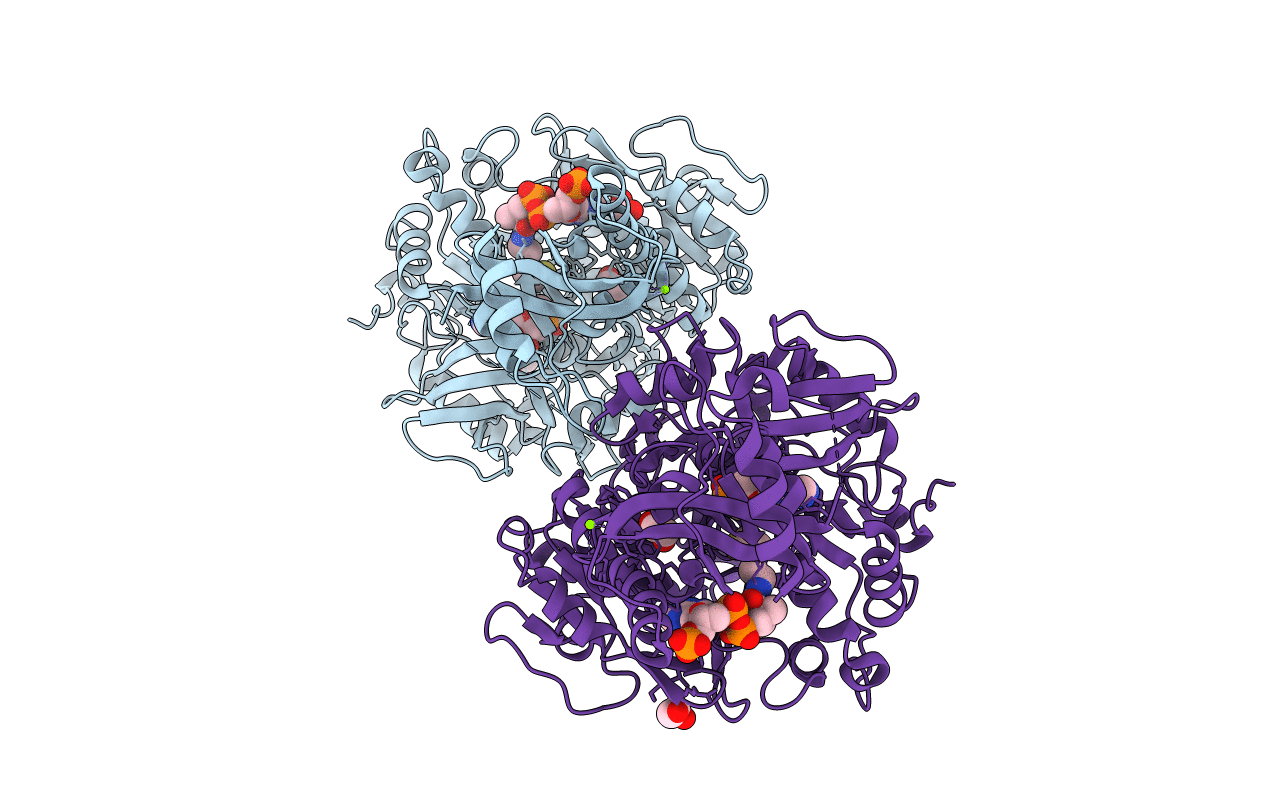
1PG4 image
Deposition Date 2003-05-27
Release Date 2003-06-03
Last Version Date 2024-02-14
Entry Detail
PDB ID:
1PG4
Keywords:
Title:
Acetyl CoA Synthetase, Salmonella enterica
Biological Source:
Source Organism:
Method Details:
Experimental Method:
Resolution:
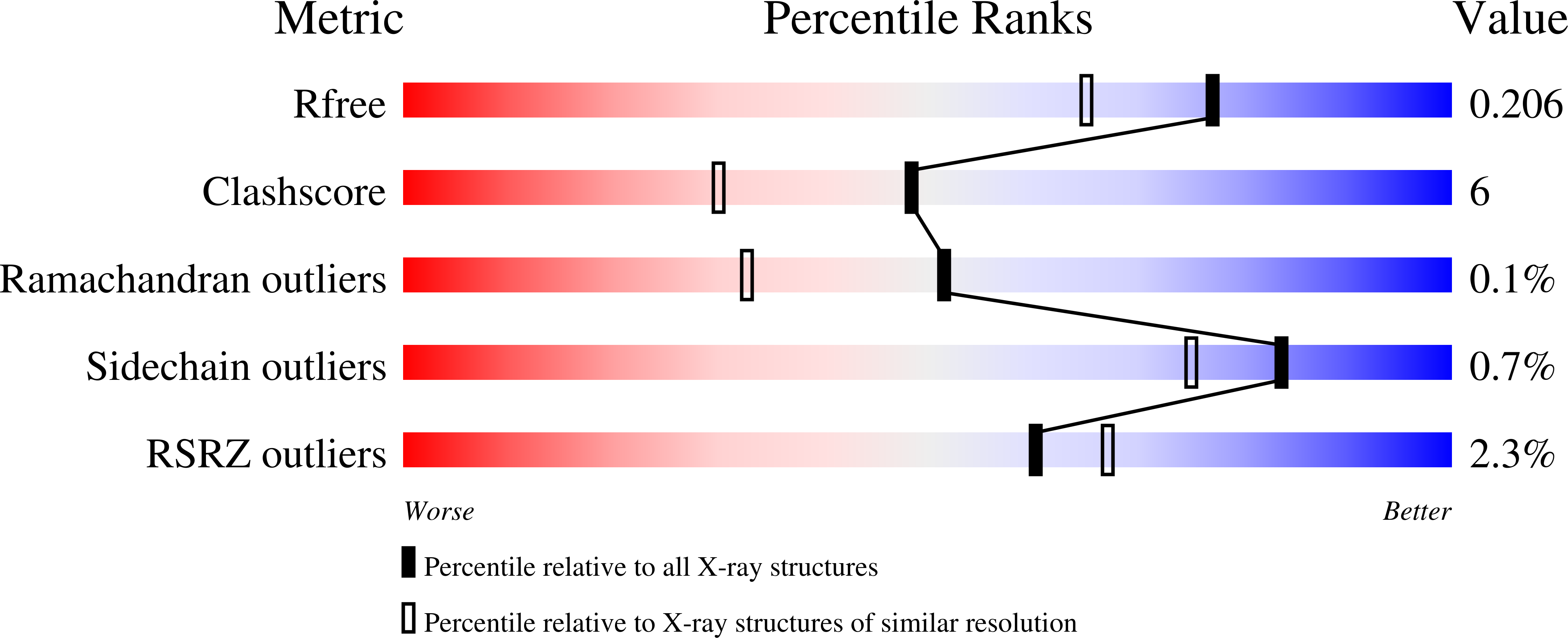
1.75 Å
R-Value Free:
0.21
R-Value Work:
0.18
Space Group:
P 1 21 1
Macromolecular Entities
Structures with similar UniProt ID
Protein Blast
Polymer Type:polypeptide(L)
Molecule:acetyl-CoA synthetase
Gene (Uniprot):acs
Mutagens:R174C
Chain IDs:A, B
Chain Length:652
Number of Molecules:2
Biological Source:Salmonella enterica
Primary Citation
The 1.75 A Crystal Structure of Acetyl-CoA Synthetase Bound to Adenosine-5'-propylphosphate and Coenzyme A
Biochemistry 42 2866 2873 (2003)
PMID: 12627952 DOI: 10.1021/bi0271603

Abstact

Acetyl-coenzyme A synthetase catalyzes the two-step synthesis of acetyl-CoA from acetate, ATP, and CoA and belongs to a family of adenylate-forming enzymes that generate an acyl-AMP intermediate. This family includes other acyl- and aryl-CoA synthetases, firefly luciferase, and the adenylation domains of the modular nonribosomal peptide synthetases. We have determined the X-ray crystal structure of acetyl-CoA synthetase complexed with adenosine-5'-propylphosphate and CoA. The structure identifies the CoA binding pocket as well as a new conformation for members of this enzyme family in which the approximately 110-residue C-terminal domain exhibits a large rotation compared to structures of peptide synthetase adenylation domains. This domain movement presents a new set of residues to the active site and removes a conserved lysine residue that was previously shown to be important for catalysis of the adenylation half-reaction. Comparison of our structure with kinetic and structural data of closely related enzymes suggests that the members of the adenylate-forming family of enzymes may adopt two different orientations to catalyze the two half-reactions. Additionally, we provide a structural explanation for the recently shown control of enzyme activity by acetylation of an active site lysine.

Legend

Protein

Chemical

Disease

Primary Citation of related structures
Feedback Form
Name
Email
Institute
Feedback