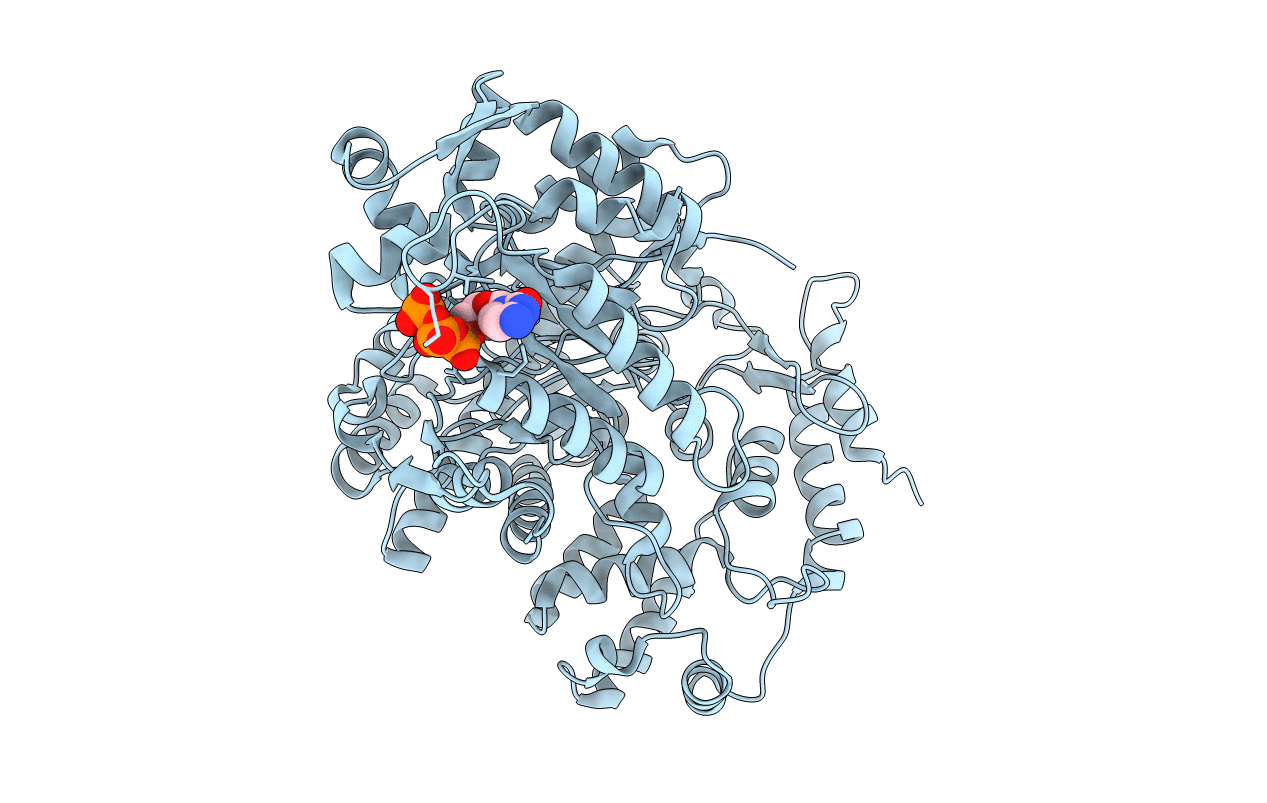
1PEO image
Deposition Date 2003-05-22
Release Date 2004-05-25
Last Version Date 2024-11-06
Entry Detail
PDB ID:
1PEO
Keywords:
Title:
Ribonucleotide Reductase Protein R1E from Salmonella typhimurium
Biological Source:
Source Organism:
Method Details:
Experimental Method:
Resolution:
3.00 Å
R-Value Free:
0.25
R-Value Work:
0.20
R-Value Observed:
0.20
Space Group:
P 43 21 2

Macromolecular Entities
Structures with similar UniProt ID
Protein Blast
Polymer Type:polypeptide(L)
Molecule:Ribonucleoside-diphosphate reductase 2 alpha chain
Gene (Uniprot):nrdE
Chain IDs:A
Chain Length:714
Number of Molecules:1
Biological Source:Salmonella typhimurium
Primary Citation
Structure of the large subunit of class Ib ribonucleotide reductase from Salmonella typhimurium and its complexes with allosteric effectors.
J.Mol.Biol. 330 87 97 (2003)
PMID: 12818204 DOI: 10.1016/S0022-2836(03)00538-2

Abstact

The three-dimensional structure of the large subunit of the first member of a class Ib ribonucleotide reductase, R1E of Salmonella typhimurium, has been determined in its native form and together with three allosteric effectors. The enzyme contains the characteristic ten-stranded alpha/beta-barrel with catalytic residues at a finger loop in its center and with redox-active cysteine residues at two adjacent barrel strands. Structures where the redox-active cysteine residues are in reduced thiol form and in oxidized disulfide form have been determined revealing local structural changes. The R1E enzyme differs from the class Ia enzyme, Escherichia coli R1, by not having an overall allosteric regulation. This is explained from the structure by differences in the N-terminal domain, which is about 50 residues shorter and lacks the overall allosteric binding site. R1E has an allosteric substrate specificity regulation site and the binding site for the nucleotide effectors is located at the dimer interface similarly as for the class Ia enzymes. We have determined the structures of R1E in the absence of effectors and with dTTP, dATP and dCTP bound. The low affinity for ATP at the specificity site is explained by a tyrosine, which hinders nucleotides containing a 2'-OH group to bind.

Legend

Protein

Chemical

Disease

Primary Citation of related structures
Feedback Form
Name
Email
Institute
Feedback