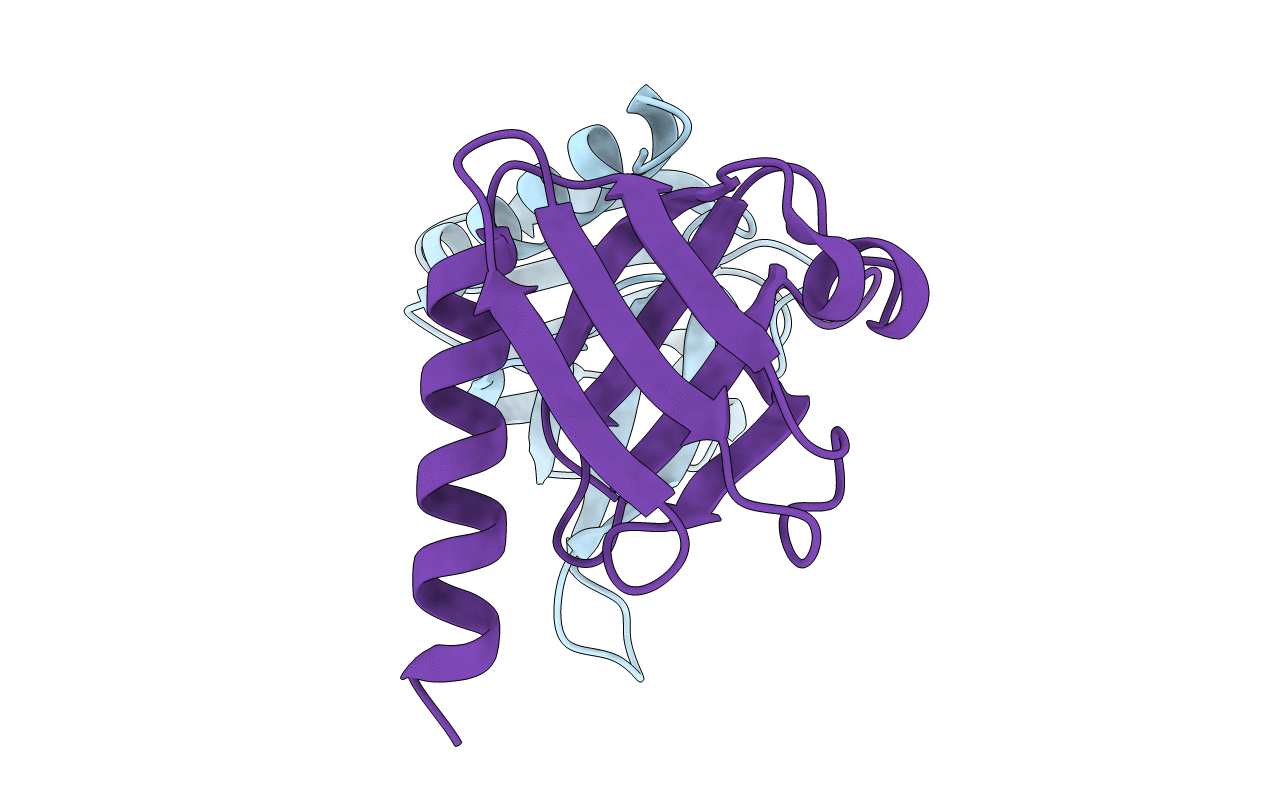
1P5T image
Deposition Date 2003-04-28
Release Date 2004-02-17
Last Version Date 2024-10-16
Entry Detail
PDB ID:
1P5T
Title:
Crystal Structure of Dok1 PTB Domain
Biological Source:
Source Organism:
Mus musculus (Taxon ID: 10090)
Host Organism:
Method Details:
Experimental Method:
Resolution:
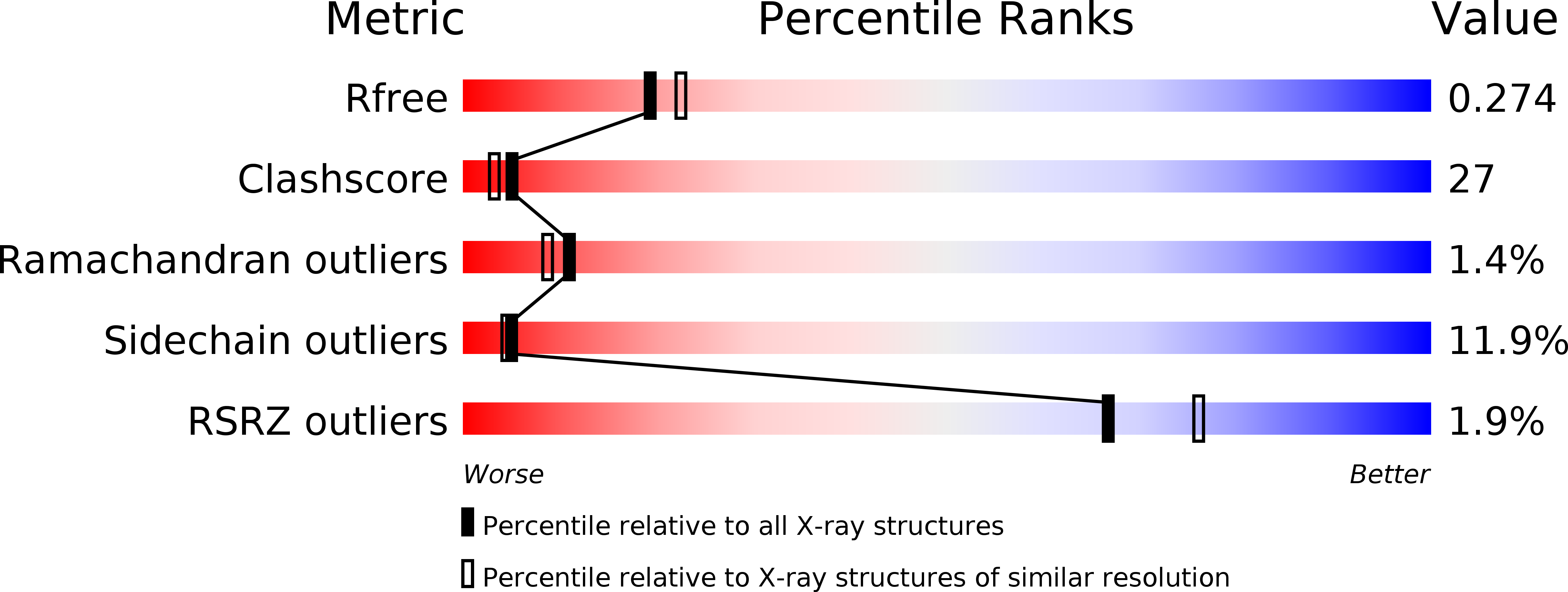
2.35 Å
R-Value Free:
0.26
R-Value Work:
0.21
R-Value Observed:
0.22
Space Group:
P 21 21 21
Macromolecular Entities
Structures with similar UniProt ID
Protein Blast
Polymer Type:polypeptide(L)
Molecule:Docking protein 1
Gene (Uniprot):Dok1
Chain IDs:A, B
Chain Length:127
Number of Molecules:2
Biological Source:Mus musculus
Modified Residue
Compound ID Chain ID Parent Comp ID Details 2D Image
MSE A MET SELENOMETHIONINE
Primary Citation
Structural Basis for the Specific Recognition of RET by the Dok1 Phosphotyrosine Binding Domain
J.BIOL.CHEM. 279 4962 4969 (2004)
PMID: 14607833 DOI: 10.1074/jbc.M311030200

Abstact

Dok1 is a common substrate of activated protein-tyrosine kinases. It is rapidly tyrosine-phosphorylated in response to receptor tyrosine activation and interacts with ras GTPase-activating protein and Nck, leading to inhibition of ras signaling pathway activation and the c-Jun N-terminal kinase (JNK) and c-Jun activation, respectively. In chronic myelogenous leukemia cells, it has shown constitutive phosphorylation. The N-terminal phosphotyrosine binding (PTB) domain of Dok1 can recognize and bind specifically to phosphotyrosine-containing motifs of receptors. Here we report the crystal structure of the Dok1 PTB domain alone and in complex with a phosphopeptide derived from RET receptor tyrosine kinase. The structure consists of a beta-sandwich composed of two nearly orthogonal, 7-stranded, antiparallel beta-sheets, and it is capped at one side by a C-terminal alpha-helix. The RET phosphopeptide binds to Dok1 via a surface groove formed between strand beta5 and the C-terminal alpha-helix of the PTB domain. The structures reveal the molecular basis for the specific recognition of RET by the Dok1 PTB domain. We also show that Dok1 does not recognize peptide sequences from TrkA and IL-4, which are recognized by Shc and IRS1, respectively.

Legend

Protein

Chemical

Disease

Primary Citation of related structures
Feedback Form
Name
Email
Institute
Feedback