1OQK image
Deposition Date 2003-03-10
Release Date 2004-01-13
Last Version Date 2024-05-22
Entry Detail
PDB ID:
1OQK
Keywords:
Title:
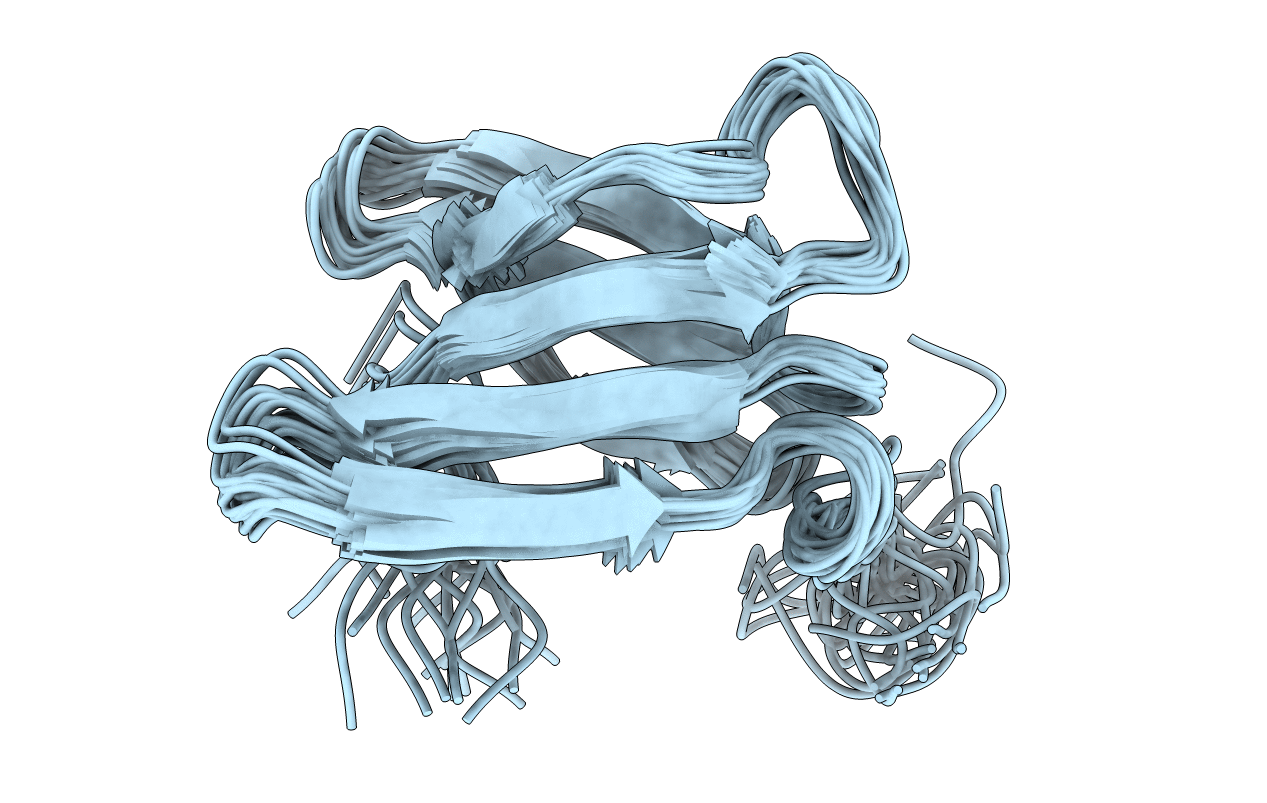
Structure of Mth11: A homologue of human RNase P protein Rpp29
Biological Source:
Source Organism:
Host Organism:
Method Details:
Experimental Method:
Conformers Calculated:
35
Conformers Submitted:
22
Selection Criteria:
structures with the lowest energy

Macromolecular Entities
Structures with similar UniProt ID
Protein Blast
Polymer Type:polypeptide(L)
Molecule:conserved protein MTH11
Gene (Uniprot):rnp1
Chain IDs:A
Chain Length:97
Number of Molecules:1
Biological Source:Methanothermobacter thermautotrophicus
Ligand Molecules
Primary Citation
Structure of Mth11/Mth Rpp29, an essential protein subunit of archaeal and eukaryotic RNase P.
Proc.Natl.Acad.Sci.Usa 100 15398 15403 (2003)
PMID: 14673079 DOI: 10.1073/pnas.2535887100

Abstact

We have determined the solution structure of Mth11 (Mth Rpp29), an essential subunit of the RNase P enzyme from the archaebacterium Methanothermobacter thermoautotrophicus (Mth). RNase P is a ubiquitous ribonucleoprotein enzyme primarily responsible for cleaving the 5' leader sequence during maturation of tRNAs in all three domains of life. In eubacteria, this enzyme is made up of two subunits: a large RNA (approximately 120 kDa) responsible for mediating catalysis, and a small protein cofactor (approximately 15 kDa) that modulates substrate recognition and is required for efficient in vivo catalysis. In contrast, multiple proteins are associated with eukaryotic and archaeal RNase P, and these proteins exhibit no recognizable homology to the conserved bacterial protein subunit. In reconstitution experiments with recombinantly expressed and purified protein subunits, we found that Mth Rpp29, a homolog of the Rpp29 protein subunit from eukaryotic RNase P, is an essential protein component of the archaeal holoenzyme. Consistent with its role in mediating protein-RNA interactions, we report that Mth Rpp29 is a member of the oligonucleotide/oligosaccharide binding fold family. In addition to a structured beta-barrel core, it possesses unstructured N- and C-terminal extensions bearing several highly conserved amino acid residues. To identify possible RNA contacts in the protein-RNA complex, we examined the interaction of the 11-kDa protein with the full 100-kDa Mth RNA subunit by using NMR chemical shift perturbation. Our findings represent a critical step toward a structural model of the RNase P holoenzyme from archaebacteria and higher organisms.

Legend

Protein

Chemical

Disease

Primary Citation of related structures
Feedback Form
Name
Email
Institute
Feedback