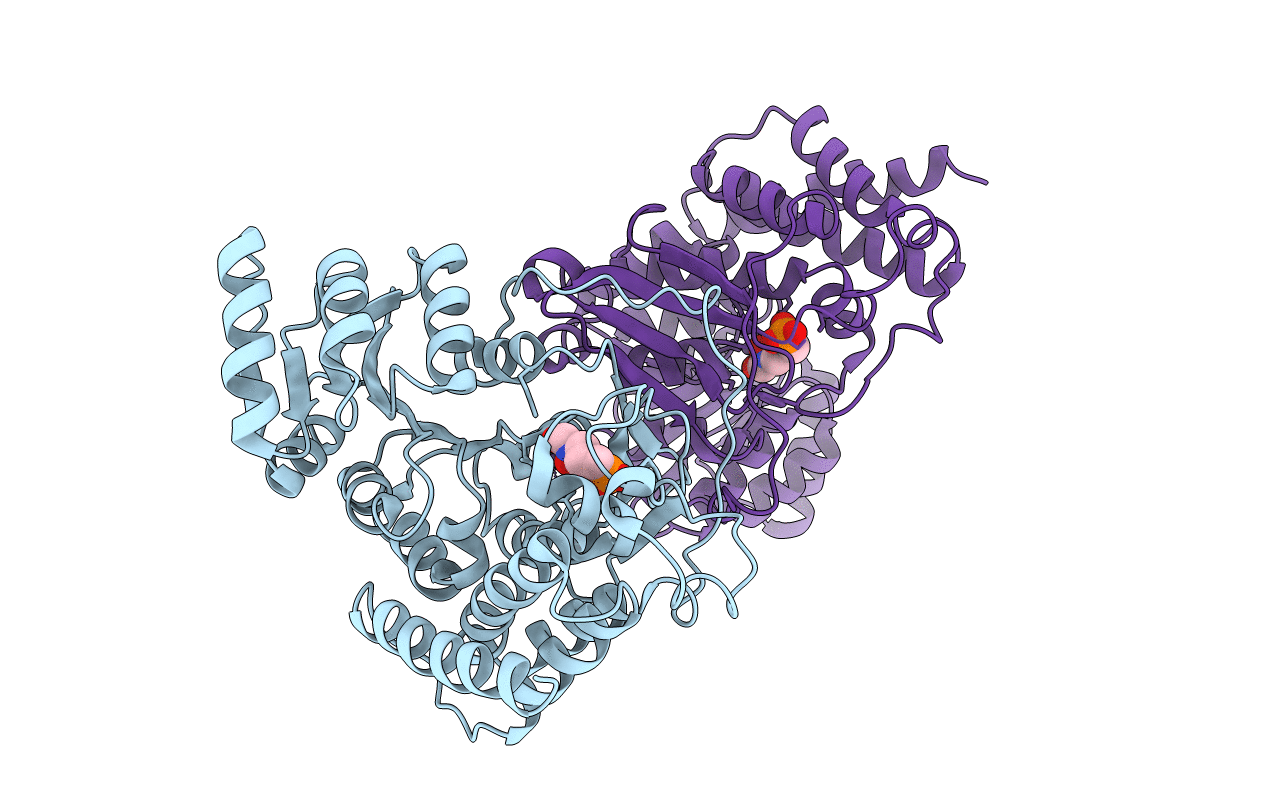
1ONP image
Deposition Date 2003-02-28
Release Date 2003-03-18
Last Version Date 2023-10-25
Entry Detail
PDB ID:
1ONP
Keywords:
Title:
IspC complex with Mn2+ and fosmidomycin
Biological Source:
Source Organism:
Escherichia coli (Taxon ID: 562)
Host Organism:
Method Details:
Experimental Method:
Resolution:
2.50 Å
R-Value Free:
0.33
R-Value Work:
0.25
R-Value Observed:
0.26
Space Group:
P 1 21 1
Macromolecular Entities
Structures with similar UniProt ID
Protein Blast
Polymer Type:polypeptide(L)
Molecule:1-deoxy-D-xylulose 5-phosphate reductoisomerase
Gene (Uniprot):dxr
Chain IDs:A, B
Chain Length:398
Number of Molecules:2
Biological Source:Escherichia coli
Primary Citation
Structural basis of fosmidomycin action revealed by the complex with 2-C-methyl-D-erythritol 4-phosphate synthase (IspC). Implications for the catalytic mechanism and anti-malaria drug development.
J.BIOL.CHEM. 278 18401 18407 (2003)
PMID: 12621040 DOI: 10.1074/jbc.M300993200

Abstact

2-C-Methyl-d-erythritol 4-phosphate synthase (IspC) is the first enzyme committed to isoprenoid biosynthesis in the methylerythritol phosphate pathway, which represents an alternative route to the classical mevalonate pathway. As it is present in many pathogens and plants, but not in man, this pathway has attracted considerable interest as a target for novel antibiotics and herbicides. Fosmidomycin represents a specific high-affinity inhibitor of IspC. Very recently, its anti-malaria activity in man has been demonstrated in clinical trials. Here, we present the crystal structure of Escherichia coli IspC in complex with manganese and fosmidomycin at 2.5 A resolution. The (N-formyl-N-hydroxy)amino group provides two oxygen ligands to manganese that is present in a distorted octahedral coordination, whereas the phosphonate group is anchored in a specific pocket by numerous hydrogen bonds. Both sites are connected by a spacer of three methylene groups. The substrate molecule, 1-d-deoxyxylulose 5-phosphate, can be superimposed onto fosmidomycin, explaining the stereochemical course of the reaction.

Legend

Protein

Chemical

Disease

Primary Citation of related structures
Feedback Form
Name
Email
Institute
Feedback