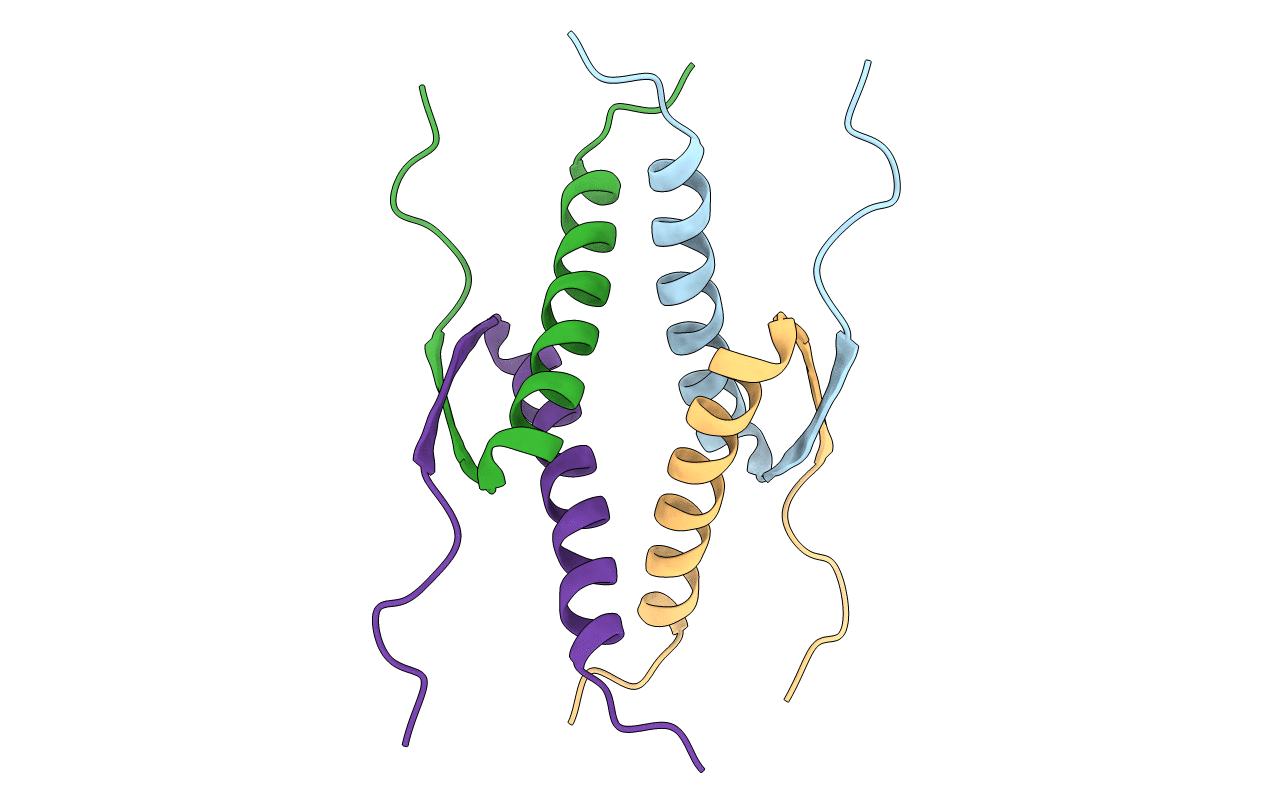
1OLG image
Deposition Date 1994-06-13
Release Date 1995-01-26
Last Version Date 2024-05-22
Entry Detail
PDB ID:
1OLG
Keywords:
Title:
HIGH-RESOLUTION SOLUTION STRUCTURE OF THE OLIGOMERIZATION DOMAIN OF P53 BY MULTI-DIMENSIONAL NMR
Biological Source:
Source Organism:
Homo sapiens (Taxon ID: 9606)
Method Details:
Experimental Method:
Conformers Submitted:
1
Macromolecular Entities
Structures with similar UniProt ID
Protein Blast
Polymer Type:polypeptide(L)
Molecule:TUMOR SUPPRESSOR P53 (OLIGOMERIZATION DOMAIN)
Gene (Uniprot):TP53
Chain IDs:A, B, C, D
Chain Length:42
Number of Molecules:4
Biological Source:Homo sapiens
Ligand Molecules
Primary Citation
High-resolution structure of the oligomerization domain of p53 by multidimensional NMR.
Science 265 386 391 (1994)
PMID: 8023159

Abstact

The three-dimensional structure of the oligomerization domain (residues 319 to 360) of the tumor suppressor p53 has been solved by multidimensional heteronuclear magnetic resonance (NMR) spectroscopy. The domain forms a 20-kilodalton symmetric tetramer with a topology made up from a dimer of dimers. The two primary dimers each comprise two antiparallel helices linked by an antiparallel beta sheet. One beta strand and one helix are contributed from each monomer. The interface between the two dimers forming the tetramer is mediated solely by helix-helix contacts. The overall result is a symmetric, four-helix bundle with adjacent helices oriented antiparallel to each other and with the two antiparallel beta sheets located on opposing faces of the molecule. The tetramer is stabilized not only by hydrophobic interactions within the protein core but also by a number of electrostatic interactions. The implications of the structure of the tetramer for the biological function of p53 are discussed.

Legend

Protein

Chemical

Disease

Primary Citation of related structures
Feedback Form
Name
Email
Institute
Feedback