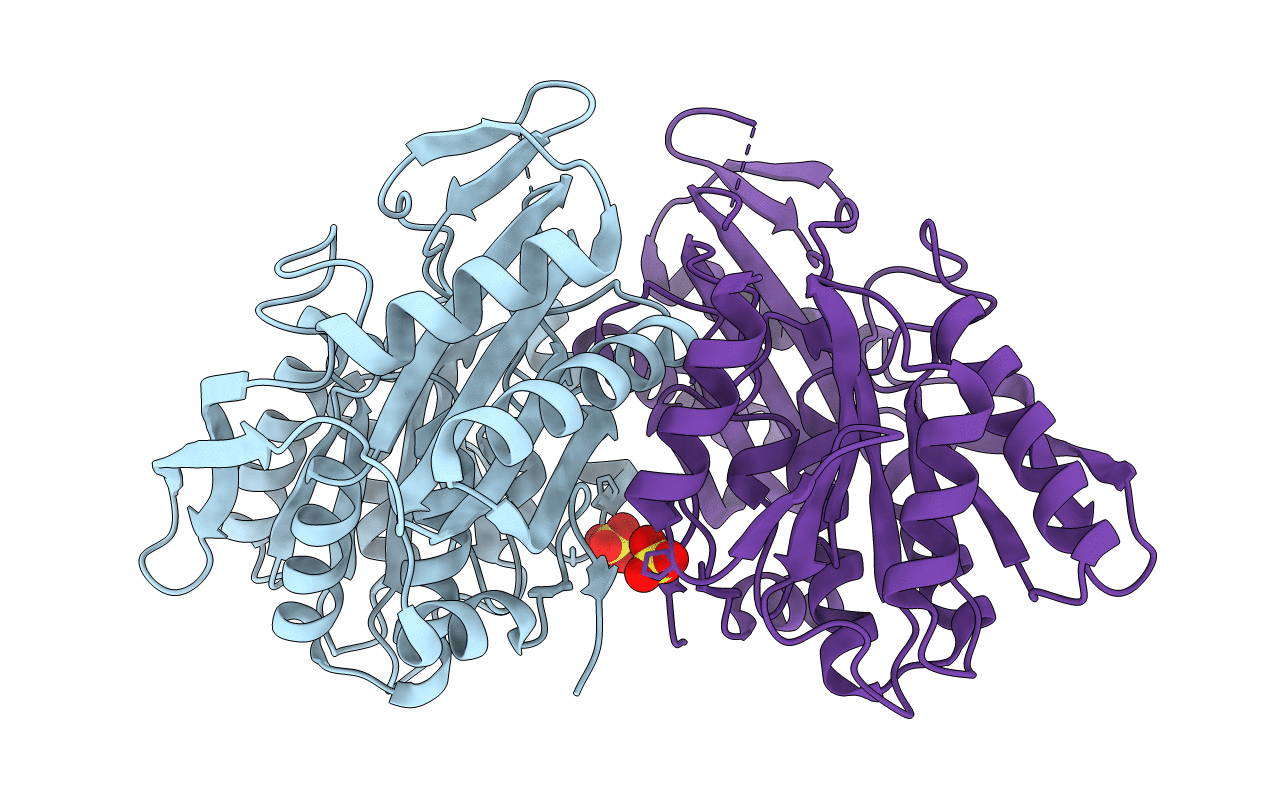
1OI3 image
Deposition Date 2003-06-04
Release Date 2003-07-14
Last Version Date 2024-05-08
Entry Detail
PDB ID:
1OI3
Keywords:
Title:
X-ray structure of the dihydroxyacetone kinase from Escherichia coli
Biological Source:
Source Organism:
ESCHERICHIA COLI (Taxon ID: 562)
Host Organism:
Method Details:
Experimental Method:
Resolution:
2.00 Å
R-Value Free:
0.23
R-Value Work:
0.18
R-Value Observed:
0.18
Space Group:
P 21 21 2
Macromolecular Entities
Structures with similar UniProt ID
Protein Blast
Polymer Type:polypeptide(L)
Molecule:HYPOTHETICAL PROTEIN YCGT
Gene (Uniprot):dhaK
Chain IDs:A, B
Chain Length:366
Number of Molecules:2
Biological Source:ESCHERICHIA COLI
Ligand Molecules
Primary Citation
A Mechanism of Covalent Substrate Binding in the X-Ray Structure of Subunit K of the Escherichia Coli Dihydroxyacetone Kinase
Proc.Natl.Acad.Sci.USA 100 8188 ? (2003)
PMID: 12813127 DOI: 10.1073/PNAS.0932787100

Abstact

Dihydroxyacetone (Dha) kinases are homologous proteins that use different phosphoryl donors, a multiphosphoryl protein of the phosphoenolpyruvate-dependent carbohydrate:phosphotransferase system in bacteria, ATP in animals, plants, and some bacteria. The Dha kinase of Escherichia coli consists of three subunits, DhaK and DhaL, which are colinear to the ATP-dependent Dha kinases of eukaryotes, and the multiphosphoryl protein DhaM. Here we show the crystal structure of the DhaK subunit in complex with Dha at 1.75 A resolution. DhaK is a homodimer with a fold consisting of two six-stranded mixed beta-sheets surrounded by nine alpha-helices and a beta-ribbon covering the exposed edge strand of one sheet. The core of the N-terminal domain has an alpha/beta fold common to subunits of carbohydrate transporters and transcription regulators of the phosphoenolpyruvate-dependent carbohydrate:phosphotransferase system. The core of the C-terminal domain has a fold similar to the C-terminal domain of the cell-division protein FtsZ. A molecule of Dha is covalently bound in hemiaminal linkage to the N epsilon 2 of His-230. The hemiaminal does not participate in covalent catalysis but is the chemical basis for discrimination between short-chain carbonyl compounds and polyols. Paralogs of Dha kinases occur in association with transcription regulators of the TetR/QacR and the SorC families, pointing to their biological role as sensors in signaling.

Legend

Protein

Chemical

Disease

Primary Citation of related structures
Feedback Form
Name
Email
Institute
Feedback