1OAG image
Deposition Date 2003-01-13
Release Date 2003-03-20
Last Version Date 2023-12-13
Entry Detail
PDB ID:
1OAG
Keywords:
Title:
Ascorbate peroxidase from soybean cytosol
Biological Source:
Source Organism:
GLYCINE MAX (Taxon ID: 3847)
Host Organism:
Method Details:
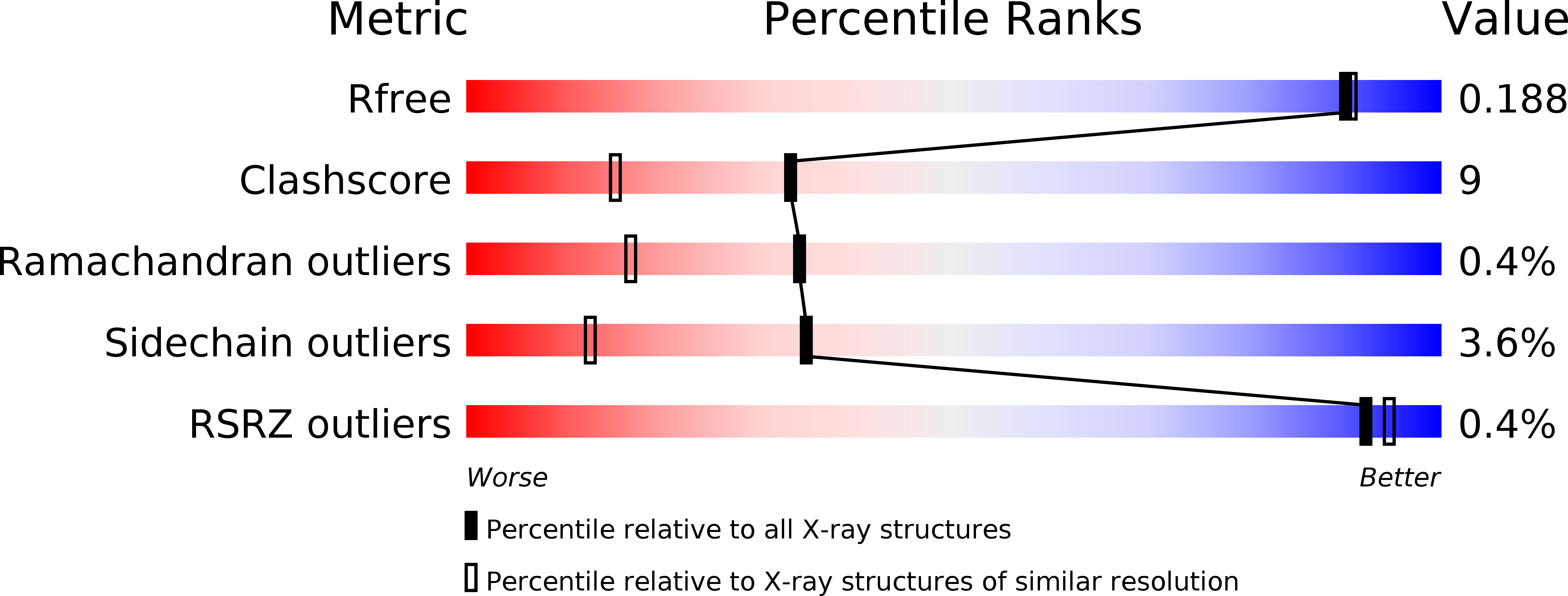
Experimental Method:
Resolution:
1.75 Å
R-Value Free:
0.17
R-Value Work:
0.14
R-Value Observed:
0.14
Space Group:
P 42 21 2
Macromolecular Entities
Structures with similar UniProt ID
Protein Blast
Polymer Type:polypeptide(L)
Molecule:ASCORBATE PEROXIDASE
Gene (Uniprot):apx1
Chain IDs:A
Chain Length:261
Number of Molecules:1
Biological Source:GLYCINE MAX
Primary Citation
Crystal Structure of the Ascorbate Peroxidase-Ascorbate Complex
Nat.Struct.Biol. 10 303 ? (2003)
PMID: 12640445 DOI: 10.1038/NSB913

Abstact

Heme peroxidases catalyze the H2O2-dependent oxidation of a variety of substrates, most of which are organic. Mechanistically, these enzymes are well characterized: they share a common catalytic cycle that involves formation of a two-electron, oxidized Compound I intermediate followed by two single-electron reduction steps by substrate. The substrate specificity is more diverse--most peroxidases oxidize small organic substrates, but there are prominent exceptions--and there is a notable absence of structural information for a representative peroxidase-substrate complex. Thus, the features that control substrate specificity remain undefined. We present the structure of the complex of ascorbate peroxidase-ascorbate. The structure defines the ascorbate-binding interaction for the first time and provides new rationalization of the unusual functional features of the related cytochrome c peroxidase enzyme, which has been a benchmark for peroxidase catalysis for more than 20 years. A new mechanism for electron transfer is proposed that challenges existing views of substrate oxidation in other peroxidases.

Legend

Protein

Chemical

Disease

Primary Citation of related structures
Feedback Form
Name
Email
Institute
Feedback