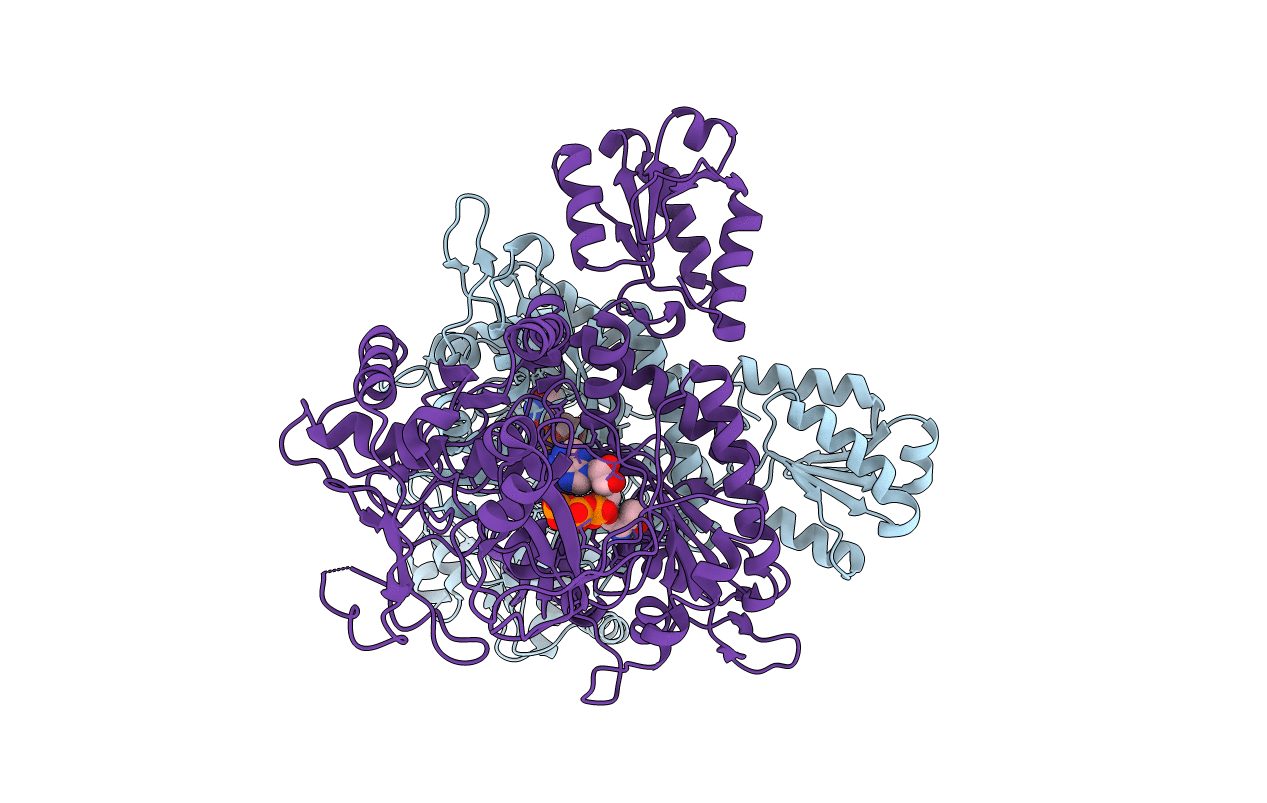
1NYR image
Deposition Date 2003-02-13
Release Date 2003-10-28
Last Version Date 2023-08-16
Entry Detail
PDB ID:
1NYR
Keywords:
Title:
Structure of Staphylococcus aureus threonyl-tRNA synthetase complexed with ATP
Biological Source:
Source Organism:
Method Details:
Experimental Method:
Resolution:
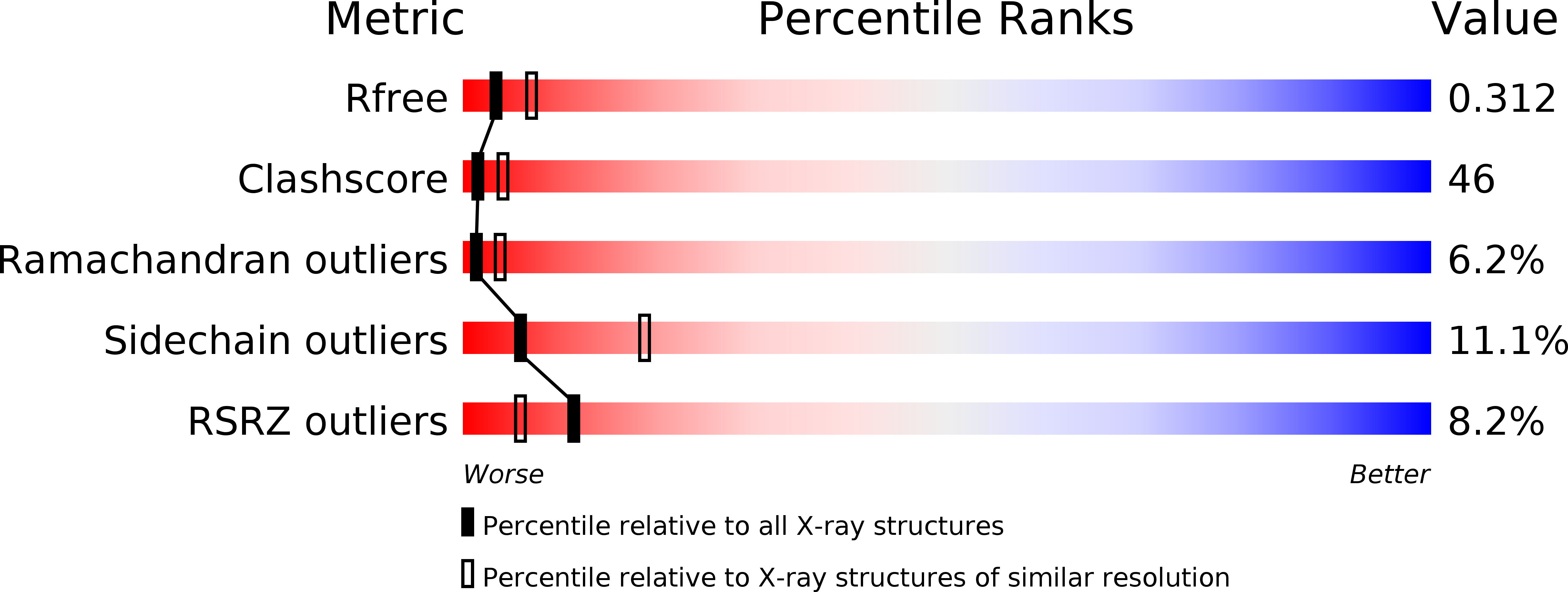
2.80 Å
R-Value Free:
0.31
R-Value Work:
0.23
R-Value Observed:
0.23
Space Group:
P 21 21 21
Macromolecular Entities
Structures with similar UniProt ID
Protein Blast
Polymer Type:polypeptide(L)
Molecule:threonyl-tRNA synthetase 1
Gene (Uniprot):thrS
Chain IDs:A, B
Chain Length:645
Number of Molecules:2
Biological Source:Staphylococcus aureus
Primary Citation
Conformational movements and cooperativity upon amino acid, ATP and tRNA binding in threonyl-tRNA synthetase
J.Mol.Biol. 331 201 211 (2003)
PMID: 12875846 DOI: 10.1016/S0022-2836(03)00719-8

Abstact

The crystal structures of threonyl-tRNA synthetase (ThrRS) from Staphylococcus aureus, with ATP and an analogue of threonyl adenylate, are described. Together with the previously determined structures of Escherichia coli ThrRS with different substrates, they allow a comprehensive analysis of the effect of binding of all the substrates: threonine, ATP and tRNA. The tRNA, by inserting its acceptor arm between the N-terminal domain and the catalytic domain, causes a large rotation of the former. Within the catalytic domain, four regions surrounding the active site display significant conformational changes upon binding of the different substrates. The binding of threonine induces the movement of as much as 50 consecutive amino acid residues. The binding of ATP triggers a displacement, as large as 8A at some C(alpha) positions, of a strand-loop-strand region of the core beta-sheet. Two other regions move in a cooperative way upon binding of threonine or ATP: the motif 2 loop, which plays an essential role in the first step of the aminoacylation reaction, and the ordering loop, which closes on the active site cavity when the substrates are in place. The tRNA interacts with all four mobile regions, several residues initially bound to threonine or ATP switching to a position in which they can contact the tRNA. Three such conformational switches could be identified, each of them in a different mobile region. The structural analysis suggests that, while the small substrates can bind in any order, they must be in place before productive tRNA binding can occur.

Legend

Protein

Chemical

Disease

Primary Citation of related structures
Feedback Form
Name
Email
Institute
Feedback