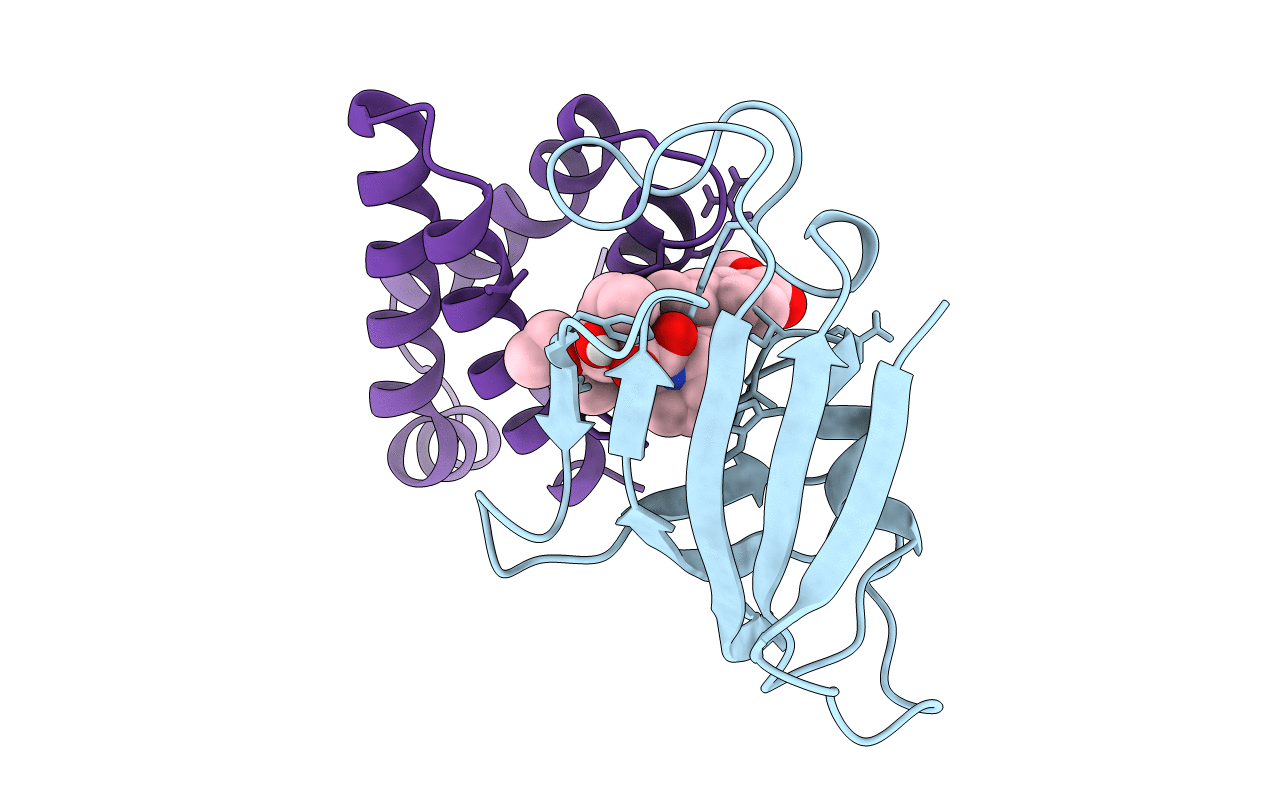
1NSG image
Deposition Date 1997-07-01
Release Date 1998-03-18
Last Version Date 2024-02-14
Entry Detail
PDB ID:
1NSG
Title:
THE STRUCTURE OF THE IMMUNOPHILIN-IMMUNOSUPPRESSANT FKBP12-RAPAMYCIN COMPLEX INTERACTING WITH HUMAN FRAP
Biological Source:
Source Organism:
Homo sapiens (Taxon ID: 9606)
Host Organism:
Method Details:
Experimental Method:
Resolution:
2.20 Å
R-Value Free:
0.26
R-Value Work:
0.19
R-Value Observed:
0.19
Space Group:
P 21 21 21
Macromolecular Entities
Structures with similar UniProt ID
Protein Blast
Polymer Type:polypeptide(L)
Molecule:FK506-BINDING PROTEIN
Gene (Uniprot):FKBP1A
Chain IDs:A
Chain Length:107
Number of Molecules:1
Biological Source:Homo sapiens
Structures with similar UniProt ID
Protein Blast
Polymer Type:polypeptide(L)
Molecule:FKBP-RAPAMYCIN ASSOCIATED PROTEIN (FRAP)
Gene (Uniprot):MTOR
Chain IDs:B
Chain Length:94
Number of Molecules:1
Biological Source:Homo sapiens
Ligand Molecules
Primary Citation
Refined structure of the FKBP12-rapamycin-FRB ternary complex at 2.2 A resolution.
Acta Crystallogr.,Sect.D 55 736 744 (1999)
PMID: 10089303 DOI: 10.1107/S0907444998014747

Abstact

The structure of the FKBP12-rapamycin-FRB ternary complex has now been refined at 2.2 A resolution. The cell-cycle arrest agent rapamycin binds FK506-binding protein (FKBP12) and the FKBP12-rapamycin binding (FRB) domain of FKBP12-rapamycin associated protein (FRAP) simultaneously, and the inhibition of FRAP is responsible for rapamycin's biological activity. The conformation of rapamycin in the ternary complex is very similar to that observed in the FKBP12-rapamycin binary complex, with an r.m.s. difference of only 0.30 A. However, a slight (9 degrees ) rotation repositions the FRB-binding face of rapamycin in the ternary complex. There are extensive rapamycin-protein interactions and relatively few interactions between the two protein partners FKBP12 and FRB, these interactions mainly involving residues in the 40s and 80s loops of FKBP12 and alpha1 and alpha4 of FRB. The high-resolution refinement has revealed the crucial role of several buried waters in the formation of the ternary complex.

Legend

Protein

Chemical

Disease

Primary Citation of related structures
Feedback Form
Name
Email
Institute
Feedback