1NPE image
Deposition Date 2003-01-17
Release Date 2003-08-12
Last Version Date 2024-10-16
Entry Detail
PDB ID:
1NPE
Title:
Crystal structure of Nidogen/Laminin Complex
Biological Source:
Source Organism:
Mus musculus (Taxon ID: 10090)
Host Organism:
Method Details:
Experimental Method:
Resolution:
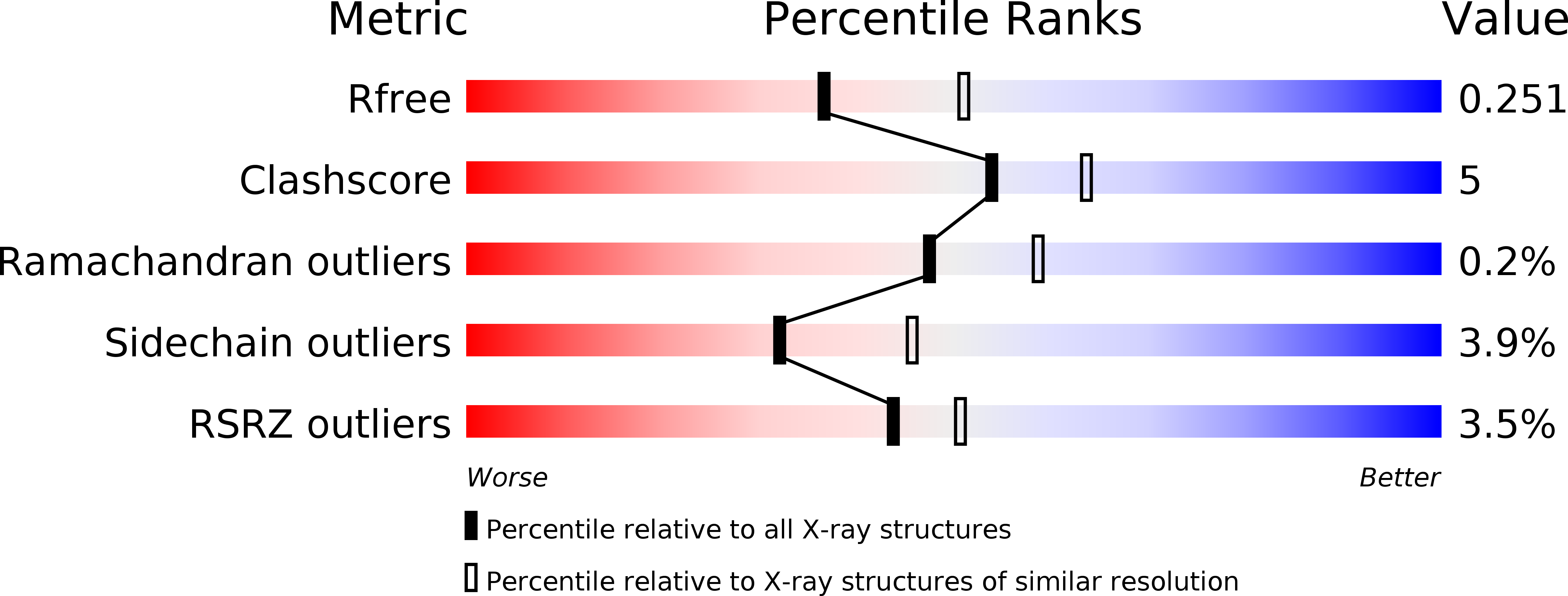
2.30 Å
R-Value Free:
0.25
R-Value Work:
0.22
Space Group:
P 21 21 21
Macromolecular Entities
Structures with similar UniProt ID
Protein Blast
Polymer Type:polypeptide(L)
Molecule:nidogen
Gene (Uniprot):Lamc1
Chain IDs:A
Chain Length:267
Number of Molecules:1
Biological Source:Mus musculus
Structures with similar UniProt ID
Protein Blast
Polymer Type:polypeptide(L)
Molecule:Laminin gamma-1 chain
Gene (Uniprot):Nid1
Chain IDs:B
Chain Length:164
Number of Molecules:1
Biological Source:Mus musculus
Ligand Molecules
Primary Citation
Complex between nidogen and laminin fragments reveals a paradigmatic beta-propeller interface
Nature 424 969 974 (2003)
PMID: 12931195 DOI: 10.1038/nature01873

Abstact

Basement membranes are fundamental to tissue organization and physiology in all metazoans. The interaction between laminin and nidogen is crucial to the assembly of basement membranes. The structure of the interacting domains reveals a six-bladed Tyr-Trp-Thr-Asp (YWTD) beta-propeller domain in nidogen bound to laminin epidermal-growth-factor-like (LE) modules III3-5 in laminin (LE3-5). Laminin LE module 4 binds to an amphitheatre-shaped surface on the pseudo-6-fold axis of the beta-propeller, and LE module 3 binds over its rim. A Phe residue that shutters the water-filled central aperture of the beta-propeller, the rigidity of the amphitheatre, and high shape complementarity enable the construction of an evolutionarily conserved binding surface for LE4 of unprecedentedly high affinity for its small size. Hypermorphic mutations in the Wnt co-receptor LRP5 (refs 6-9) suggest that a similar YWTD beta-propeller interface is used to bind ligands that function in developmental pathways. A related interface, but shifted off-centre from the pseudo-6-fold axis and lacking the shutter over the central aperture, is used in the low-density lipoprotein receptor for an intramolecular interaction that is regulated by pH in receptor recycling.

Legend

Protein

Chemical

Disease

Primary Citation of related structures
Feedback Form
Name
Email
Institute
Feedback