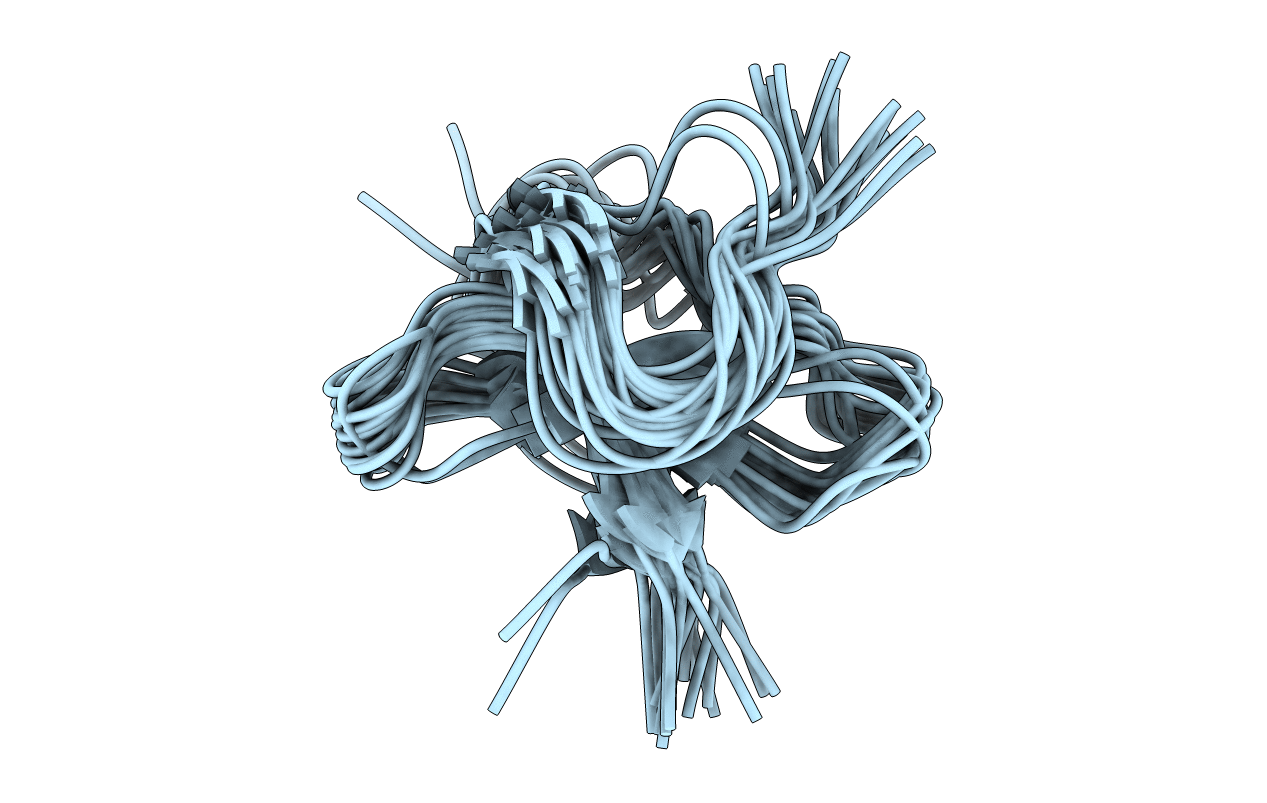
1NIY image
Deposition Date 2002-12-30
Release Date 2003-01-14
Last Version Date 2024-10-30
Entry Detail
PDB ID:
1NIY
Keywords:
Title:
THREE DIMENSIONAL SOLUTION STRUCTURE OF HAINANTOXIN-IV BY 2D 1H-NMR
Biological Source:
Source Organism:
Method Details:
Experimental Method:
Conformers Calculated:
50
Conformers Submitted:
20
Selection Criteria:
structures with the lowest energy

Macromolecular Entities
Structures with similar UniProt ID
Protein Blast
Polymer Type:polypeptide(L)
Molecule:HAINANTOXIN-IV
Chain IDs:A
Chain Length:36
Number of Molecules:1
Biological Source:Ornithoctonus hainana
Ligand Molecules
Primary Citation
Structure-Activity Relationships of Hainantoxin-IV and Structure Determination of Active and Inactive Sodium Channel Blockers.
J.Biol.Chem. 279 37734 37740 (2004)
PMID: 15201273 DOI: 10.1074/jbc.M405765200

Abstact

Hainantoxin-IV (HNTX-IV) can specifically inhibit the neuronal tetrodotoxin-sensitive sodium channels and defines a new class of depressant spider toxin. The sequence of native HNTX-IV is ECLGFGKGCNPSNDQCCKSSNLVCSRKHRWCKYEI-NH(2). In the present study, to obtain further insight into the primary and tertiary structural requirements of neuronal sodium channel blockers, we determined the solution structure of HNTX-IV as a typical inhibitor cystine knot motif and synthesized four mutants designed based on the predicted sites followed by structural elucidation of two inactive mutants. Pharmacological studies indicated that the S12A and R26A mutants had activities near that of native HNTX-IV, while K27A and R29A demonstrated activities reduced by 2 orders of magnitude. (1)H MR analysis showed the similar molecular conformations for native HNTX-IV and four synthetic mutants. Furthermore, in the determined structures of K27A and R29A, the side chains of residues 27 and 29 were located in the identical spatial position to those of native HNTX-IV. These results suggested that residues Ser(12), Arg(26), Lys(27), and Arg(29) were not responsible for stabilizing the distinct conformation of HNTX-IV, but Lys(27) and Arg(29) were critical for the bioactivities. The potency reductions produced by Ala substitutions were primarily due to the direct interaction of the essential residues Lys(27) and Arg(29) with sodium channels rather than to a conformational change. After comparison of these structures and activities with correlated toxins, we hypothesized that residues Lys(27), Arg(29), His(28), Lys(32), Phe(5), and Trp(30) clustered on one face of HNTX-IV were responsible for ligand binding.

Legend

Protein

Chemical

Disease

Primary Citation of related structures
Feedback Form
Name
Email
Institute
Feedback