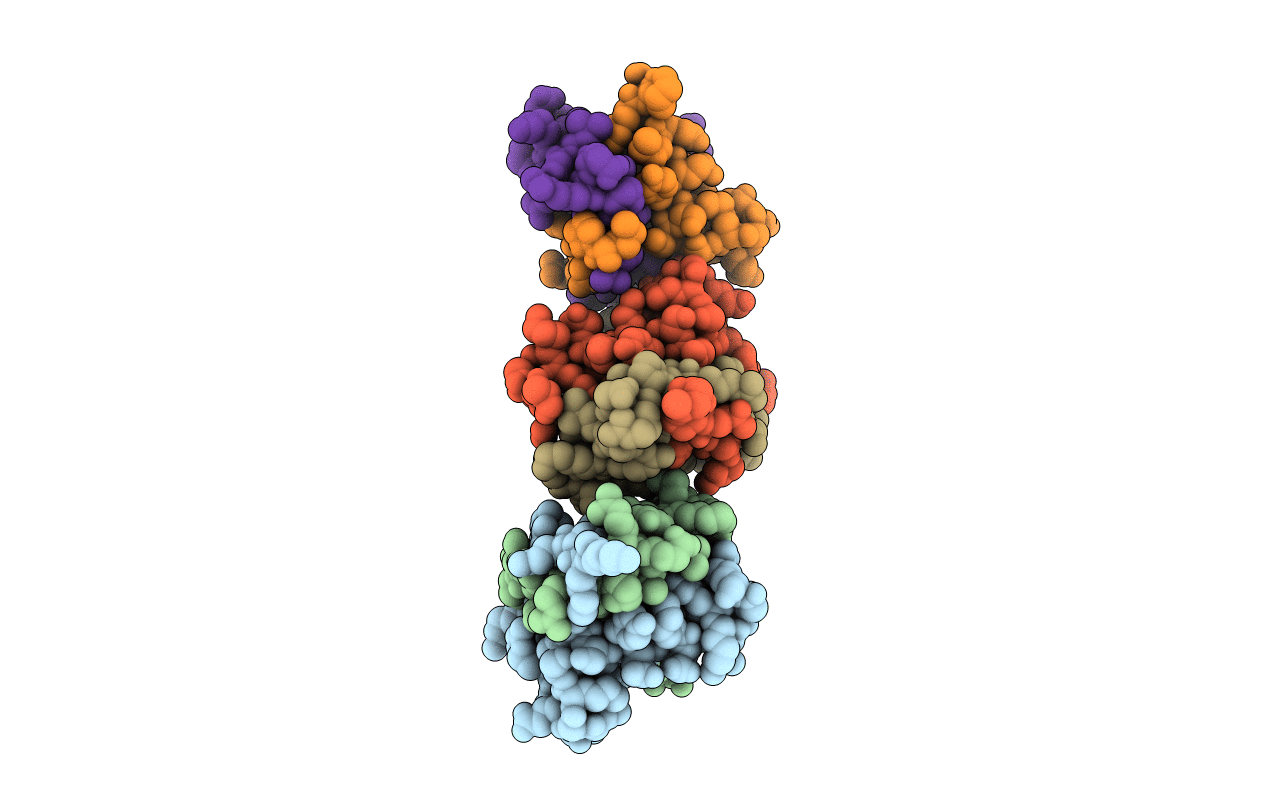
1MYL image
Deposition Date 1994-10-06
Release Date 1995-01-26
Last Version Date 2024-02-14
Entry Detail
PDB ID:
1MYL
Title:
SUBSTITUTING HYDROPHOBIC RESIDUES FOR A BURIED SALT BRIDGE ENHANCES PROTEIN STABILITY BUT DOES NOT REDUCE CONFORMATIONAL SPECIFICITY
Biological Source:
Source Organism:
Host Organism:
Method Details:
Experimental Method:
Resolution:
2.40 Å
R-Value Free:
0.29
R-Value Work:
0.20
R-Value Observed:
0.20
Space Group:
P 1 21 1
Macromolecular Entities
Structures with similar UniProt ID
Protein Blast
Polymer Type:polypeptide(L)
Molecule:ARC REPRESSOR
Gene (Uniprot):arc
Chain IDs:A, B, C, D, E, F
Chain Length:53
Number of Molecules:6
Biological Source:Enterobacteria phage P22
Primary Citation
Are buried salt bridges important for protein stability and conformational specificity?
Nat.Struct.Biol. 2 122 128 (1995)
PMID: 7749916 DOI: 10.1038/nsb0295-122

Abstact

The side chains of Arg 31, Glu 36 and Arg 40 in Arc repressor form a buried salt-bridge triad. The entire salt-bridge network can be replaced by hydrophobic residues in combinatorial randomization experiments resulting in active mutants that are significantly more stable than wild type. The crystal structure of one mutant reveals that the mutant side chains pack against each other in an otherwise wild-type fold. Thus, simple hydrophobic interactions provide more stabilizing energy than the buried salt bridge and confer comparable conformational specificity.

Legend

Protein

Chemical

Disease

Primary Citation of related structures
Feedback Form
Name
Email
Institute
Feedback