1MML image
Deposition Date 1995-07-18
Release Date 1995-10-15
Last Version Date 2024-02-14
Entry Detail
PDB ID:
1MML
Title:
MECHANISTIC IMPLICATIONS FROM THE STRUCTURE OF A CATALYTIC FRAGMENT OF MMLV REVERSE TRANSCRIPTASE
Biological Source:
Source Organism:
Host Organism:
Method Details:
Experimental Method:
Resolution:
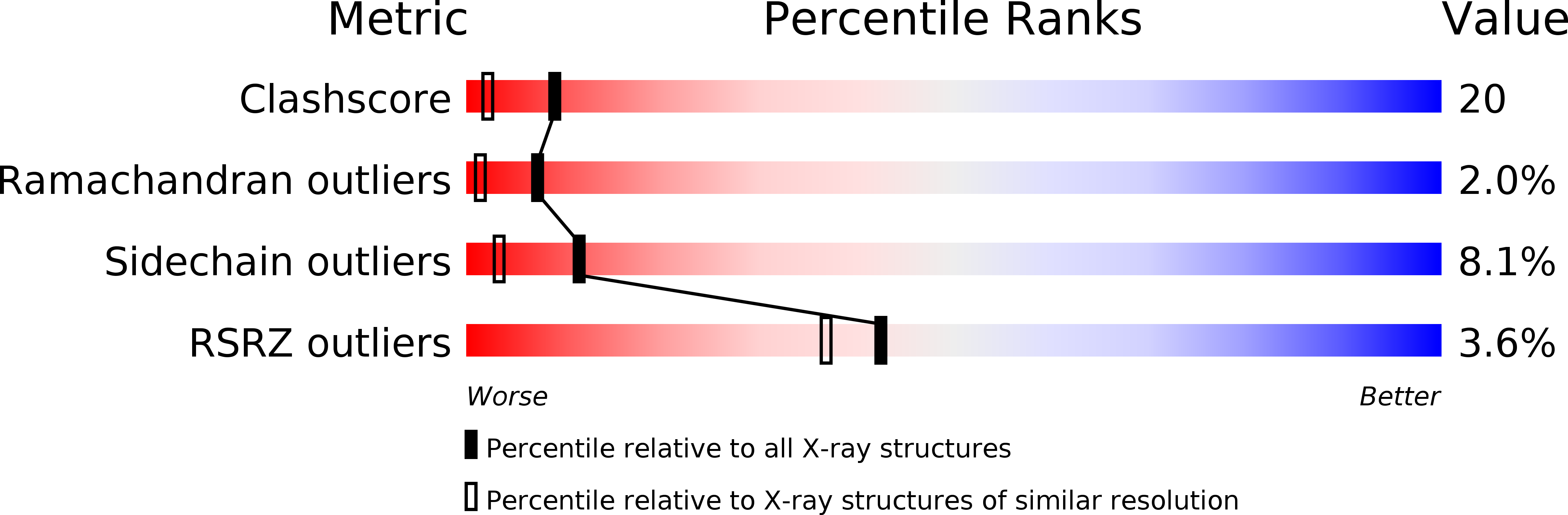
1.80 Å
R-Value Free:
0.25
R-Value Observed:
0.19
Space Group:
P 32 2 1
Macromolecular Entities
Structures with similar UniProt ID
Protein Blast
Polymer Type:polypeptide(L)
Molecule:MMLV REVERSE TRANSCRIPTASE
Gene (Uniprot):gag-pol
Chain IDs:A
Chain Length:265
Number of Molecules:1
Biological Source:Moloney murine leukemia virus
Primary Citation
Mechanistic implications from the structure of a catalytic fragment of Moloney murine leukemia virus reverse transcriptase.
Structure 3 879 892 (1995)
PMID: 8535782 DOI: 10.1016/S0969-2126(01)00223-4

Abstact

BACKGROUND Reverse transcriptase (RT) converts the single-stranded RNA genome of a retrovirus into a double-stranded DNA copy for integration into the host genome. This process requires ribonuclease H as well as RNA- and DNA-directed DNA polymerase activities. Although the overall organization of HIV-1 RT is known from previously reported crystal structures, no structure of a complex including a metal ion, which is essential for its catalytic activity, has been reported. RESULTS Here we describe the structures at 1.8 Angstrum resolution of a catalytically active fragment of RT from Moloney murine leukemia virus (MMLV) and at 2.6 Angstrum of a complex of this fragment with Mn2+ coordinated in the polymerase active site. On the basis of similarities with HIV-1 RT and rat DNA polymerase beta, we have modeled template/primer and deoxyribonucleoside 5'-triphosphate substrates into the MMLV RT structure. CONCLUSIONS Our model, in the context of the disposition of evolutionarily conserved residues seen here at high resolution, provides new insights into the mechanisms of catalysis, fidelity, processivity and discrimination between deoxyribose and ribose nucleotides.

Legend

Protein

Chemical

Disease

Primary Citation of related structures
Feedback Form
Name
Email
Institute
Feedback