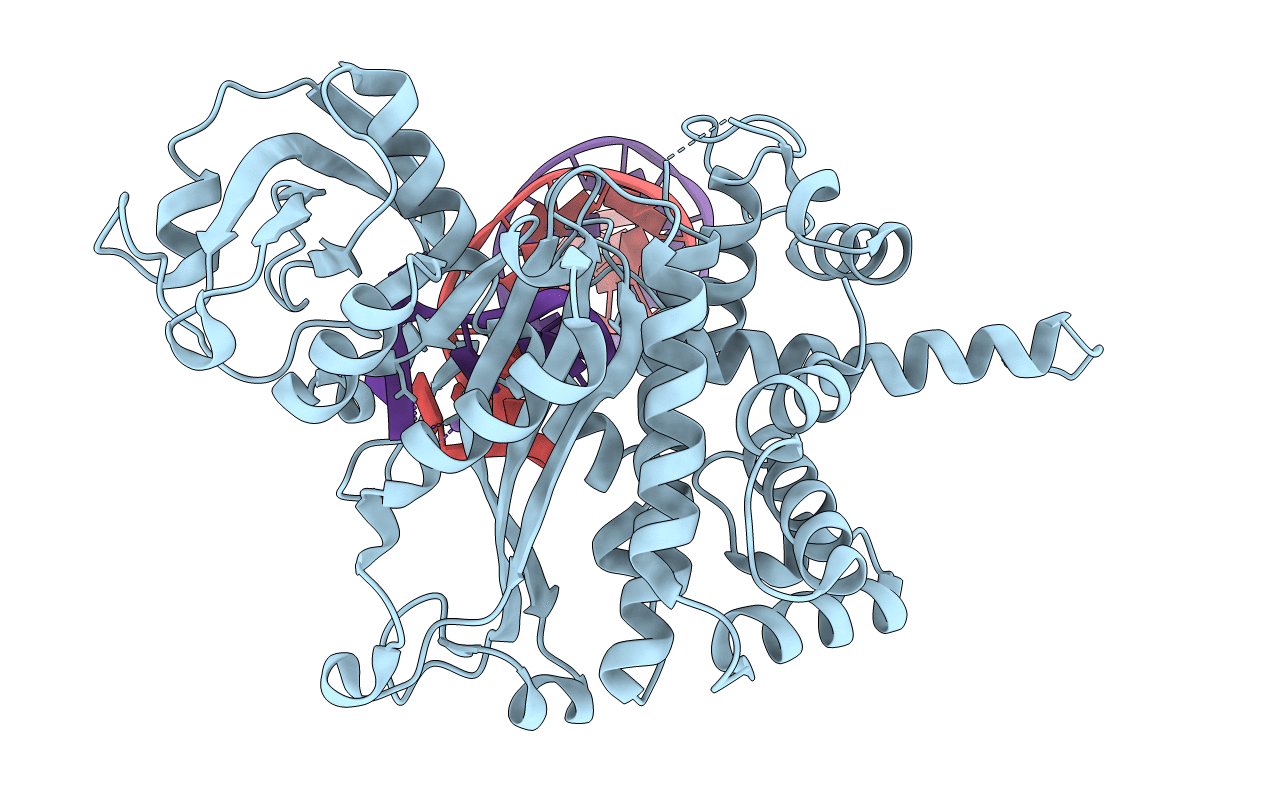
1MM8 image
Deposition Date 2002-09-03
Release Date 2002-12-13
Last Version Date 2024-02-14
Entry Detail
PDB ID:
1MM8
Title:
Crystal structure of Tn5 Transposase complexed with ME DNA
Biological Source:
Source Organism:
Escherichia coli (Taxon ID: 562)
Host Organism:
Method Details:
Experimental Method:
Resolution:
2.80 Å
R-Value Free:
0.27
R-Value Work:
0.21
Space Group:
P 65 2 2
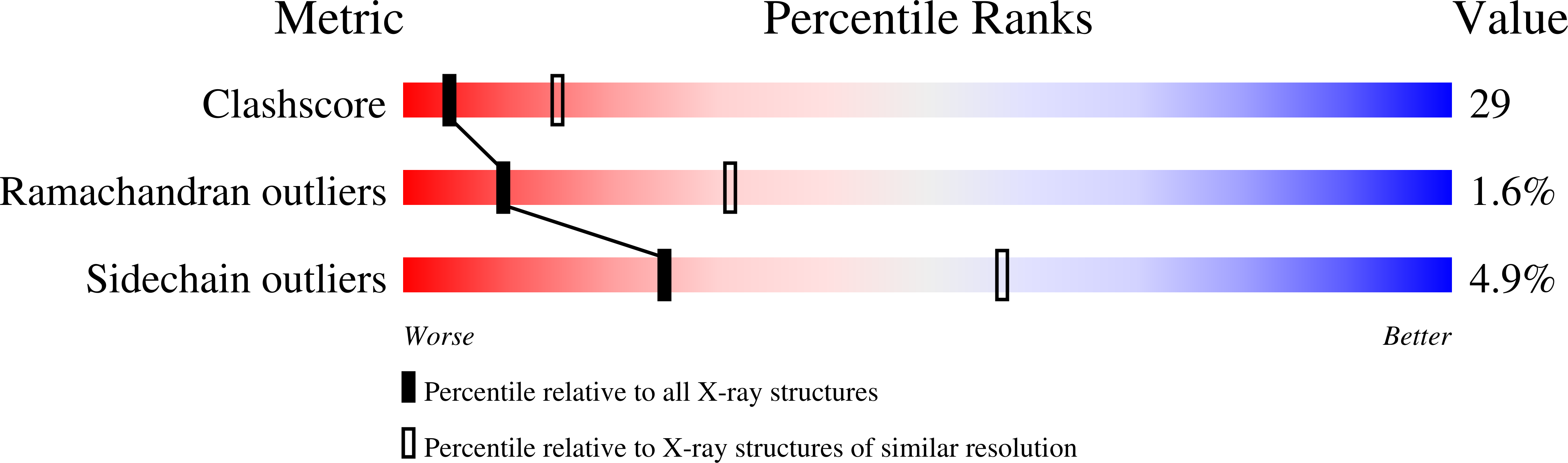
Macromolecular Entities
Structures with similar UniProt ID
Protein Blast
Polymer Type:polypeptide(L)
Molecule:Tn5 Transposase
Gene (Uniprot):tnpA
Mutagens:E58K, M60A, E349K, L376P
Chain IDs:C (auth: A)
Chain Length:481
Number of Molecules:1
Biological Source:Escherichia coli
Polymer Type:polydeoxyribonucleotide
Molecule:ME DNA transferred strand
Chain IDs:A (auth: B)
Chain Length:20
Number of Molecules:1
Biological Source:
Polymer Type:polydeoxyribonucleotide
Molecule:ME DNA non-transferred strand
Chain IDs:B (auth: C)
Chain Length:20
Number of Molecules:1
Biological Source:
Ligand Molecules
Primary Citation
Evidence for "unseen" Transposase--DNA contacts
J.Mol.Biol. 322 971 982 (2002)
PMID: 12367522 DOI: 10.1016/S0022-2836(02)00877-X

Abstact

In this study, evidence of novel, important interactions between a hyperactive Tn5 transposon recognition end sequence and hyperactive Tn5 transposase (Tnp) are presented. A hyperactive Tn5 end sequence, the mosaic end (ME), was isolated previously. The ME and a wild-type end sequence, the outside end (OE), differ at only three positions, yet transposition on the ME is tenfold higher than on the OE in vivo. Also, transposition on the ME is much more efficient than transposition on the OE in vitro. Here, we show that the decreased activity observed for the OE is caused by a defect in paired ends complex (PEC) formation resulting from the orientation of the A-T base-pair at position 4 of this end. Efficient PEC formation requires an interaction between the C5-methyl group (C5-Me) on the non-transferred strand thymine base at position 4 (T4) and Tnp. PEC formation on nicked substrates is much less affected by the orientation of the A-T base-pair at position 4, indicating that the C5-Me group is important only for steps preceding nicking. A recently determined co-crystal structure of Tn5 Tnp with the ME is discussed and a model explaining possible roles for the base-pair at position 4 is explored.

Legend

Protein

Chemical

Disease

Primary Citation of related structures
Feedback Form
Name
Email
Institute
Feedback