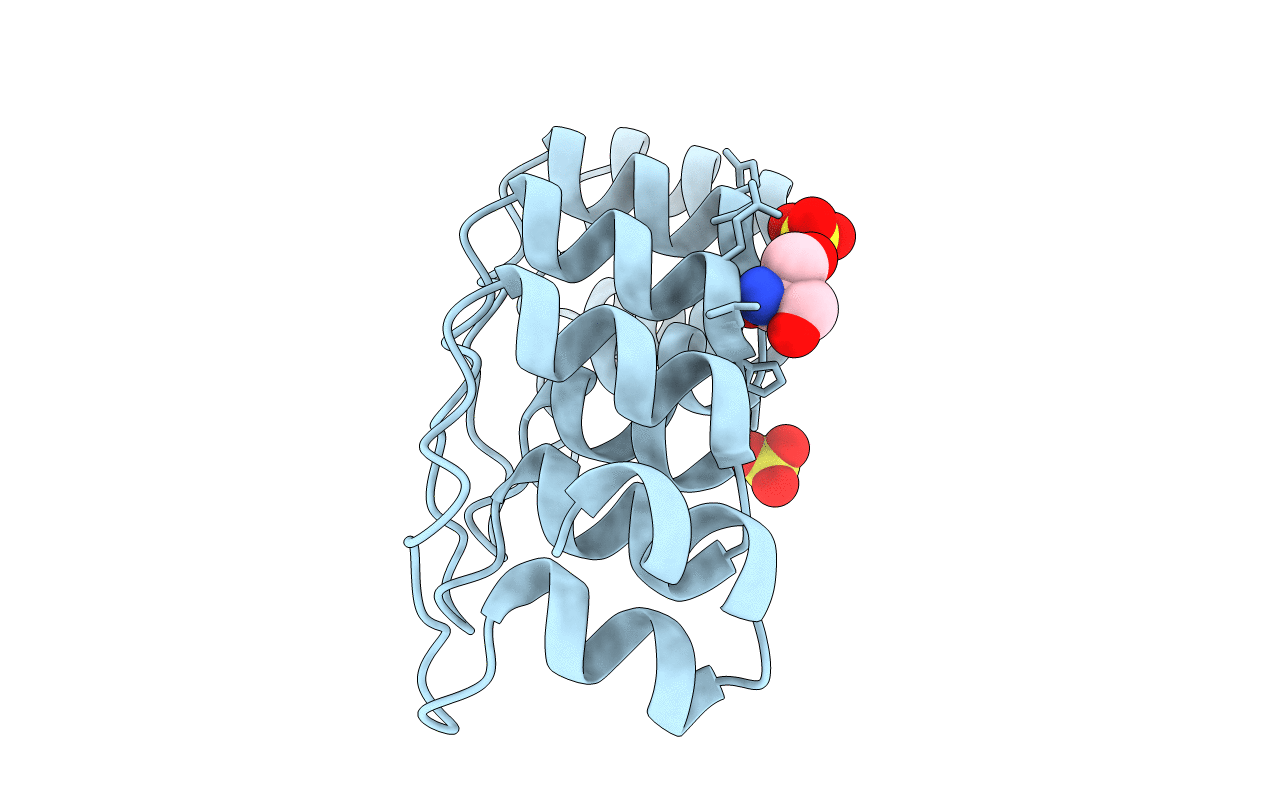
1MJ0 image
Deposition Date 2002-08-26
Release Date 2003-01-21
Last Version Date 2024-12-25
Entry Detail
PDB ID:
1MJ0
Keywords:
Title:
SANK E3_5: an artificial Ankyrin repeat protein
Biological Source:
Source Organism:
Host Organism:
Method Details:
Experimental Method:
Resolution:
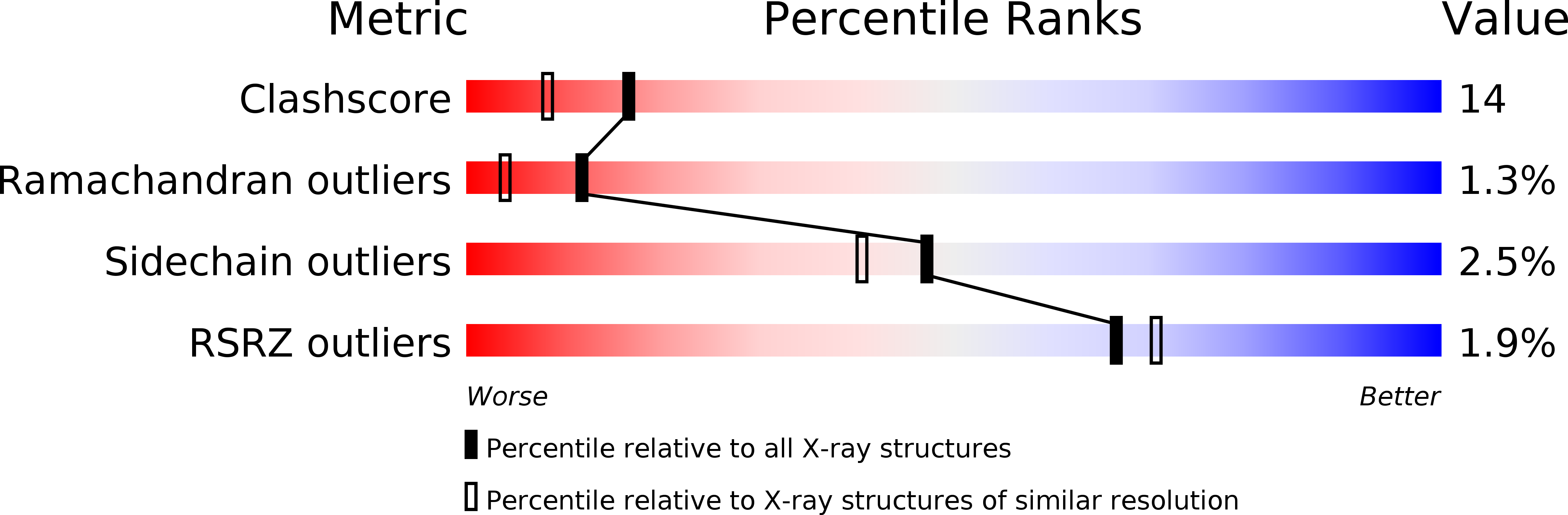
2.03 Å
R-Value Free:
0.22
R-Value Work:
0.17
R-Value Observed:
0.18
Space Group:
P 21 21 2
Macromolecular Entities
Polymer Type:polypeptide(L)
Molecule:SANK E3_5 Protein
Chain IDs:A
Chain Length:166
Number of Molecules:1
Biological Source:Designed synthetic gene
Primary Citation
Designed to be stable: Crystal structure of a consensus ankyrin repeat protein
Proc.Natl.Acad.Sci.USA 100 1700 1705 (2003)
PMID: 12566564 DOI: 10.1073/pnas.0337680100

Abstact

Ankyrin repeat (AR) proteins mediate innumerable protein-protein interactions in virtually all phyla. This finding suggested the use of AR proteins as designed binding molecules. Based on sequence and structural analyses, we designed a consensus AR with fixed framework and randomized interacting residues. We generated several combinatorial libraries of AR proteins consisting of defined numbers of this repeat. Randomly chosen library members are expressed in soluble form in the cytoplasm of Escherichia coli constituting up to 30% of total cellular protein and show high thermodynamic stability. We determined the crystal structure of one of those library members to 2.0-A resolution, providing insight into the consensus AR fold. Besides the highly complementary hydrophobic repeat-repeat interfaces and the absence of structural irregularities in the consensus AR protein, the regular and extended hydrogen bond networks in the beta-turn and loop regions are noteworthy. Furthermore, all residues found in the turn region of the Ramachandran plot are glycines. Many of these features also occur in natural AR proteins, but not in this rigorous and standardized fashion. We conclude that the AR domain fold is an intrinsically very stable and well-expressed scaffold, able to display randomized interacting residues. This scaffold represents an excellent basis for the design of novel binding molecules.

Legend

Protein

Chemical

Disease

Primary Citation of related structures
Feedback Form
Name
Email
Institute
Feedback