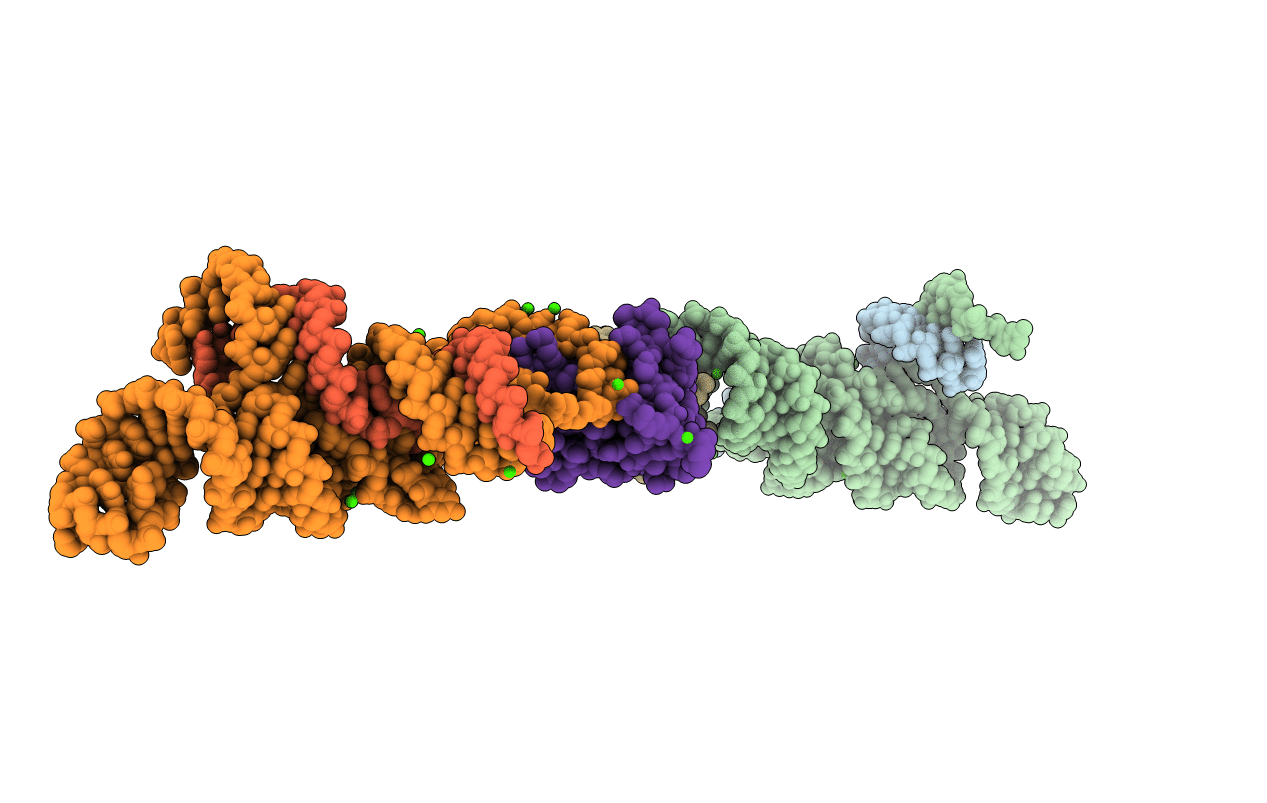
1M5O image
Deposition Date 2002-07-09
Release Date 2002-10-12
Last Version Date 2024-02-14
Entry Detail
PDB ID:
1M5O
Keywords:
Title:
Transition State Stabilization by a Catalytic RNA
Biological Source:
Source Organism:
Homo sapiens (Taxon ID: 9606)
Host Organism:
Method Details:
Experimental Method:
Resolution:
2.20 Å
R-Value Free:
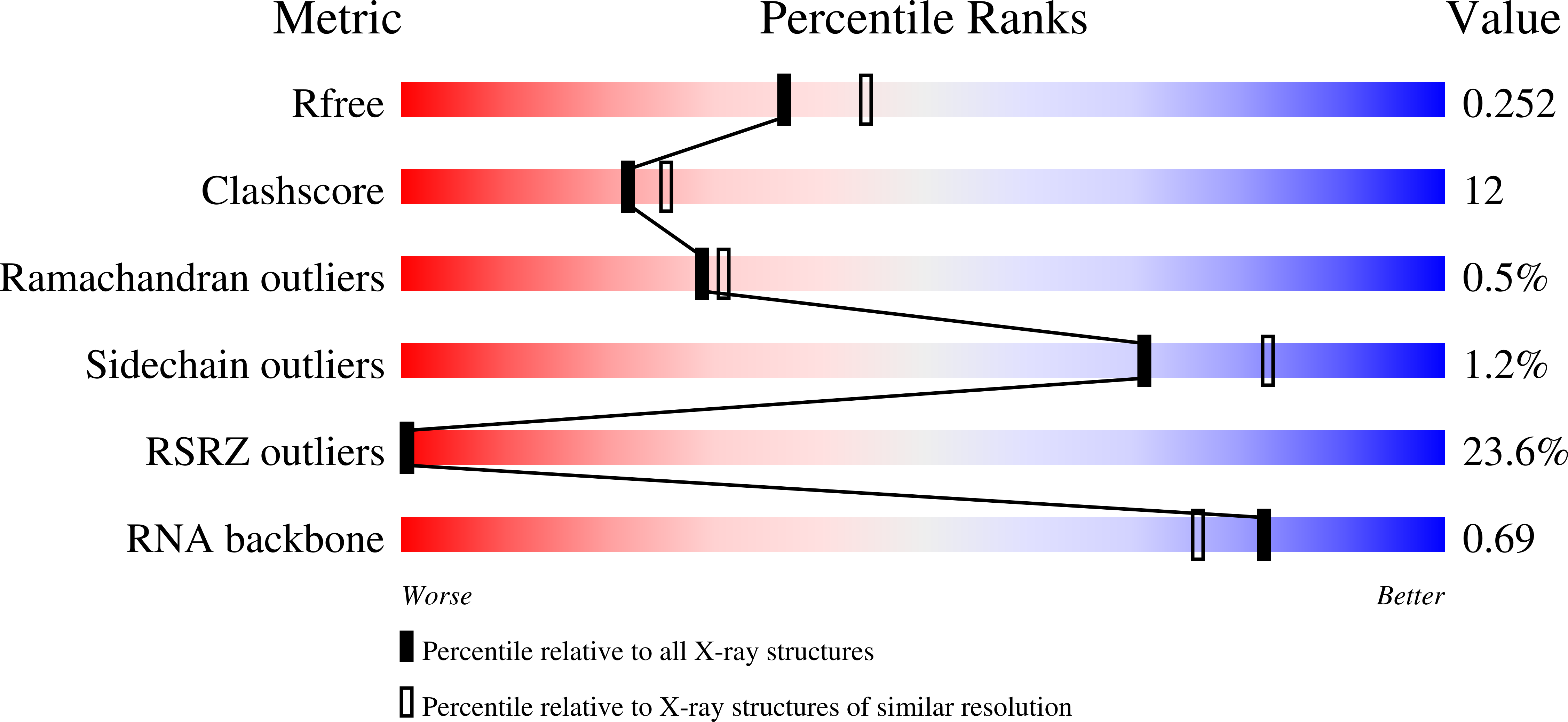
0.26
R-Value Work:
0.22
R-Value Observed:
0.22
Space Group:
C 1 2 1
Macromolecular Entities
Polymer Type:polyribonucleotide
Molecule:RNA SUBSTRATE
Chain IDs:A, C (auth: D)
Chain Length:21
Number of Molecules:2
Biological Source:
Polymer Type:polyribonucleotide
Molecule:RNA HAIRPIN RIBOZYME
Chain IDs:B, D (auth: E)
Chain Length:92
Number of Molecules:2
Biological Source:
Structures with similar UniProt ID
Protein Blast
Polymer Type:polypeptide(L)
Molecule:U1 SMALL NUCLEAR RIBONUCLEOPROTEIN A
Gene (Uniprot):SNRPA
Mutagens:Y31H,Q36R
Chain IDs:E (auth: C), F
Chain Length:100
Number of Molecules:2
Biological Source:Homo sapiens
Modified Residue
Compound ID Chain ID Parent Comp ID Details 2D Image
AVC A A ?
Ligand Molecules
Primary Citation
Transition state stabilization by a catalytic RNA
Science 298 1421 1424 (2002)
PMID: 12376595 DOI: 10.1126/science.1076093

Abstact

The hairpin ribozyme catalyzes sequence-specific cleavage of RNA through transesterification of the scissile phosphate. Vanadate has previously been used as a transition state mimic of protein enzymes that catalyze the same reaction. Comparison of the 2.2 angstrom resolution structure of a vanadate-hairpin ribozyme complex with structures of precursor and product complexes reveals a rigid active site that makes more hydrogen bonds to the transition state than to the precursor or product. Because of the paucity of RNA functional groups capable of general acid-base or electrostatic catalysis, transition state stabilization is likely to be an important catalytic strategy for ribozymes.

Legend

Protein

Chemical

Disease

Primary Citation of related structures
Feedback Form
Name
Email
Institute
Feedback