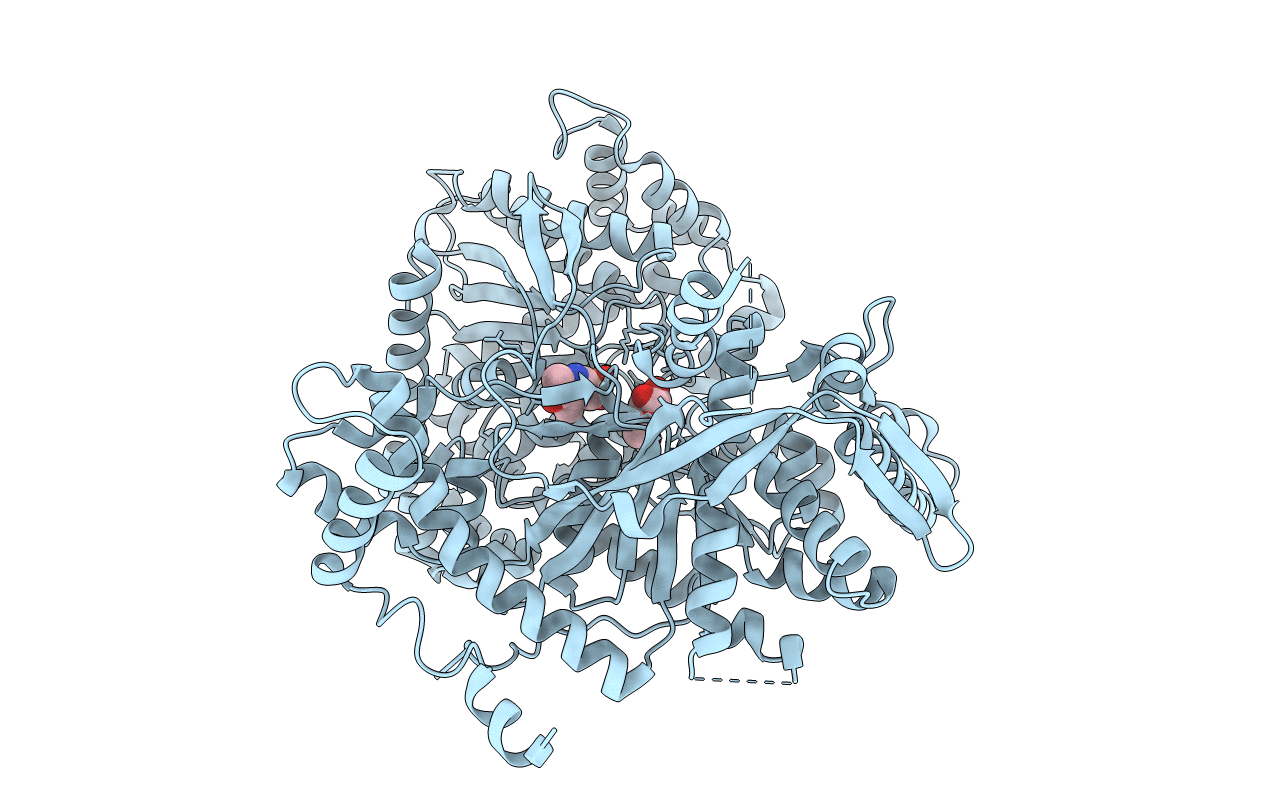
1LWN image
Deposition Date 2002-06-01
Release Date 2002-06-19
Last Version Date 2024-04-03
Entry Detail
PDB ID:
1LWN
Keywords:
Title:
Crystal structure of rabbit muscle glycogen phosphorylase a in complex with a potential hypoglycaemic drug at 2.0 A resolution
Biological Source:
Source Organism:
Method Details:
Experimental Method:
Resolution:
2.00 Å
R-Value Free:
0.21
R-Value Work:
0.17
R-Value Observed:
0.17
Space Group:
P 43 21 2

Macromolecular Entities
Structures with similar UniProt ID
Protein Blast
Polymer Type:polypeptide(L)
Molecule:glycogen phosphorylase
Gene (Uniprot):PYGM
Chain IDs:A
Chain Length:842
Number of Molecules:1
Biological Source:Oryctolagus cuniculus
Modified Residue
Compound ID Chain ID Parent Comp ID Details 2D Image
SEP A SER PHOSPHOSERINE
Primary Citation
Crystal structure of rabbit muscle glycogen phosphorylase a in complex with a potential hypoglycaemic drug at 2.0 A resolution
BIOCHEM.BIOPHYS.ACTA PROTEINS & PROTEOMICS 1647 325 332 (2003)
PMID: 12686153 DOI: 10.1016/S1570-9639(03)00085-2

Abstact

CP320626 has been identified as a potent inhibitor, synergistic with glucose, of human liver glycogen phosphorylase a (LGPa), a possible target for type 2 diabetes therapy. CP320626 is also a potent inhibitor of human muscle GPa. In order to elucidate the structural basis of the mechanism of CP320626 inhibition, the structures of T state rabbit muscle GPa (MGPa) in complex with glucose and in complex with both glucose and CP320626 were determined at 2.0 A resolution, and refined to crystallographic R values of 0.179 (R(free)=0.218) and 0.207 (R(free)=0.235), respectively. CP320626 binds at the new allosteric site, some 33 A from the catalytic site, where glucose binds. The binding of CP320626 to MGPa does not promote extensive conformational changes except for small shifts of the side chain atoms of residues R60, V64, and K191. Both CP320626 and glucose promote the less active T state, while structural comparisons of MGPa-glucose-CP320626 complex with LGPa complexed with a related compound (CP403700) and a glucose analogue inhibitor indicate that the residues of the new allosteric site, conserved in the two isozymes, show no significant differences in their positions.

Legend

Protein

Chemical

Disease

Primary Citation of related structures
Feedback Form
Name
Email
Institute
Feedback