1LT4 image
Deposition Date 1997-04-14
Release Date 1997-06-16
Last Version Date 2024-10-23
Entry Detail
PDB ID:
1LT4
Keywords:
Title:
HEAT-LABILE ENTEROTOXIN MUTANT S63K
Biological Source:
Source Organism(s):
Escherichia coli (Taxon ID: 562)
Expression System(s):
Method Details:
Experimental Method:
Resolution:
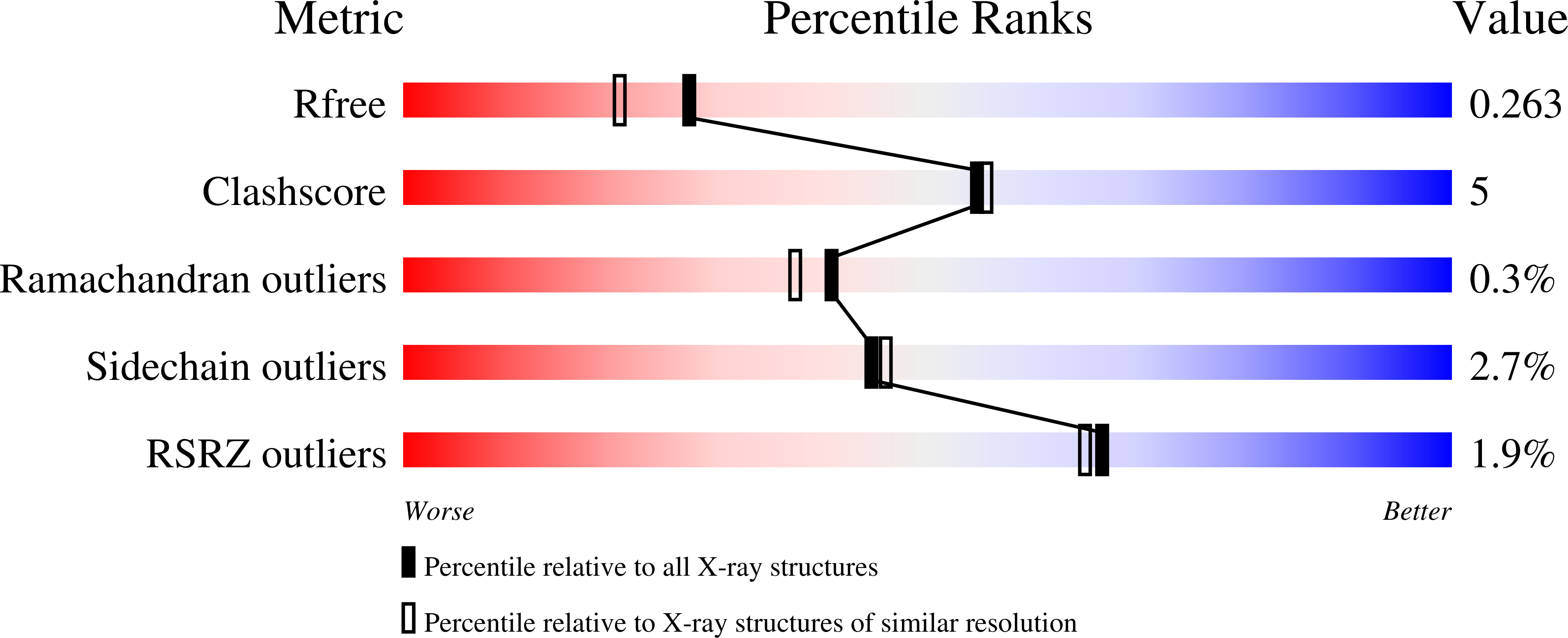
2.00 Å
R-Value Free:
0.25
R-Value Work:
0.19
R-Value Observed:
0.19
Space Group:
P 21 21 21
Macromolecular Entities
Structures with similar UniProt ID
Protein Blast
Polymer Type:polypeptide(L)
Molecule:HEAT-LABILE ENTEROTOXIN
Mutagens:CHAIN A, S63K
Chain IDs:F (auth: A)
Chain Length:247
Number of Molecules:1
Biological Source:Escherichia coli
Structures with similar UniProt ID
Protein Blast
Polymer Type:polypeptide(L)
Molecule:HEAT-LABILE ENTEROTOXIN
Gene (Uniprot):eltB
Mutagens:CHAIN A, S63K
Chain IDs:A (auth: D), B (auth: E), C (auth: F), D (auth: G), E (auth: H)
Chain Length:103
Number of Molecules:5
Biological Source:Escherichia coli
Peptide-like Molecules
PRD_900004
Primary Citation
Crystal structure of a non-toxic mutant of heat-labile enterotoxin, which is a potent mucosal adjuvant.
Protein Sci. 6 2650 2654 (1997)
PMID: 9416617

Abstact

Two closely related bacterial toxins, heat-labile enterotoxin (LT-I) and cholera toxin (CT), not only invoke a toxic activity that affects many victims worldwide but also contain a beneficial mucosal adjuvant activity that significantly enhances the potency of vaccines in general. For the purpose of vaccine design it is most interesting that the undesirable toxic activity of these toxins can be eliminated by the single-site mutation Ser63Lys in the A subunit while the mucosal adjuvant activity is still present. The crystal structure of the Ser63Lys mutant of LT-I is determined at 2.0 A resolution. Its structure appears to be essentially the same as the wild-type LT-I structure. The substitution Ser63Lys was designed, based on the wild-type LT-I crystal structure, to decrease toxicity by interfering with NAD binding and/or catalysis. In the mutant crystal structure, the newly introduced lysine side chain is indeed positioned such that it could potentially obstruct the productive binding mode of the substrate NAD while at the same time its positive charge could possibly interfere with the critical function of nearby charged groups in the active site of LT-I. The fact that the Ser63Lys mutant of LT-I does not disrupt the wild-type LT-I structure makes the non-toxic mutant potentially suitable, from a structural point of view, to be used as a vaccine to prevent enterotoxigenic E. coli infections. The structural similarity of mutant and wild-type toxin might also be the reason why the inactive Ser63Lys variant retains its adjuvant activity.

Legend

Protein

Chemical

Disease

Primary Citation of related structures
Feedback Form
Name
Email
Institute
Feedback