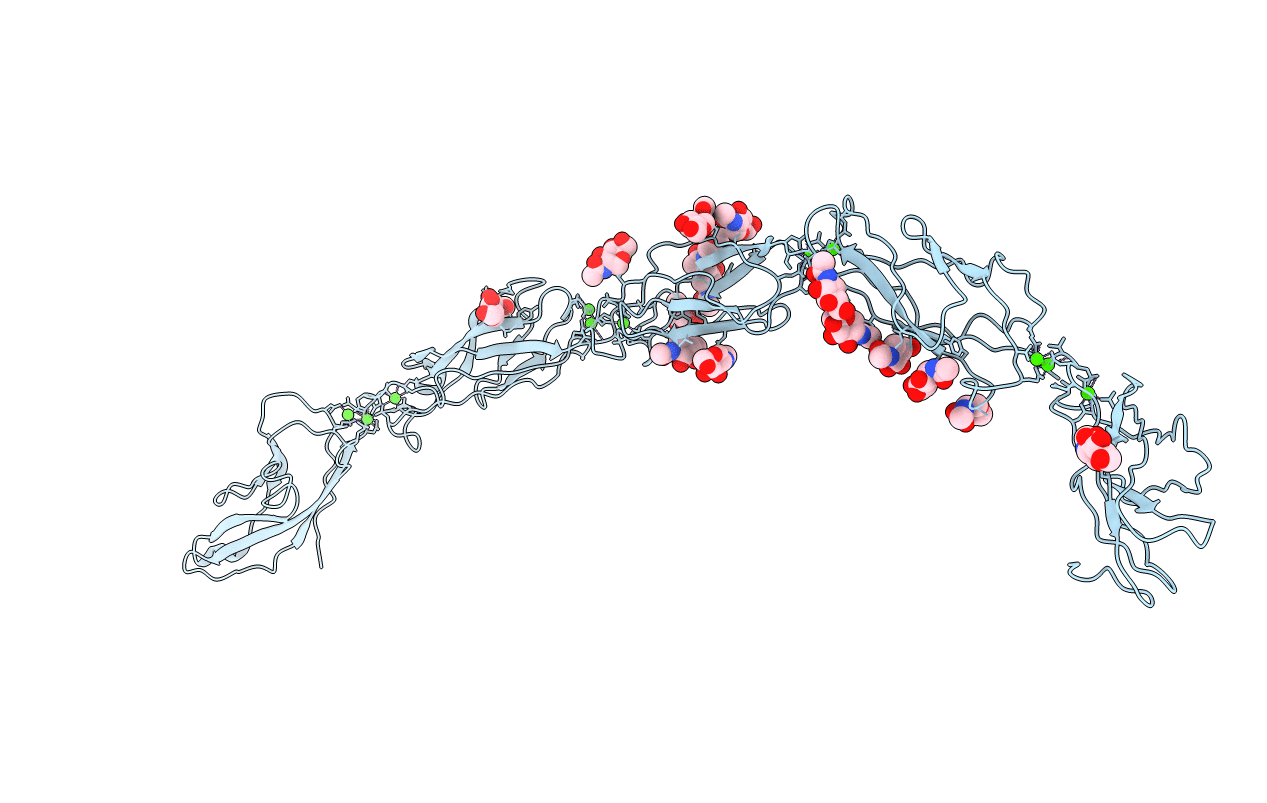
1L3W image
Deposition Date 2002-03-01
Release Date 2002-04-26
Last Version Date 2024-12-25
Entry Detail
PDB ID:
1L3W
Title:
C-cadherin Ectodomain
Biological Source:
Source Organism:
Xenopus laevis (Taxon ID: 8355)
Host Organism:
Method Details:
Experimental Method:
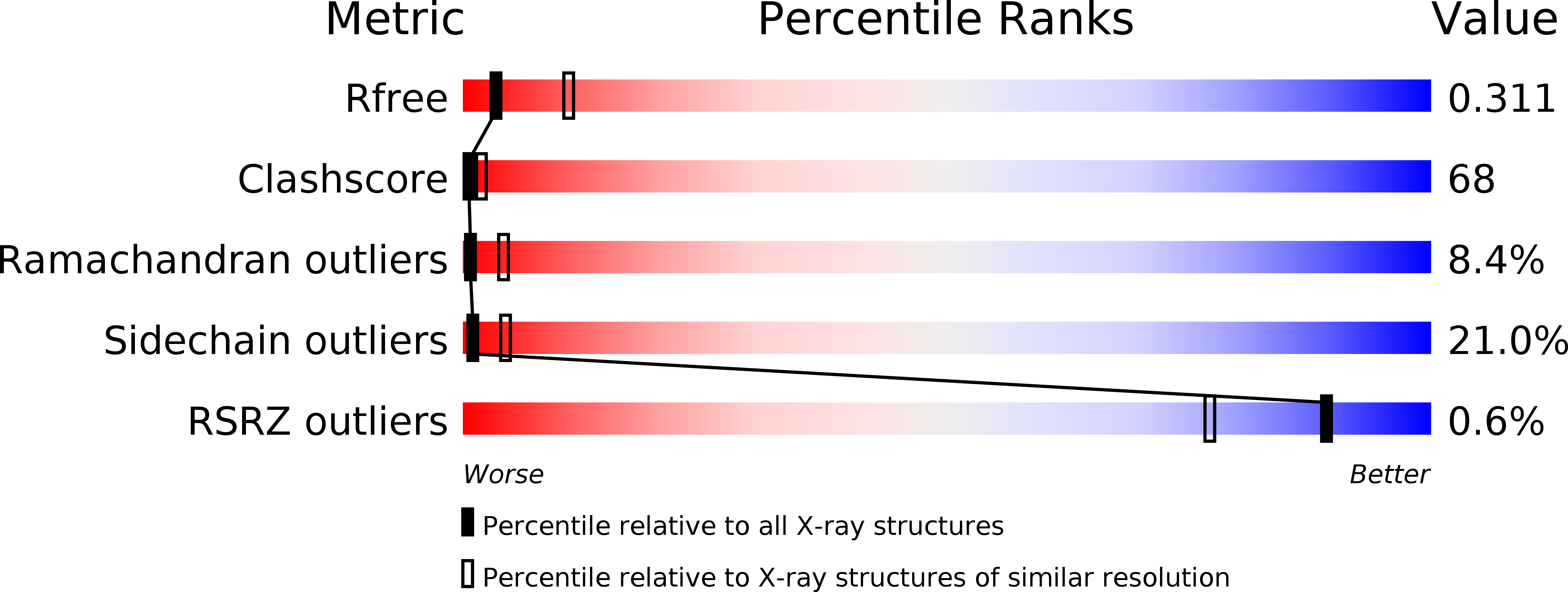
Resolution:
3.08 Å
R-Value Free:
0.27
R-Value Work:
0.24
R-Value Observed:
0.24
Space Group:
C 1 2 1
Macromolecular Entities
Structures with similar UniProt ID
Protein Blast
Polymer Type:polypeptide(L)
Molecule:EP-cadherin
Chain IDs:A
Chain Length:546
Number of Molecules:1
Biological Source:Xenopus laevis
Modified Residue
Compound ID Chain ID Parent Comp ID Details 2D Image
ASN A ASN GLYCOSYLATION SITE
THR A THR GLYCOSYLATION SITE
Primary Citation
C-cadherin ectodomain structure and implications for cell adhesion mechanisms
Science 296 1308 1313 (2002)
PMID: 11964443 DOI: 10.1126/science.1071559

Abstact

Cadherins are transmembrane proteins that mediate adhesion between cells in the solid tissues of animals. Here we present the 3.1 angstrom resolution crystal structure of the whole, functional extracellular domain from C-cadherin, a representative "classical" cadherin. The structure suggests a molecular mechanism for adhesion between cells by classical cadherins, and it provides a new framework for understanding both cis (same cell) and trans (juxtaposed cell) cadherin interactions. The trans adhesive interface is a twofold symmetric interaction defined by a conserved tryptophan side chain at the membrane-distal end of a cadherin molecule from one cell, which inserts into a hydrophobic pocket at the membrane-distal end of a cadherin molecule from the opposing cell.

Legend

Protein

Chemical

Disease

Primary Citation of related structures
Feedback Form
Name
Email
Institute
Feedback