1KZA image
Deposition Date 2002-02-06
Release Date 2002-07-05
Last Version Date 2024-11-13
Entry Detail
PDB ID:
1KZA
Title:
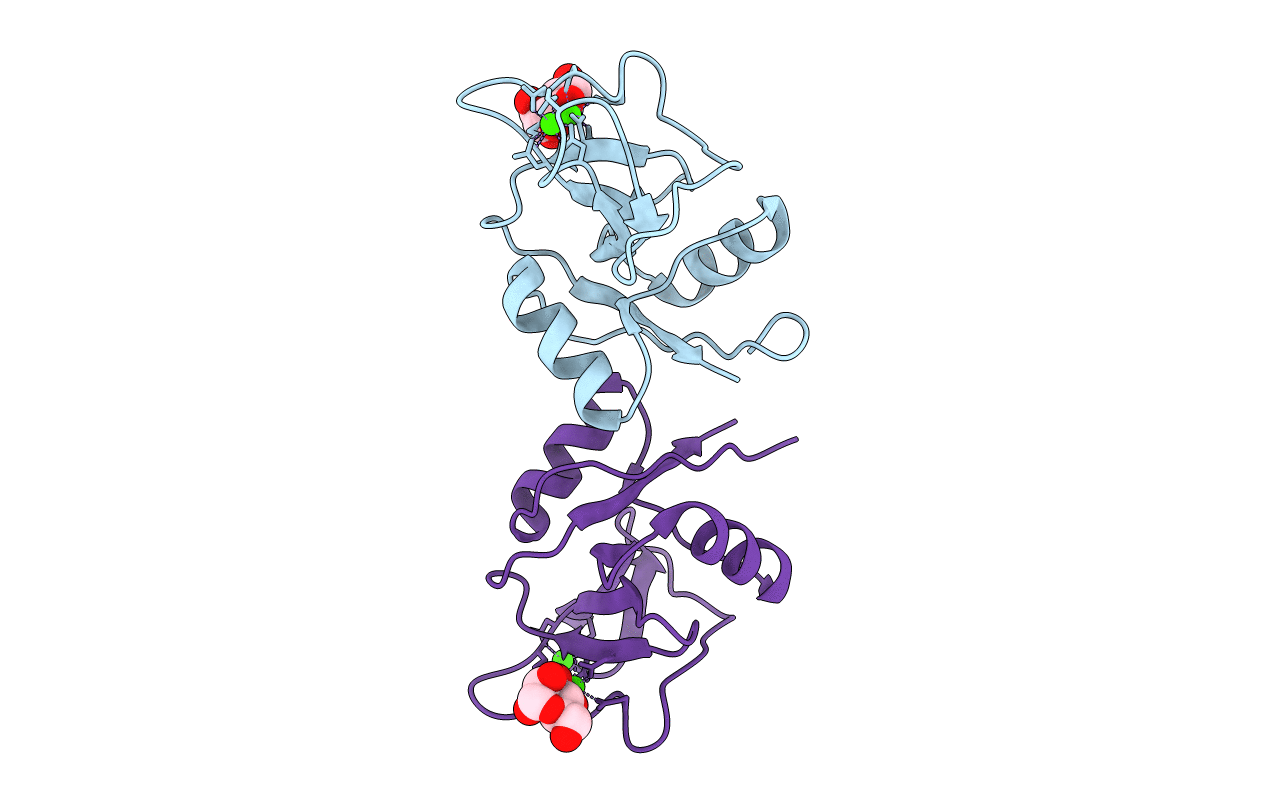
Complex of MBP-C and Man-a13-Man
Biological Source:
Source Organism:
Host Organism:
Method Details:
Experimental Method:
Resolution:
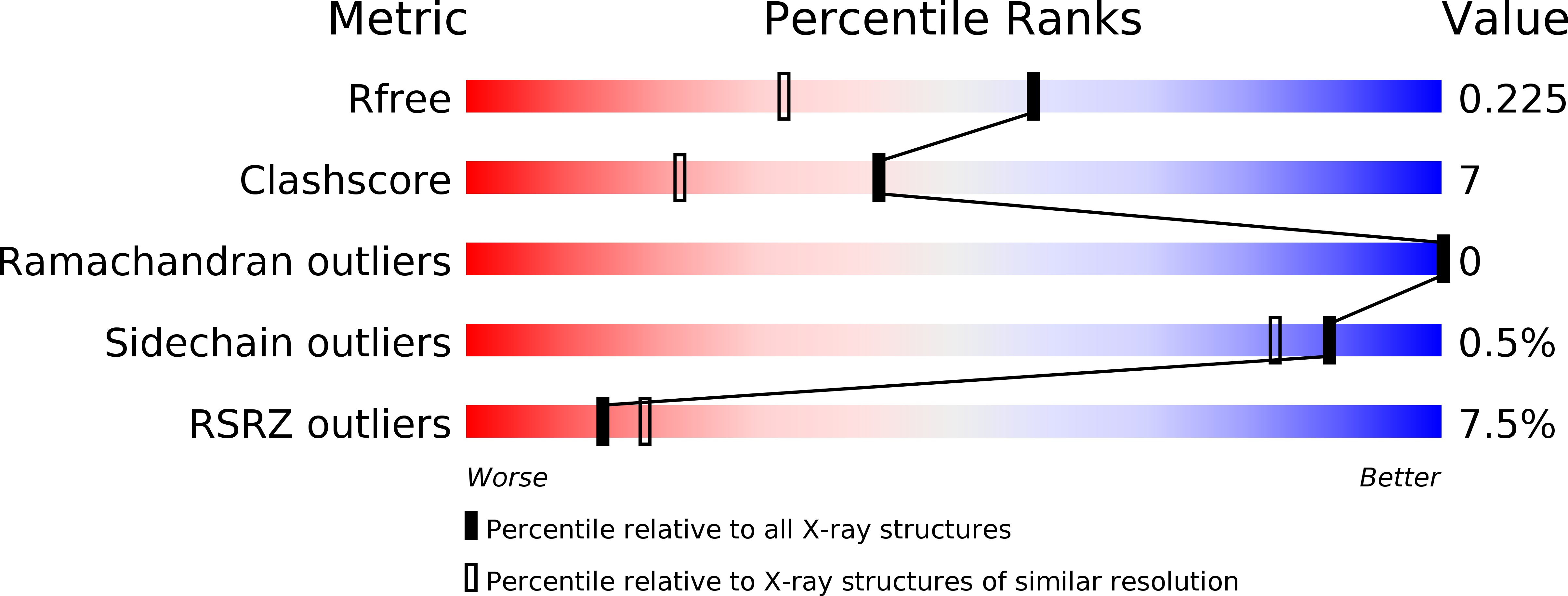
1.74 Å
R-Value Free:
0.23
R-Value Work:
0.21
R-Value Observed:
0.21
Space Group:
P 21 21 21
Macromolecular Entities
Structures with similar UniProt ID
Protein Blast
Polymer Type:polypeptide(L)
Molecule:MANNOSE-BINDING PROTEIN C
Gene (Uniprot):Mbl2
Chain IDs:A (auth: 1), B (auth: 2)
Chain Length:115
Number of Molecules:2
Biological Source:Rattus norvegicus
Primary Citation
Orientation of bound ligands in mannose-binding proteins. Implications for multivalent ligand recognition.
J.Biol.Chem. 277 16088 16095 (2002)
PMID: 11850428 DOI: 10.1074/jbc.M200493200

Abstact

Mannose-binding proteins (MBPs) are C-type animal lectins that recognize high mannose oligosaccharides on pathogenic cell surfaces. MBPs bind to their carbohydrate ligands by forming a series of Ca(2+) coordination and hydrogen bonds with two hydroxyl groups equivalent to the 3- and 4-OH of mannose. In this work, the determinants of the orientation of sugars bound to rat serum and liver MBPs (MBP-A and MBP-C) have been systematically investigated. The crystal structures of MBP-A soaked with monosaccharides and disaccharides and also the structure of the MBP-A trimer cross-linked by a high mannose asparaginyl oligosaccharide reveal that monosaccharides or alpha1-6-linked mannose bind to MBP-A in one orientation, whereas alpha1-2- or alpha1-3-linked mannose binds in an orientation rotated 180 degrees around a local symmetry axis relating the 3- and 4-OH groups. In contrast, a similar set of ligands all bind to MBP-C in a single orientation. The mutation of MBP-A His(189) to its MBP-C equivalent, valine, causes Man alpha 1-3Man to bind in a mixture of orientations. These data combined with modeling indicate that the residue at this position influences the orientation of bound ligands in MBP. We propose that the control of binding orientation can influence the recognition of multivalent ligands. A lateral association of trimers in the cross-linked crystals may reflect interactions within higher oligomers of MBP-A that are stabilized by multivalent ligands.

Legend

Protein

Chemical

Disease

Primary Citation of related structures
Feedback Form
Name
Email
Institute
Feedback