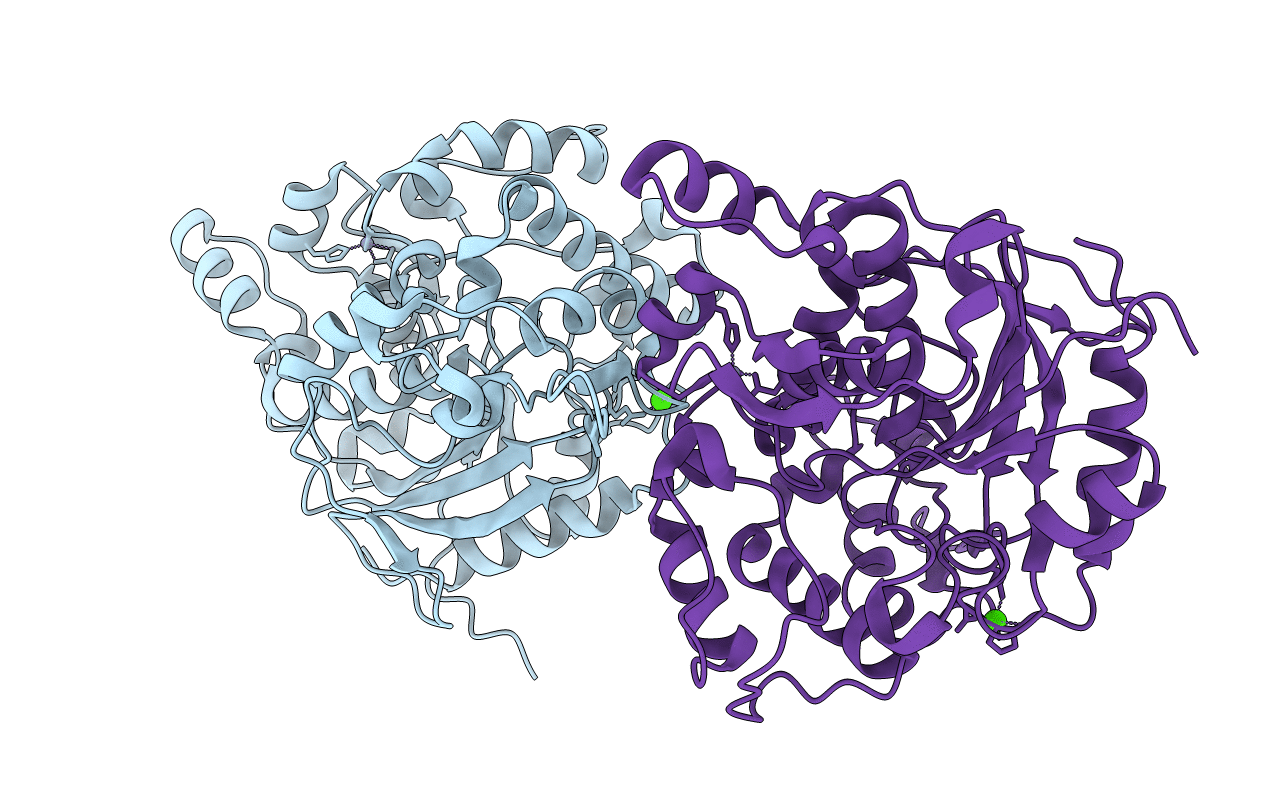
1KU0 image
Deposition Date 2002-01-18
Release Date 2002-08-21
Last Version Date 2024-03-13
Entry Detail
PDB ID:
1KU0
Keywords:
Title:
Structure of the Bacillus stearothermophilus L1 lipase
Biological Source:
Source Organism:
Host Organism:
Method Details:
Experimental Method:
Resolution:
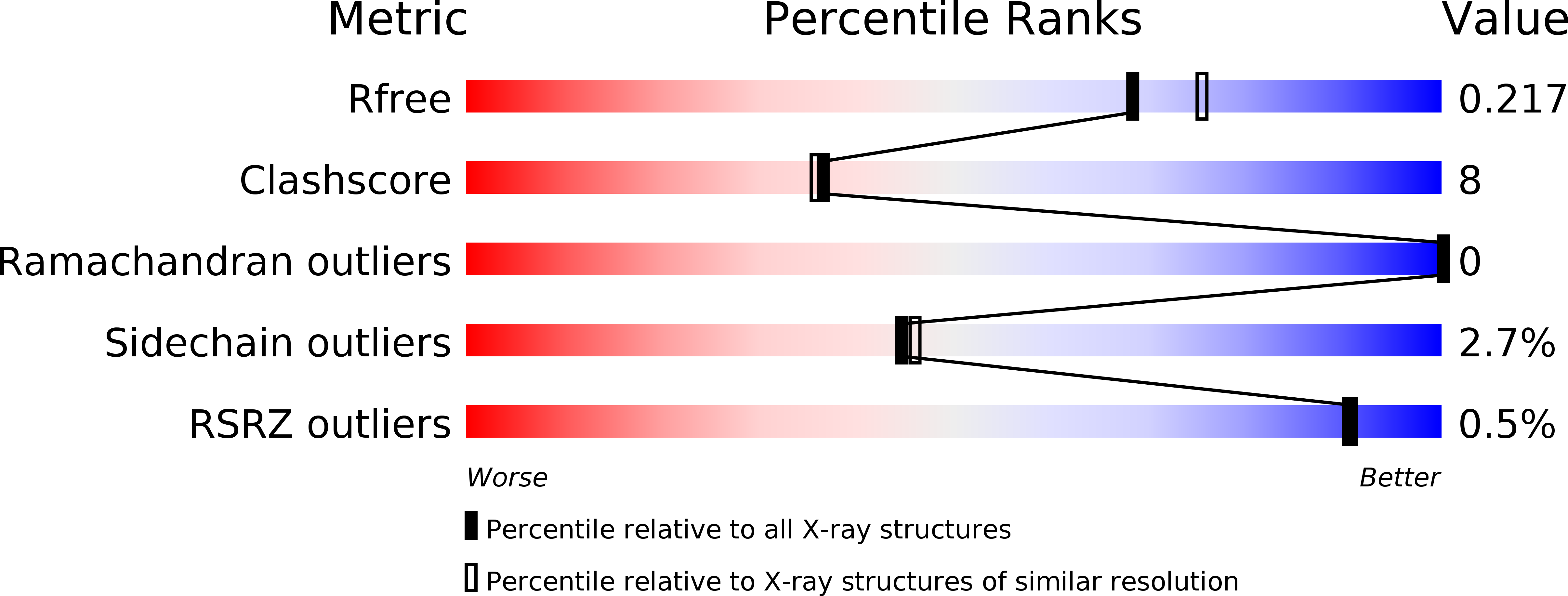
2.00 Å
R-Value Free:
0.21
R-Value Work:
0.18
Space Group:
C 1 2 1
Macromolecular Entities
Structures with similar UniProt ID
Protein Blast
Polymer Type:polypeptide(L)
Molecule:L1 lipase
Chain IDs:A, B
Chain Length:388
Number of Molecules:2
Biological Source:Geobacillus stearothermophilus
Primary Citation
Novel zinc-binding center and a temperature switch in the Bacillus stearothermophilus L1 lipase.
J.Biol.Chem. 277 17041 17047 (2002)
PMID: 11859083 DOI: 10.1074/jbc.M200640200

Abstact

The bacterial thermoalkalophilic lipases optimally hydrolyze saturated fatty acids at elevated temperatures. They also have significant sequence homology with staphylococcal lipases, and both the thermoalkalophilic and staphylococcal lipases are grouped as the lipase family I.5. We report here the first crystal structure of the lipase family I.5, the structure of a thermoalkalophilic lipase from Bacillus stearothermophilus L1 (L1 lipase) determined at 2.0-A resolution. The structure is in a closed conformation, and the active site is buried under a long lid helix. Unexpectedly, the structure exhibits a zinc-binding site in an extra domain that accounts for the larger molecular size of the family I.5 enzymes in comparison to other microbial lipases. The zinc-coordinated extra domain makes tight interactions with the loop extended from the C terminus of the lid helix, suggesting that the activation of the family I.5 lipases may be regulated by the strength of the interactions. The unusually long lid helix makes strong hydrophobic interactions with its neighbors. The structural information together with previous biochemical observations indicate that the temperature-mediated lid opening is triggered by the thermal dissociation of the hydrophobic interactions.

Legend

Protein

Chemical

Disease

Primary Citation of related structures
Feedback Form
Name
Email
Institute
Feedback