1KTK image
Deposition Date 2002-01-16
Release Date 2002-06-07
Last Version Date 2024-11-20
Entry Detail
PDB ID:
1KTK
Keywords:
Title:
Complex of Streptococcal pyrogenic enterotoxin C (SpeC) with a human T cell receptor beta chain (Vbeta2.1)
Biological Source:
Source Organism:
Host Organism:
Method Details:
Experimental Method:
Resolution:
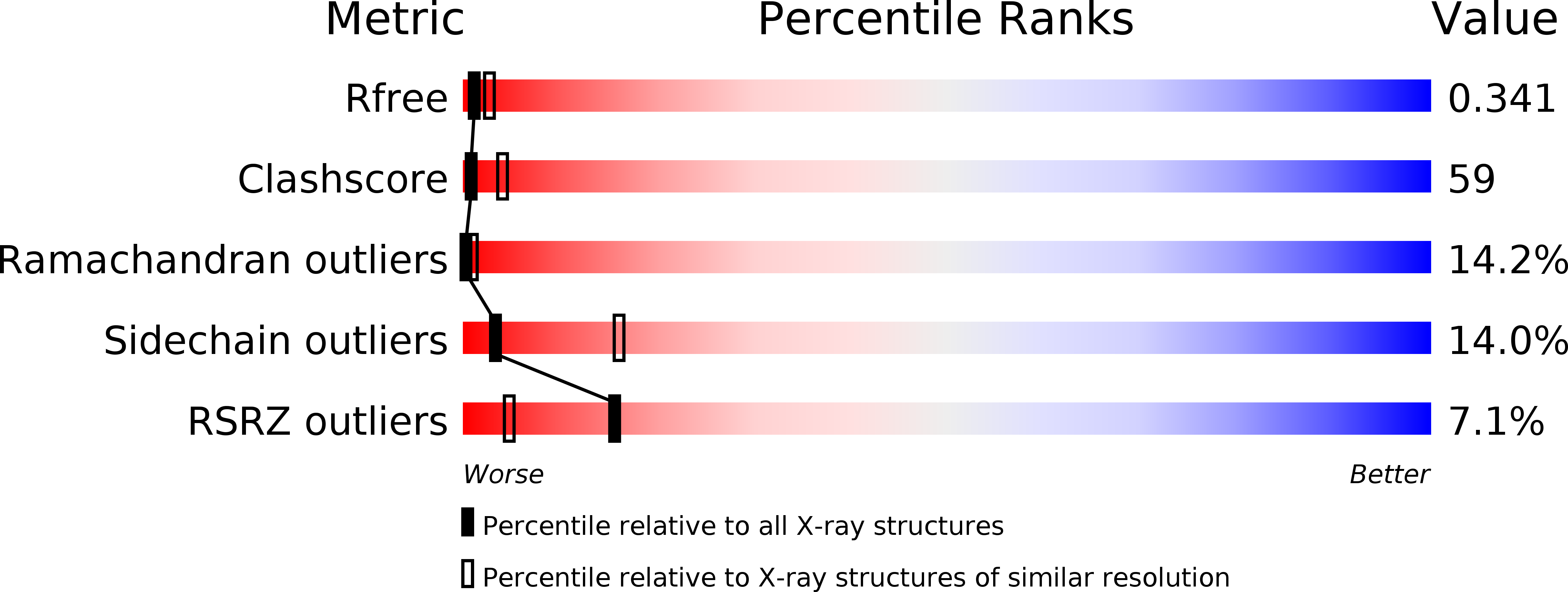
3.00 Å
R-Value Free:
0.33
R-Value Work:
0.32
R-Value Observed:
0.32
Space Group:
P 1 21 1
Macromolecular Entities
Structures with similar UniProt ID
Protein Blast
Polymer Type:polypeptide(L)
Molecule:Exotoxin type C
Mutagens:H35A
Chain IDs:A, B, C, D
Chain Length:208
Number of Molecules:4
Biological Source:Streptococcus pyogenes
Structures with similar UniProt ID
Protein Blast
Polymer Type:polypeptide(L)
Molecule:T-cell receptor beta chain
Gene (Uniprot):TRBC1
Mutagens:C13A, C191A
Chain IDs:E, F
Chain Length:247
Number of Molecules:2
Biological Source:Homo sapiens
Ligand Molecules
Primary Citation
Structures of two streptococcal superantigens bound to TCR beta chains reveal diversity in the architecture of T cell signaling complexes.
Structure 10 687 699 (2002)
PMID: 12015151 DOI: 10.1016/S0969-2126(02)00759-1

Abstact

Superantigens (SAGs) crosslink MHC class II and TCR molecules, resulting in an overstimulation of T cells associated with human disease. SAGs interact with several different surfaces on MHC molecules, necessitating the formation of multiple distinct MHC-SAG-TCR ternary signaling complexes. Variability in SAG-TCR binding modes could also contribute to the structural heterogeneity of SAG-dependent signaling complexes. We report crystal structures of the streptococcal SAGs SpeA and SpeC in complex with their corresponding TCR beta chain ligands that reveal distinct TCR binding modes. The SpeC-TCR beta chain complex structure, coupled with the recently determined SpeC-HLA-DR2a complex structure, provides a model for a novel T cell signaling complex that precludes direct TCR-MHC interactions. Thus, highly efficient T cell activation may be achieved through structurally diverse strategies of TCR ligation.

Legend

Protein

Chemical

Disease

Primary Citation of related structures
Feedback Form
Name
Email
Institute
Feedback