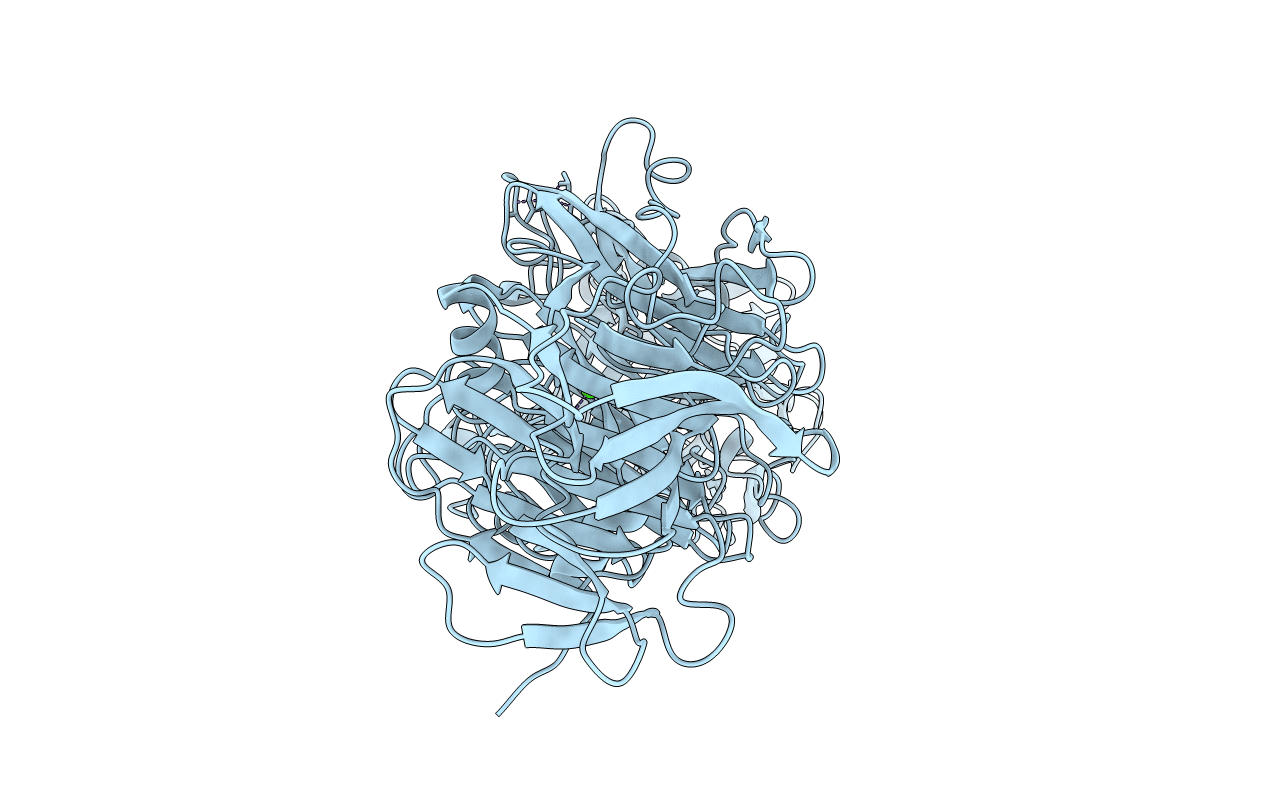
1KIT image
Deposition Date 1996-06-21
Release Date 1997-06-05
Last Version Date 2024-02-14
Entry Detail
PDB ID:
1KIT
Keywords:
Title:
VIBRIO CHOLERAE NEURAMINIDASE
Biological Source:
Source Organism(s):
Vibrio cholerae (Taxon ID: 666)
Expression System(s):
Method Details:
Experimental Method:
Resolution:
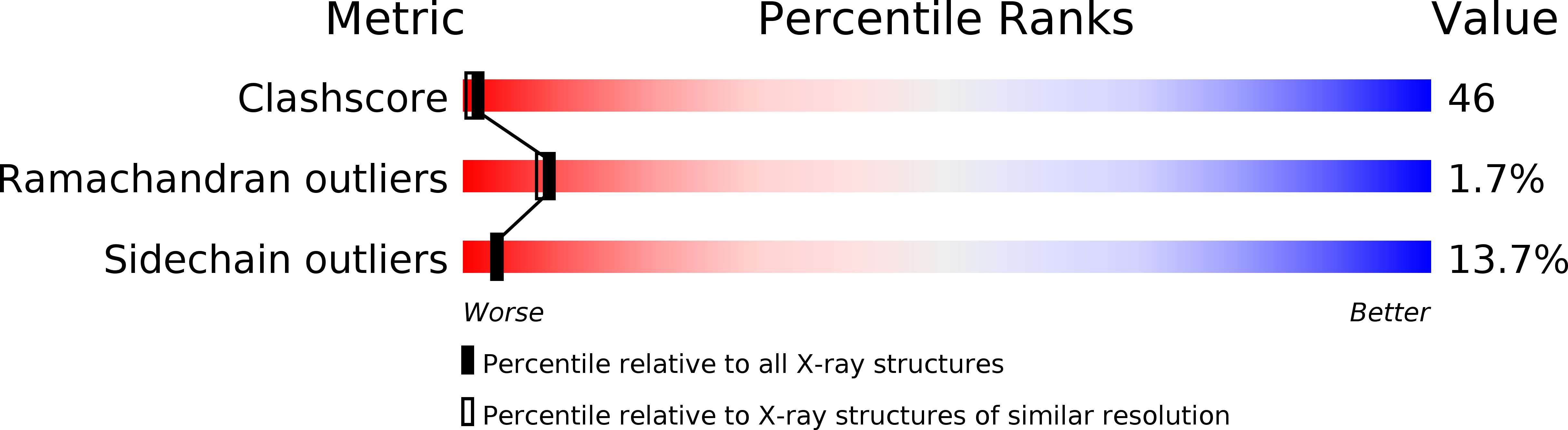
2.30 Å
R-Value Work:
0.17
Space Group:
P 21 21 21
Macromolecular Entities
Structures with similar UniProt ID
Protein Blast
Polymer Type:polypeptide(L)
Molecule:SIALIDASE
Chain IDs:A
Chain Length:757
Number of Molecules:1
Biological Source:Vibrio cholerae
Ligand Molecules
Primary Citation
Crystal structure of Vibrio cholerae neuraminidase reveals dual lectin-like domains in addition to the catalytic domain.
Structure 2 535 544 (1994)
PMID: 7922030 DOI: 10.1016/S0969-2126(00)00053-8

Abstact

BACKGROUND Vibrio cholerae neuraminidase is part of a mucinase complex which may function in pathogenesis by degrading the mucin layer of the gastrointestinal tract. The neuraminidase, which has been the target of extensive inhibitor studies, plays a subtle role in the pathology of the bacterium, by processing higher order gangliosides to GM1, the receptor for cholera toxin. RESULTS We report here the X-ray crystal structure of V. cholerae neuraminidase at 2.3 A resolution. The 83 kDa enzyme folds into three distinct domains. The central catalytic domain has the canonical neuraminidase beta-propeller fold, and is flanked by two domains which possess identical legume lectin-like topologies but without the usual metal-binding loops. The active site has many features in common with other viral and bacterial neuraminidases but, uniquely, has an essential Ca2+ ion which plays a crucial structural role. CONCLUSIONS The environment of the small intestine requires V. cholerae to secrete several adhesins, and it is known that its neuraminidase can bind to cell surfaces, and remain active. The unexpected lectin-like domains possibly mediate this attachment. These bacterial lectin folds represent additional members of a growing lectin superfamily.

Legend

Protein

Chemical

Disease

Primary Citation of related structures
Feedback Form
Name
Email
Institute
Feedback