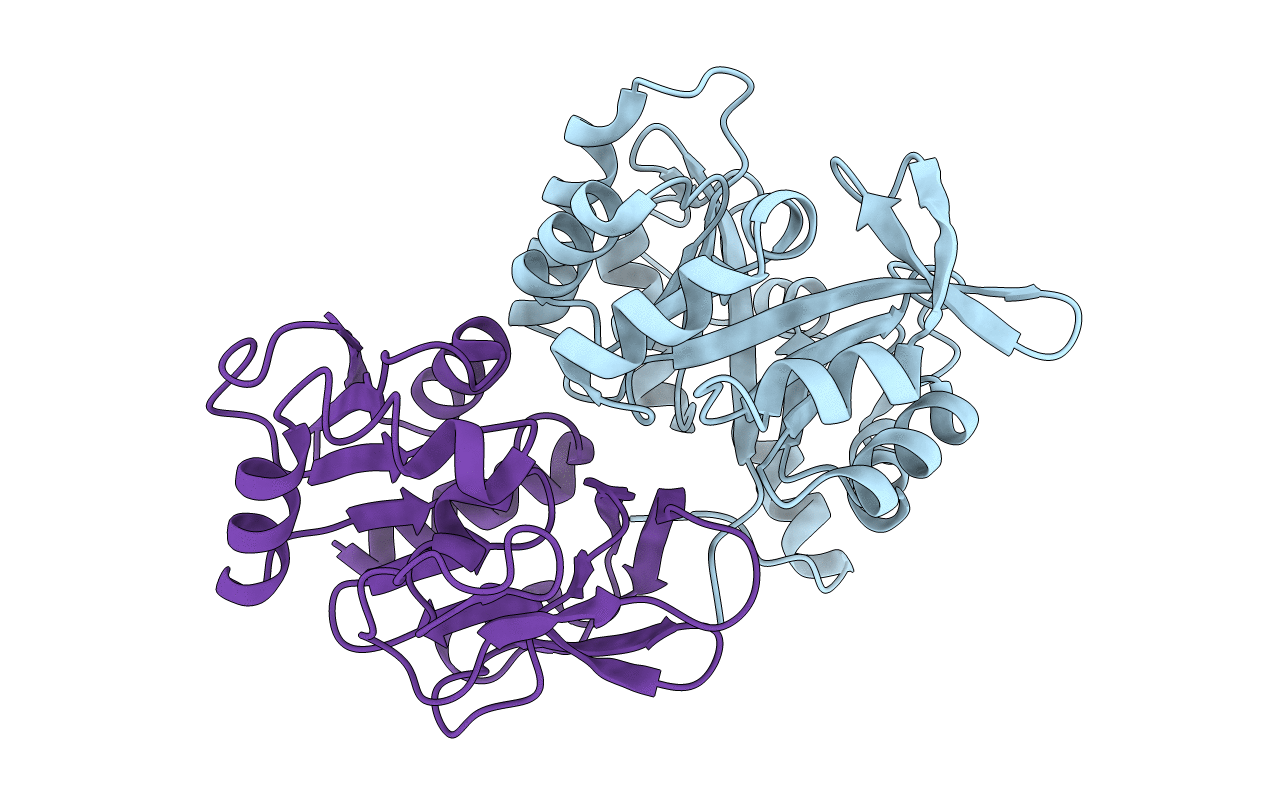
1KA9 image
Deposition Date 2001-11-01
Release Date 2002-12-04
Last Version Date 2024-03-13
Entry Detail
PDB ID:
1KA9
Keywords:
Title:
Imidazole Glycerol Phosphate Synthase
Biological Source:
Source Organism:
Host Organism:
Method Details:
Experimental Method:
Resolution:
2.30 Å
R-Value Free:
0.25
R-Value Work:
0.20
Space Group:
P 43 21 2

Macromolecular Entities
Structures with similar UniProt ID
Protein Blast
Polymer Type:polypeptide(L)
Molecule:imidazole glycerol phosphate synthase
Gene (Uniprot):hisF
Chain IDs:B (auth: F)
Chain Length:252
Number of Molecules:1
Biological Source:Thermus thermophilus
Structures with similar UniProt ID
Protein Blast
Polymer Type:polypeptide(L)
Molecule:imidazole glycerol phosphate synthase
Gene (Uniprot):hisH
Chain IDs:A (auth: H)
Chain Length:200
Number of Molecules:1
Biological Source:Thermus thermophilus
Primary Citation
Structure of imidazole glycerol phosphate synthase from Thermus thermophilus HB8: open-closed conformational change and ammonia tunneling.
J.Biochem. 132 759 765 (2002)
PMID: 12417026 DOI: 10.1093/oxfordjournals.jbchem.a003284

Abstact

Imidazole glycerol phosphate synthase (IGPs) catalyzes the fifth step in the histidine biosynthetic pathway located at the branch point to de novo purine biosynthesis. IGPs is a multienzyme comprising glutaminase and synthase subunits. The glutaminase activity, which hydrolyzes glutamine to give ammonia, is coupled with substrate binding to the synthase subunit. The three-dimensional structure of the IGPs from Thermus thermophilus HB8 has been determined at 2.3 A resolution, and compared with the previously determined structures for the yeast and Thermotoga maritima enzymes. The structure of each subunit is similar to that of the corresponding domain in the yeast enzyme or subunit in the T. maritima enzyme. However, the overall structure is significantly different from the yeast and T. maritima enzymes, indicating that IGPs may change the relative orientation between the two subunits and close the glutaminase site upon glutamine binding. The putative ammonia tunnel, which carries nascent ammonia from glutaminase to the synthase site, has a closed gate comprising a cyclic salt bridge formed by four charged residues of the synthase subunit. The side chain of Lys100 in the cyclic salt bridge might change its side chain direction to form new interactions with the main chain carbonyl group of glutamine from the synthase subunit and the hydoxyl group of tyrosine from the glutaminase subunit, resulting in the opening of the gate for ammonia transfer.

Legend

Protein

Chemical

Disease

Primary Citation of related structures
Feedback Form
Name
Email
Institute
Feedback