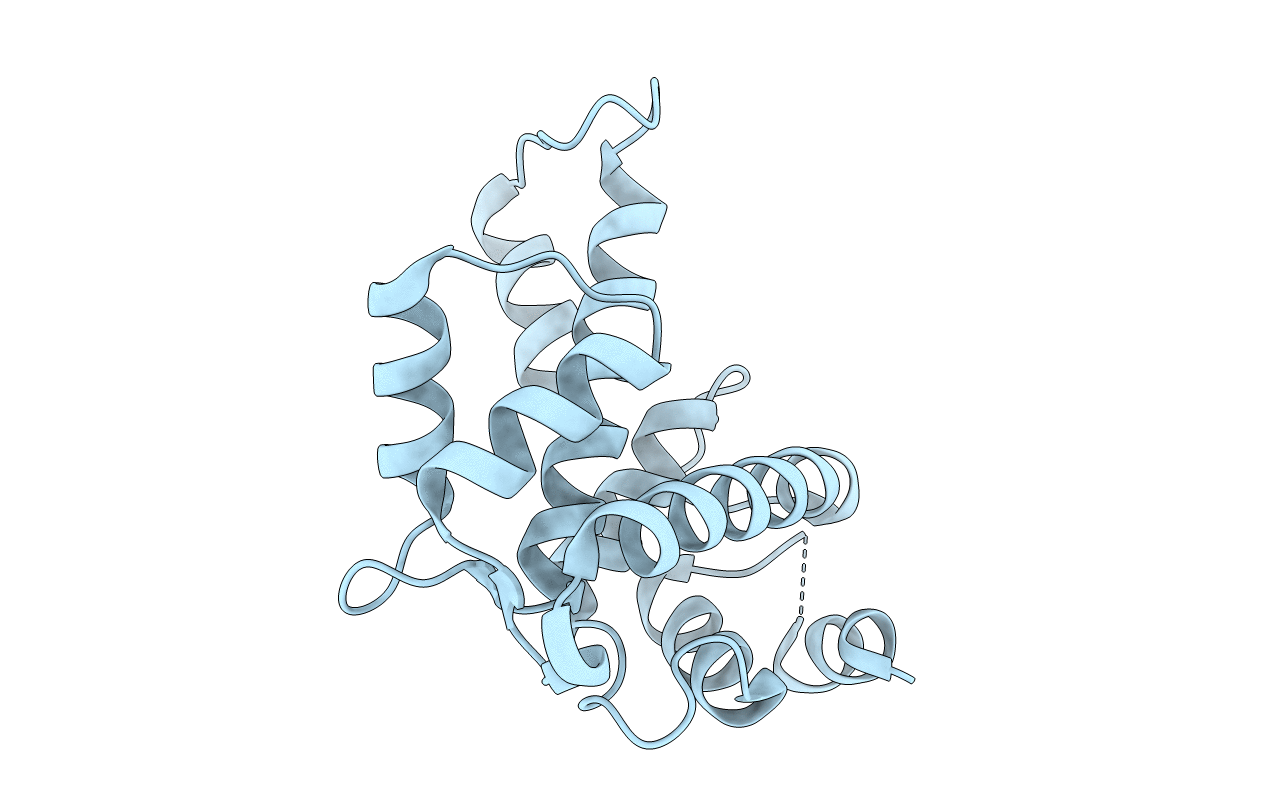
1K95 image
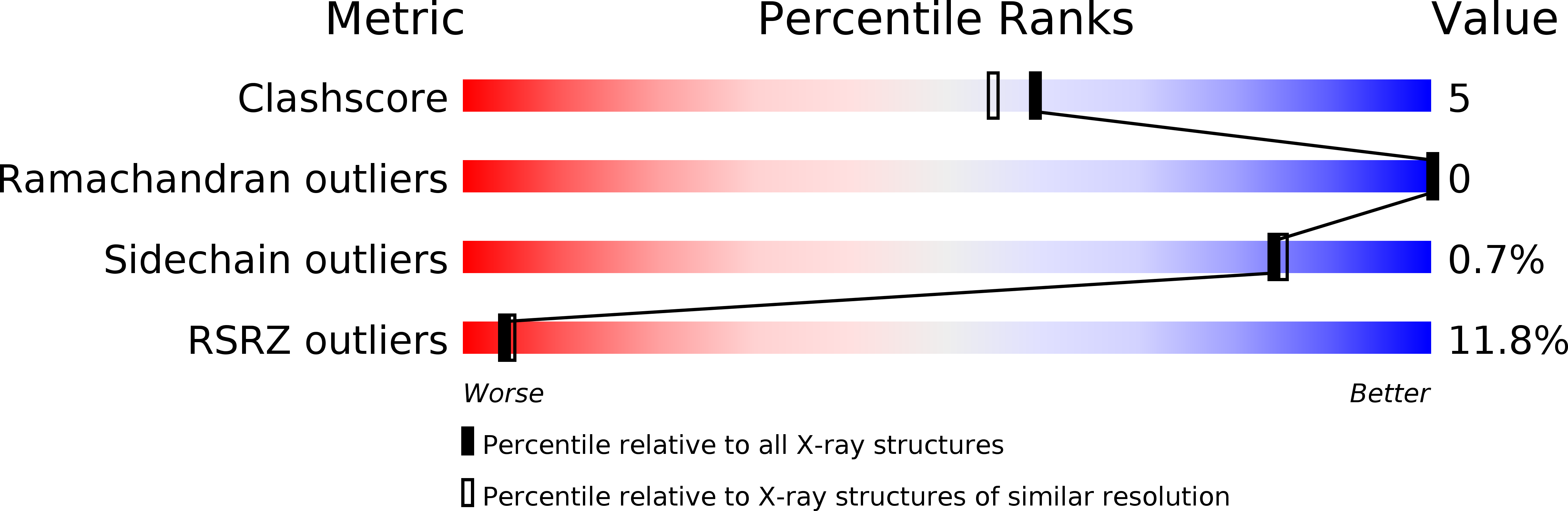
Deposition Date 2001-10-26
Release Date 2001-12-07
Last Version Date 2023-08-16
Entry Detail
PDB ID:
1K95
Title:
Crystal structure of des(1-52)grancalcin with bound calcium
Biological Source:
Source Organism:
Homo sapiens (Taxon ID: 9606)
Host Organism:
Method Details:
Experimental Method:
Resolution:
1.90 Å
R-Value Free:
0.25
R-Value Work:
0.21
Space Group:
P 65 2 2
Macromolecular Entities
Structures with similar UniProt ID
Protein Blast
Polymer Type:polypeptide(L)
Molecule:GRANCALCIN
Gene (Uniprot):GCA
Chain IDs:A
Chain Length:165
Number of Molecules:1
Biological Source:Homo sapiens
Primary Citation
Structure of Ca(2+)-loaded human grancalcin.
Acta Crystallogr.,Sect.D 57 1843 1849 (2001)
PMID: 11717497 DOI: 10.1107/S0907444901016511

Abstact

Grancalcin is a cytosolic Ca(2+)-binding protein originally identified in human neutrophils. It belongs to a new class of EF-hand proteins, called PEF proteins, which contain five EF-hand motifs. At the N-terminus of grancalcin there is a approximately 50 residue-long segment rich in glycines and prolines. The fifth EF-hand, unpaired within the monomer, provides a means for dimerization through pairing with its counterpart in a second molecule. The structure of full-length grancalcin in the apo form and with one EF3 within the dimer occupied by a Ca(2+) ion have been determined. Although the N-terminal segment was present in the molecule, this part was disordered in the crystals. Here, the structure of a truncated form of grancalcin, which is lacking 52 N-terminal residues, in the presence and absence of Ca(2+) is presented. In the Ca(2+)-bound form the ions are found in the EF1 and EF3 hands. Binding of Ca(2+) to these two EF hands produces only minor conformational changes, mostly within the EF1 Ca(2+)-binding loop. This observation supports the hypothesis, formulated on the basis of the structure of a homologous protein ALG-2 which shows significant differences in the orientation of EF4 and EF5 compared with grancalcin, that calcium is a necessary factor but not sufficient alone for inducing a significant conformational change in PEF proteins.

Legend

Protein

Chemical

Disease

Primary Citation of related structures
Feedback Form
Name
Email
Institute
Feedback