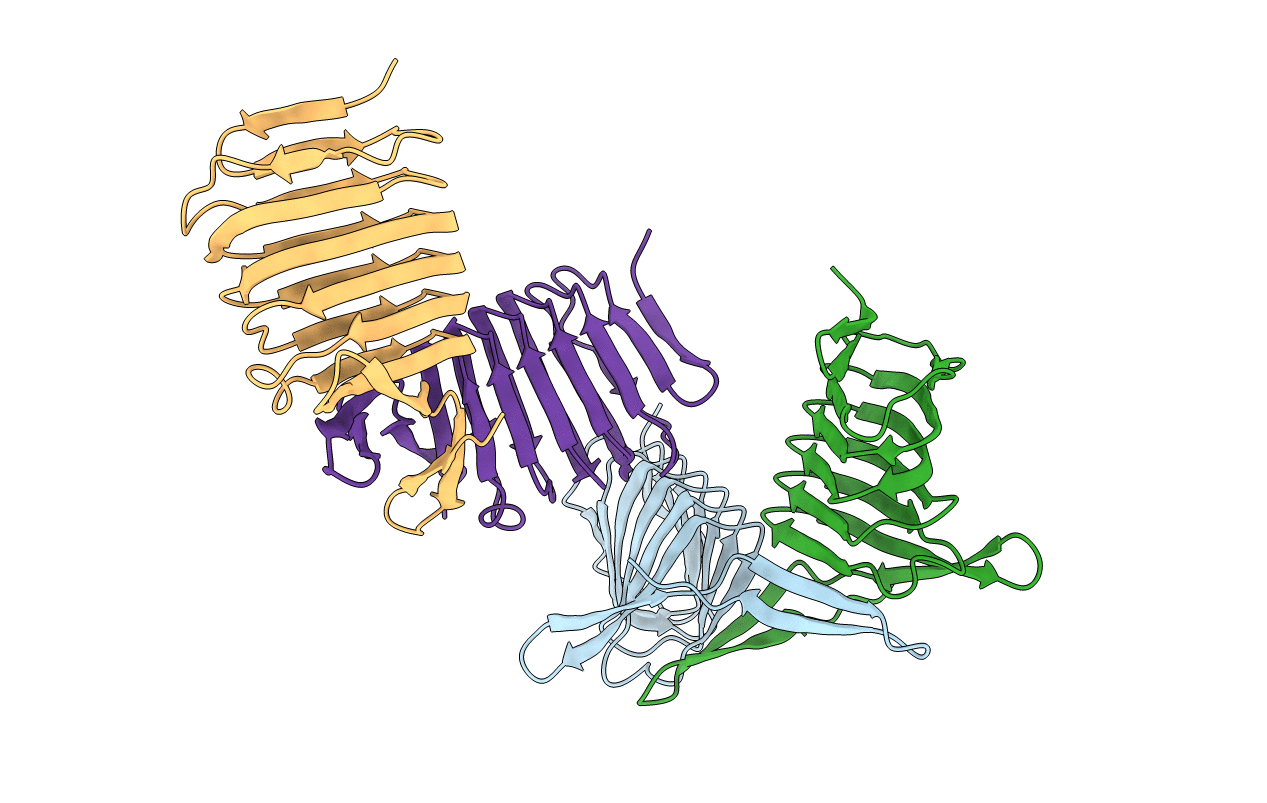
1K8F image
Deposition Date 2001-10-24
Release Date 2003-07-01
Last Version Date 2023-08-16
Entry Detail
PDB ID:
1K8F
Title:
CRYSTAL STRUCTURE OF THE HUMAN C-TERMINAL CAP1-ADENYLYL CYCLASE ASSOCIATED PROTEIN
Biological Source:
Source Organism:
Homo sapiens (Taxon ID: 9606)
Method Details:
Experimental Method:
Resolution:
2.80 Å
R-Value Free:
0.26
R-Value Work:
0.23
R-Value Observed:
0.23
Space Group:
P 21 21 21
Macromolecular Entities
Structures with similar UniProt ID
Protein Blast
Polymer Type:polypeptide(L)
Molecule:ADENYLYL CYCLASE-ASSOCIATED PROTEIN
Gene (Uniprot):CAP1
Chain IDs:A, B, C, D
Chain Length:157
Number of Molecules:4
Biological Source:Homo sapiens
Ligand Molecules
Primary Citation
Crystal structure of the actin binding domain of the cyclase-associated protein.
Biochemistry 43 10628 10641 (2004)
PMID: 15311924 DOI: 10.1021/bi049071r

Abstact

Cyclase-associated protein (CAP or Srv2p) is a modular actin monomer binding protein that directly regulates filament dynamics and has been implicated in a number of complex developmental and morphological processes, including mRNA localization and the establishment of cell polarity. The crystal structure of the C-terminal dimerization and actin monomer binding domain (C-CAP) reveals a highly unusual dimer, composed of monomers possessing six coils of right-handed beta-helix flanked by antiparallel beta-strands. Domain swapping, involving the last two strands of each monomer, results in the formation of an extended dimer with an extensive interface. This structural and biochemical characterization provides new insights into the organization and potential mechanistic properties of the multiprotein assemblies that integrate dynamic actin processes into the overall physiology of the cell. An unanticipated finding is that the unique tertiary structure of the C-CAP monomer provides a structural model for a wide range of molecules, including RP2 and cofactor C, proteins involved in X-linked retinitis pigmentosa and tubulin maturation, respectively, as well as several uncharacterized proteins that exhibit very diverse domain organizations. Thus, the unusual right-handed beta-helical fold present in C-CAP appears to support a wide range of biological functions.

Legend

Protein

Chemical

Disease

Primary Citation of related structures
Feedback Form
Name
Email
Institute
Feedback