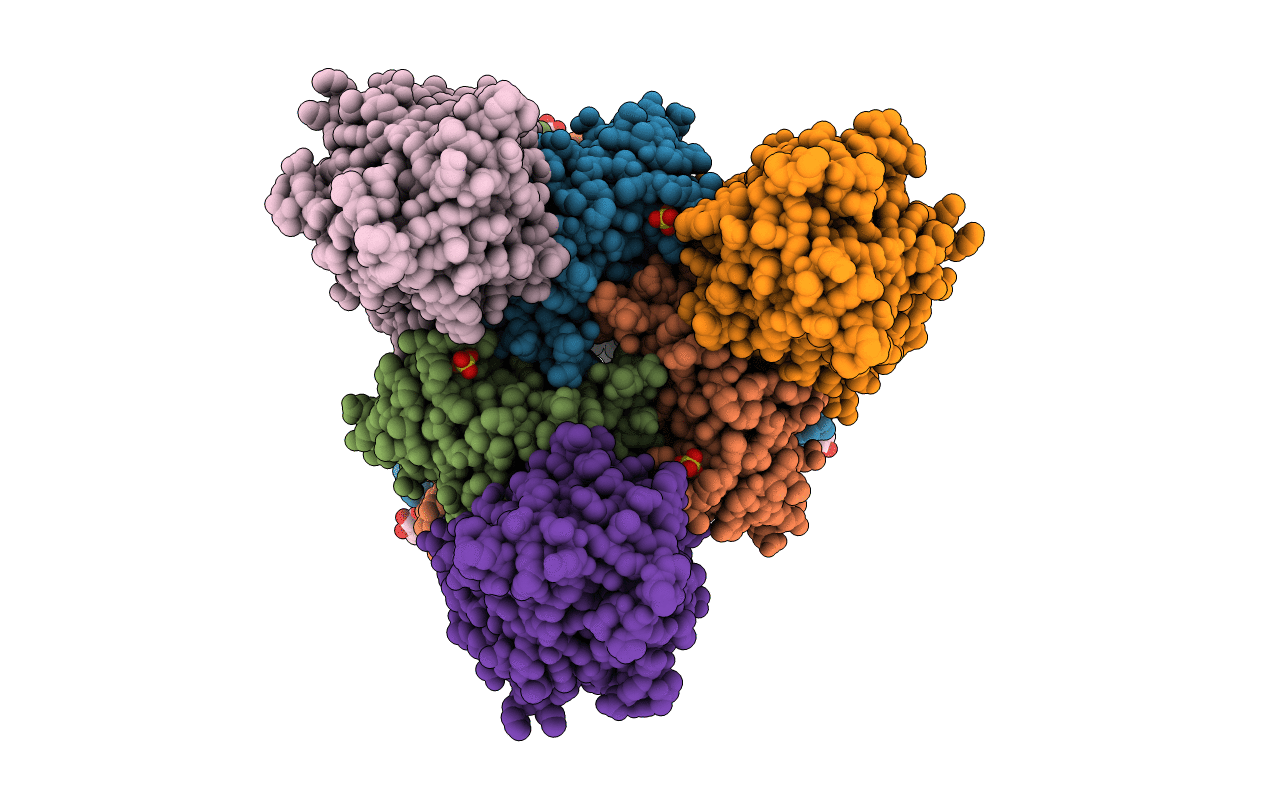
1JMU image
Deposition Date 2001-07-20
Release Date 2002-02-06
Last Version Date 2024-10-30
Entry Detail
PDB ID:
1JMU
Keywords:
Title:
Crystal Structure of the Reovirus mu1/sigma3 Complex
Biological Source:
Source Organism:
Reovirus sp. (Taxon ID: 10891)
Host Organism:
Method Details:
Experimental Method:
Resolution:
2.80 Å
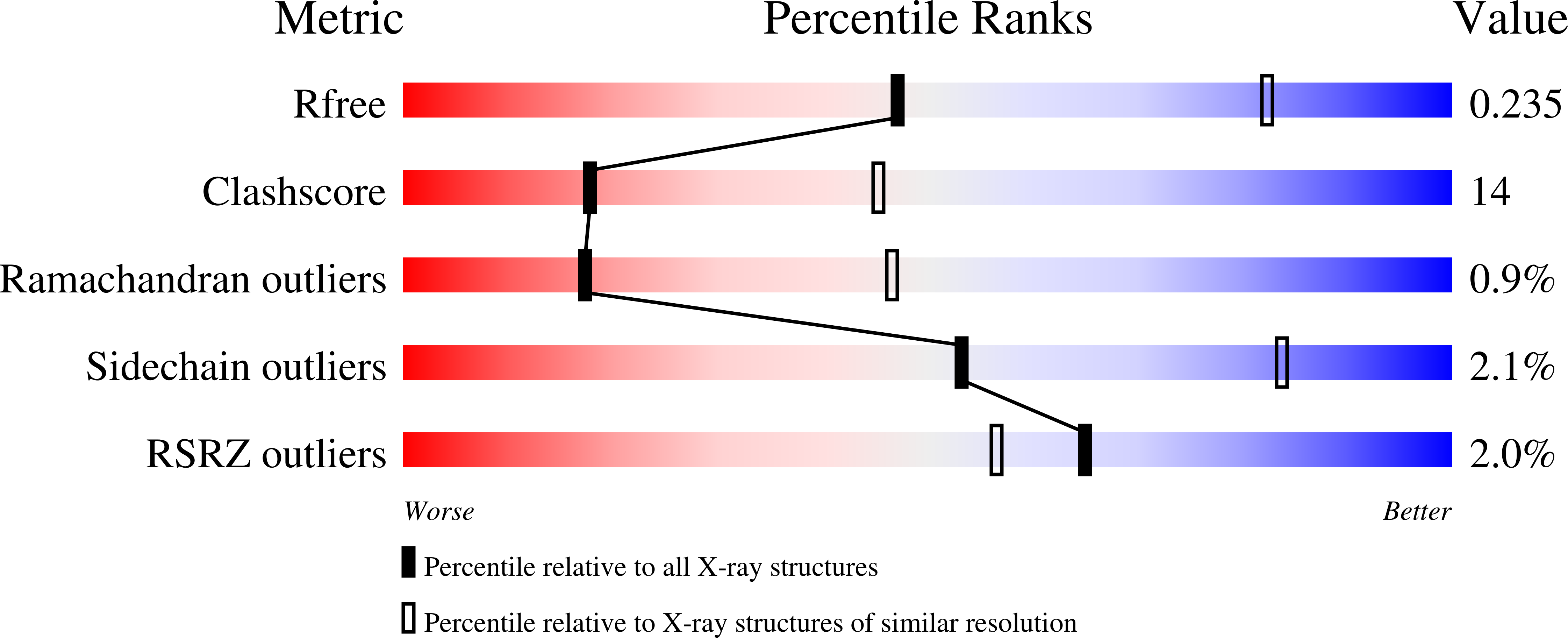
R-Value Free:
0.24
R-Value Work:
0.21
R-Value Observed:
0.21
Space Group:
I 2 2 2
Macromolecular Entities
Structures with similar UniProt ID
Protein Blast
Polymer Type:polypeptide(L)
Molecule:PROTEIN MU-1
Gene (Uniprot):M2
Chain IDs:A, C, E
Chain Length:41
Number of Molecules:3
Biological Source:Reovirus sp.
Structures with similar UniProt ID
Protein Blast
Polymer Type:polypeptide(L)
Molecule:PROTEIN MU-1
Gene (Uniprot):M2
Chain IDs:B, D, F
Chain Length:666
Number of Molecules:3
Biological Source:Reovirus sp.
Structures with similar UniProt ID
Protein Blast
Polymer Type:polypeptide(L)
Molecule:SIGMA 3 PROTEIN
Mutagens:A104C
Chain IDs:G, H, I
Chain Length:366
Number of Molecules:3
Biological Source:Reovirus sp.
Primary Citation
Structure of the reovirus membrane-penetration protein, Mu1, in a complex with is protector protein, Sigma3.
Cell(Cambridge,Mass.) 108 283 295 (2002)
PMID: 11832217 DOI: 10.1016/S0092-8674(02)00612-8

Abstact

Cell entry by nonenveloped animal viruses requires membrane penetration without membrane fusion. The reovirus penetration agent is the outer-capsid protein, Mu1. The structure of Mu1, complexed with its "protector" protein, Sigma3, and the fit of this Mu1(3)Sigma3(3) heterohexameric complex into the cryoEM image of an intact virion, reveal molecular events essential for viral penetration. Autolytic cleavage divides Mu1 into myristoylated Mu1N and Mu1C. A long hydrophobic pocket can receive the myristoyl group. Dissociation of Mu1N, linked to a major conformational change of the entire Mu1 trimer, must precede myristoyl-group insertion into the cellular membrane. A myristoyl switch, coupling exposure of the fatty acid chain, autolytic cleavage of Mu1N, and long-range molecular rearrangement of Mu1C, thus appears to be part of the penetration mechanism.

Legend

Protein

Chemical

Disease

Primary Citation of related structures
Feedback Form
Name
Email
Institute
Feedback