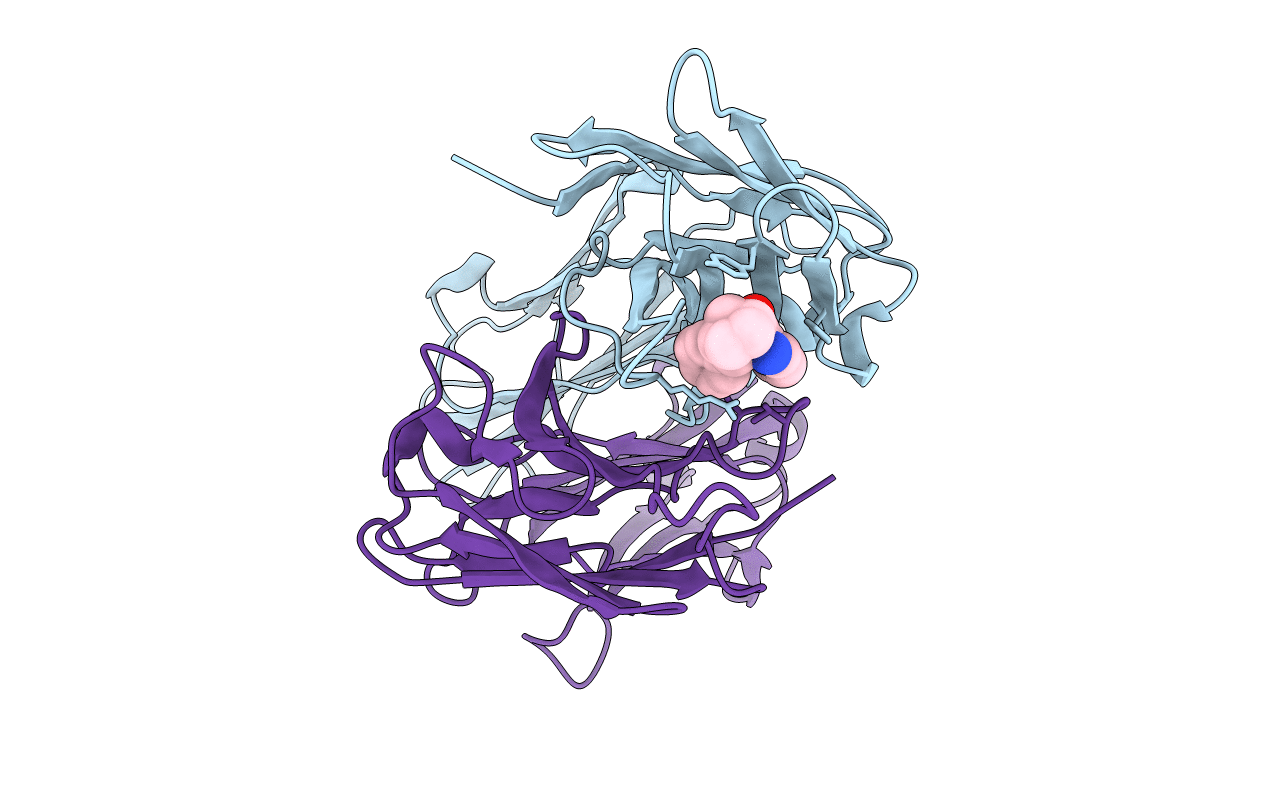
1JGU image
Deposition Date 2001-06-26
Release Date 2001-12-05
Last Version Date 2024-11-13
Entry Detail
PDB ID:
1JGU
Keywords:
Title:
STRUCTURAL BASIS FOR DISFAVORED ELIMINATION REACTION IN CATALYTIC ANTIBODY 1D4
Biological Source:
Source Organism(s):
Mus musculus (Taxon ID: 10090)
Method Details:
Experimental Method:
Resolution:
1.80 Å
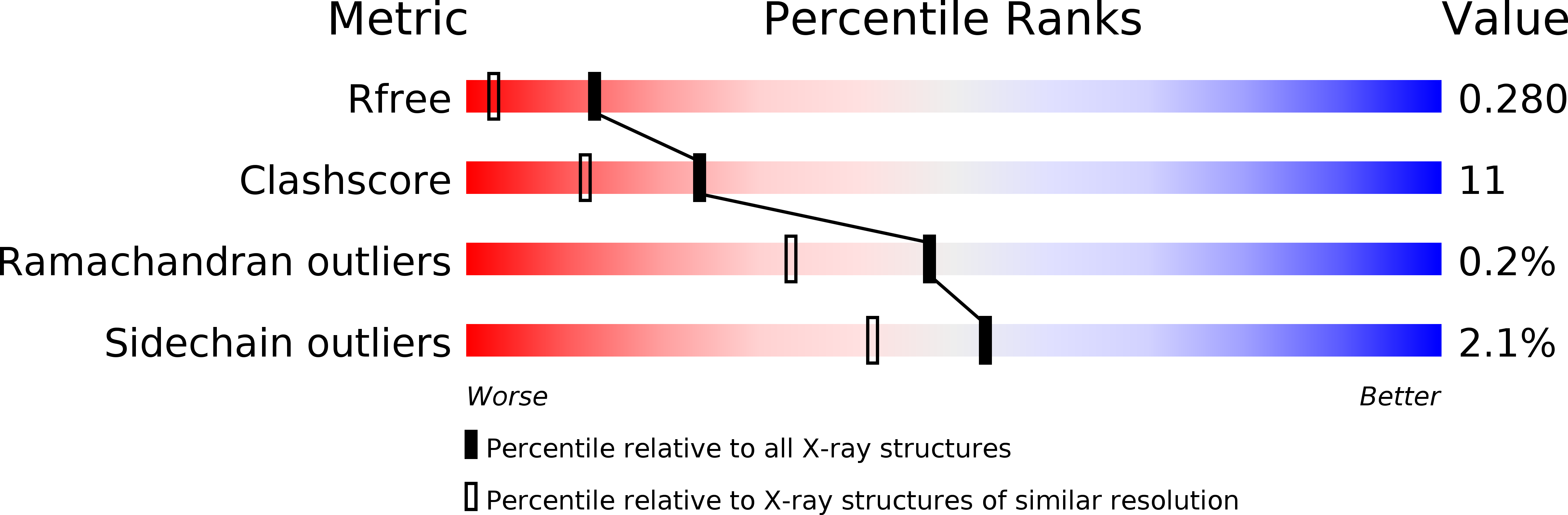
R-Value Free:
0.22
R-Value Work:
0.20
R-Value Observed:
0.20
Space Group:
P 1 21 1
Macromolecular Entities
Structures with similar UniProt ID
Protein Blast
Polymer Type:polypeptide(L)
Molecule:Antibody Heavy Chain
Chain IDs:B (auth: H)
Chain Length:217
Number of Molecules:1
Biological Source:Mus musculus
Structures with similar UniProt ID
Protein Blast
Polymer Type:polypeptide(L)
Molecule:Antibody Light Chain
Chain IDs:A (auth: L)
Chain Length:220
Number of Molecules:1
Biological Source:Mus musculus
Primary Citation
Structural basis for a disfavored elimination reaction in catalytic antibody 1D4.
J.Mol.Biol. 314 93 102 (2001)
PMID: 11724535 DOI: 10.1006/jmbi.2001.5112

Abstact

Murine antibody 1D4 selectively catalyzes a highly disfavored beta-elimination reaction. Crystal structures of unliganded 1D4 and 1D4 in complex with a transition-state analog (TSA) have elucidated a possible general base mode of catalysis. The structures of the unliganded and liganded Fabs were determined to 1.80 and 1.85 A resolution, respectively. The structure of the complex reveals a binding pocket with high shape complementarity to the TSA, which is recruited to coerce the substrate into the sterically demanding, eclipsed conformation that is required for catalysis. A histidine residue and two water molecules are likely involved in the catalysis. The structure supports either a concerted E2 or stepwise E1cB-like mechanism for elimination. Finally, the liganded 1D4 structure shows minor conformational rearrangements in CDR H2, indicative of induced-fit binding of the hapten. 1D4 has pushed the boundaries of antibody-mediated catalysis into the realm of disfavored reactions and, hence, represents an important milestone in the development of this technology.

Legend

Protein

Chemical

Disease

Primary Citation of related structures
Feedback Form
Name
Email
Institute
Feedback