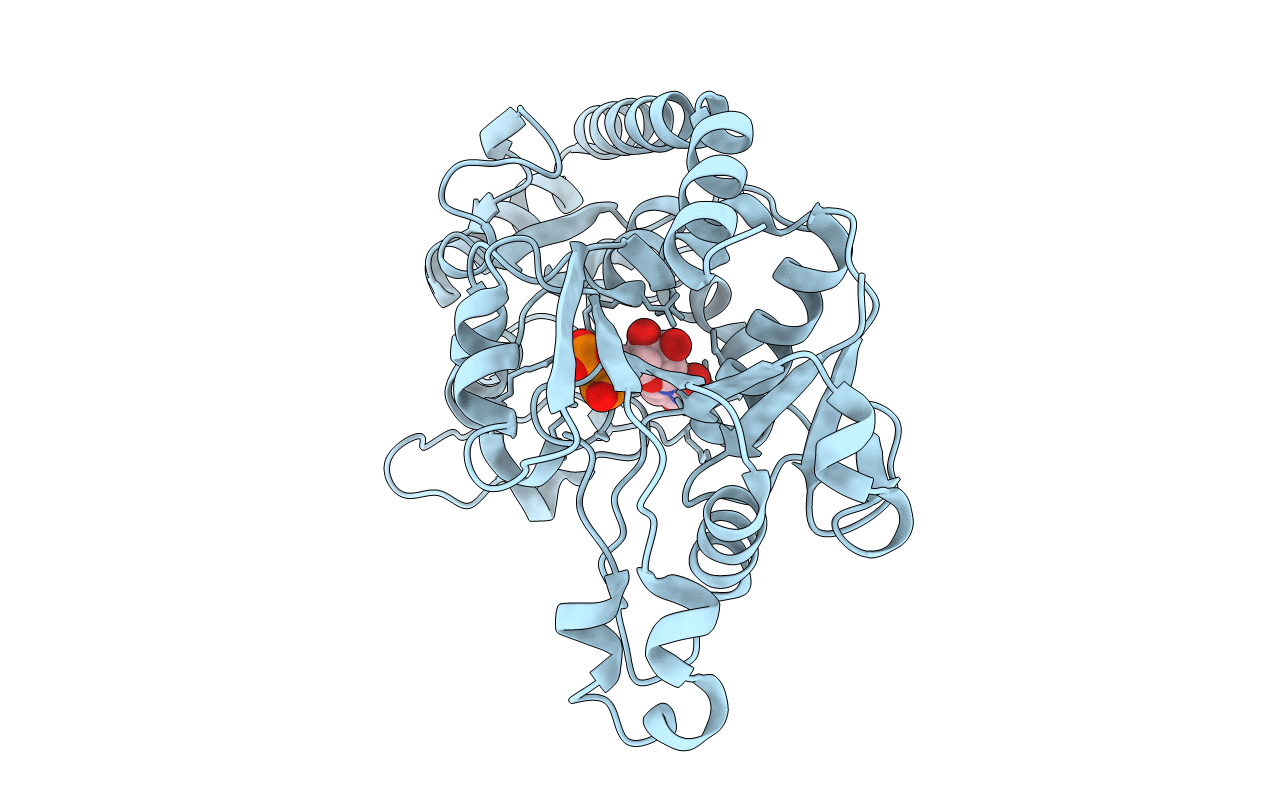
1JG7 image
Deposition Date 2001-06-23
Release Date 2001-08-15
Last Version Date 2023-08-16
Entry Detail
PDB ID:
1JG7
Keywords:
Title:
T4 phage BGT in complex with UDP and Mn2+
Biological Source:
Source Organism:
Host Organism:
Method Details:
Experimental Method:
Resolution:
1.65 Å
R-Value Free:
0.24
R-Value Work:
0.20
Space Group:
P 21 21 21

Macromolecular Entities
Structures with similar UniProt ID
Protein Blast
Polymer Type:polypeptide(L)
Molecule:DNA BETA-GLUCOSYLTRANSFERASE
Gene (Uniprot):bgt
Chain IDs:A
Chain Length:351
Number of Molecules:1
Biological Source:Enterobacteria phage T4
Primary Citation
High resolution crystal structures of T4 phage beta-glucosyltransferase: induced fit and effect of substrate and metal binding.
J.Mol.Biol. 311 569 577 (2001)
PMID: 11493010 DOI: 10.1006/jmbi.2001.4905

Abstact

beta-Glucosyltransferase (BGT) is a DNA-modifying enzyme encoded by bacteriophage T4 that transfers glucose from uridine diphosphoglucose to 5-hydroxymethyl cytosine bases of phage T4 DNA. We report six X-ray structures of the substrate-free and the UDP-bound enzyme. Four also contain metal ions which activate the enzyme, including Mg(2+) in forms 1 and 2 and Mn(2+) or Ca(2+). The substrate-free BGT structure differs by a domain movement from one previously determined in another space group. Further domain movements are seen in the complex with UDP and the four UDP-metal complexes. Mg(2+), Mn(2+) and Ca(2+) bind near the beta-phosphate of the nucleotide, but they occupy slightly different positions and have different ligands depending on the metal and the crystal form. Whilst the metal site observed in these complexes with the product UDP is not compatible with a role in activating glucose transfer, it approximates the position of the positive charge in the oxocarbonium ion thought to form on the glucose moiety of the substrate during catalysis.

Legend

Protein

Chemical

Disease

Primary Citation of related structures
Feedback Form
Name
Email
Institute
Feedback