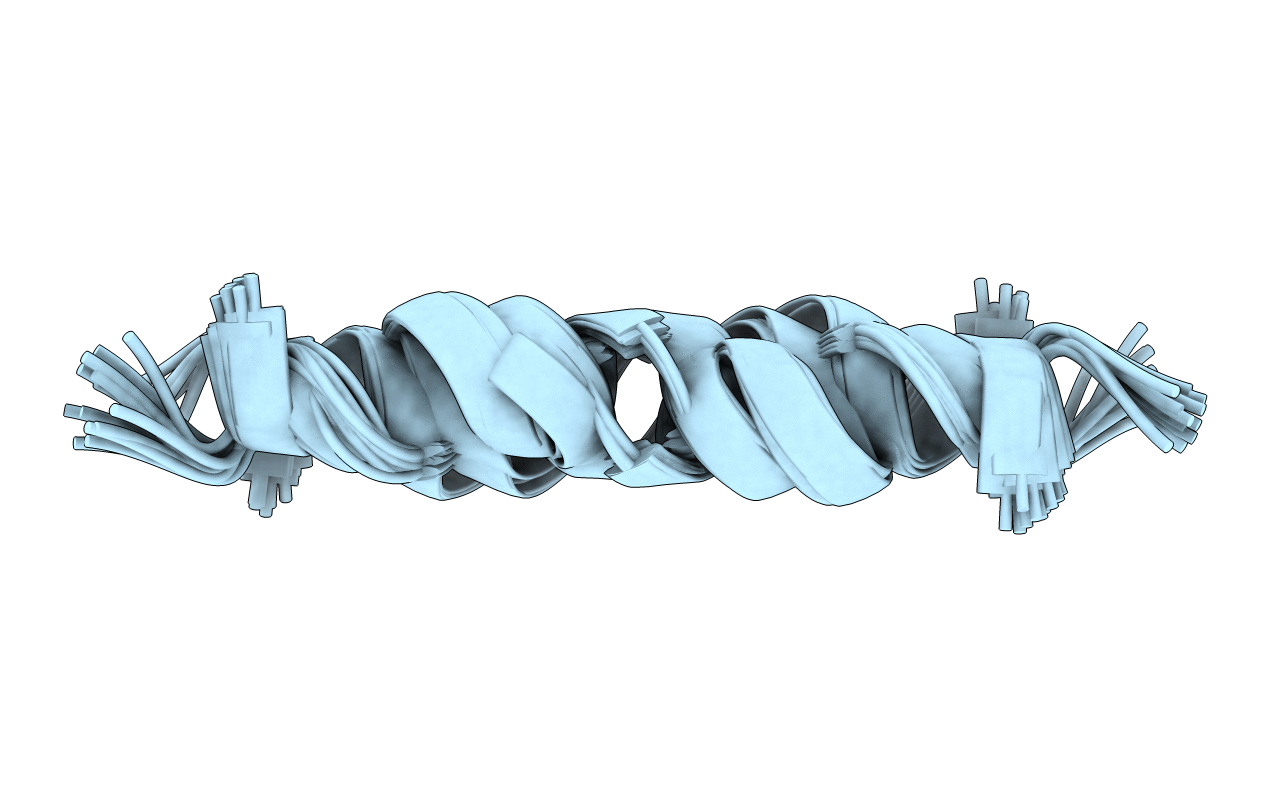
1JAU image
Deposition Date 2001-05-31
Release Date 2001-10-17
Last Version Date 2024-10-30
Entry Detail
PDB ID:
1JAU
Keywords:
Title:
NMR Solution Structure of the Trp-Rich Peptide of HIV gp41 Bound to DPC Micelles
Biological Source:
Source Organism:
Method Details:
Experimental Method:
Conformers Calculated:
200
Conformers Submitted:
40
Selection Criteria:
structures with the lowest energy

Macromolecular Entities
Structures with similar UniProt ID
Protein Blast
Polymer Type:polypeptide(L)
Molecule:TRANSMEMBRANE GLYCOPROTEIN (GP41)
Gene (Uniprot):env
Chain IDs:A
Chain Length:20
Number of Molecules:1
Biological Source:
Ligand Molecules
Primary Citation
The membrane-proximal tryptophan-rich region of the HIV glycoprotein, gp41, forms a well-defined helix in dodecylphosphocholine micelles.
Biochemistry 40 9570 9578 (2001)
PMID: 11583156 DOI: 10.1021/bi010640u

Abstact

The membrane-proximal tryptophan-rich region of the HIV transmembrane glycoprotein, gp41, plays an important role in the membrane fusion reaction. Using NMR spectroscopy, we have studied the tertiary structure of a synthetic 19-residue amidated peptide (NH2-KWASLWNWFNITNWLWYIK-CONH2) corresponding to this region in membrane-mimetic environments. Initial experiments in sodium dodecyl sulfate/H2O micelles and trifluoroethanol gave poor results, because of low solubility. However, in dodecylphosphocholine micelles, we obtained excellent 500 and 800 MHz NMR spectra, suggesting that the peptide has a preference for a zwitterionic membrane-like environment. The final NMR structures demonstrated a well-defined helical peptide with a backbone rmsd of 0.47 +/- 0.18 A. Four of the five tryptophan residues, as well as the tyrosine residue, formed a "collar" of aromatic residues along the axial length of the helix. By analogy to related tryptophan-rich antimicrobial peptides, the structure indicates that the aromatic residues of the HIV peptide are positioned within the membrane-water interface of a phospholipid bilayer. This is confirmed by the observation of direct NOEs between the aromatic residues of the peptide to the headgroup and interfacial protons of prototonated dodecylphosphocholine. The bulk of the polar residues are positioned on one face of this structure, with the hydrophobic phenylalanine side chain on the opposing face, forming an amphipathic structure. This work shows that the Trp-rich membrane-proximal region of HIV and related viruses can bind to the surfaces of zwitterioninc membranes in a "Velcro-like" manner.

Legend

Protein

Chemical

Disease

Primary Citation of related structures
Feedback Form
Name
Email
Institute
Feedback