1J0Z image
Deposition Date 2002-11-25
Release Date 2003-06-17
Last Version Date 2024-10-30
Entry Detail
PDB ID:
1J0Z
Keywords:
Title:
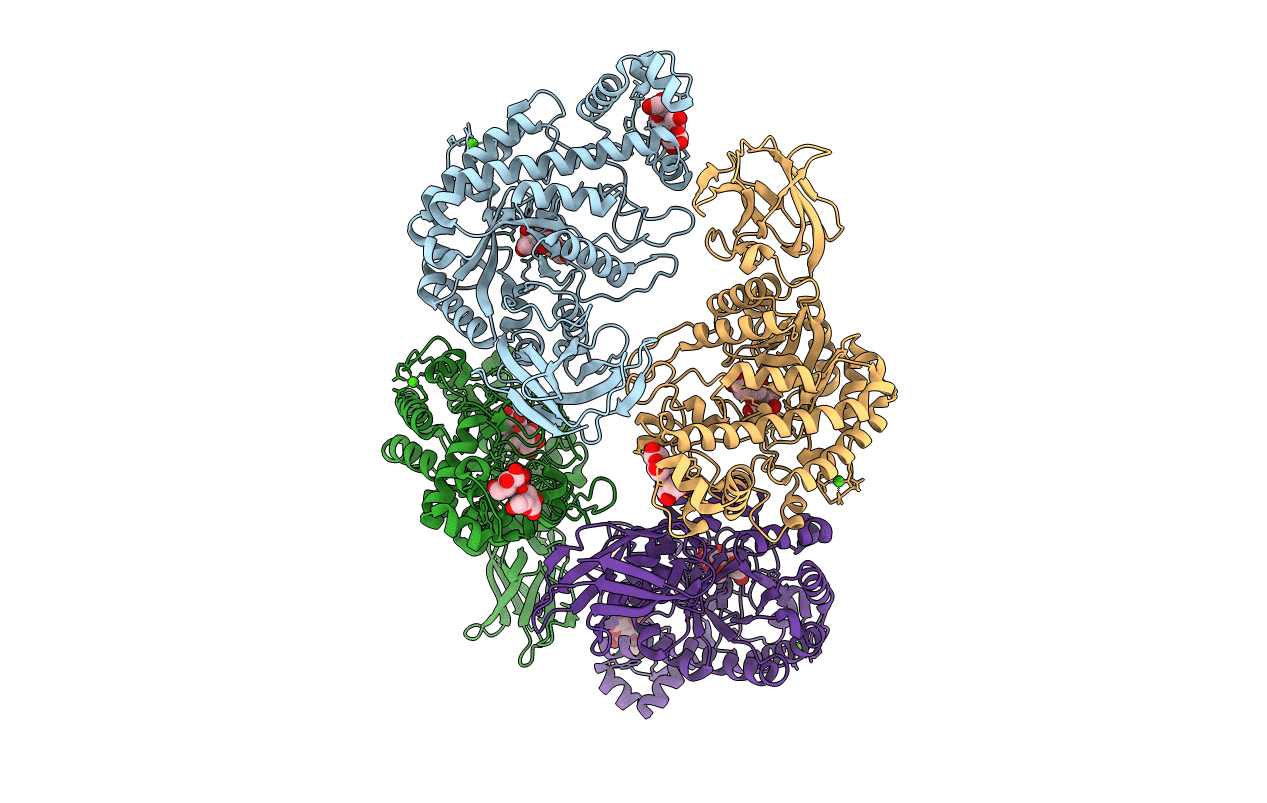
Beta-amylase from Bacillus cereus var. mycoides in complex with maltose
Biological Source:
Source Organism:
Bacillus cereus (Taxon ID: 1396)
Method Details:
Experimental Method:
Resolution:
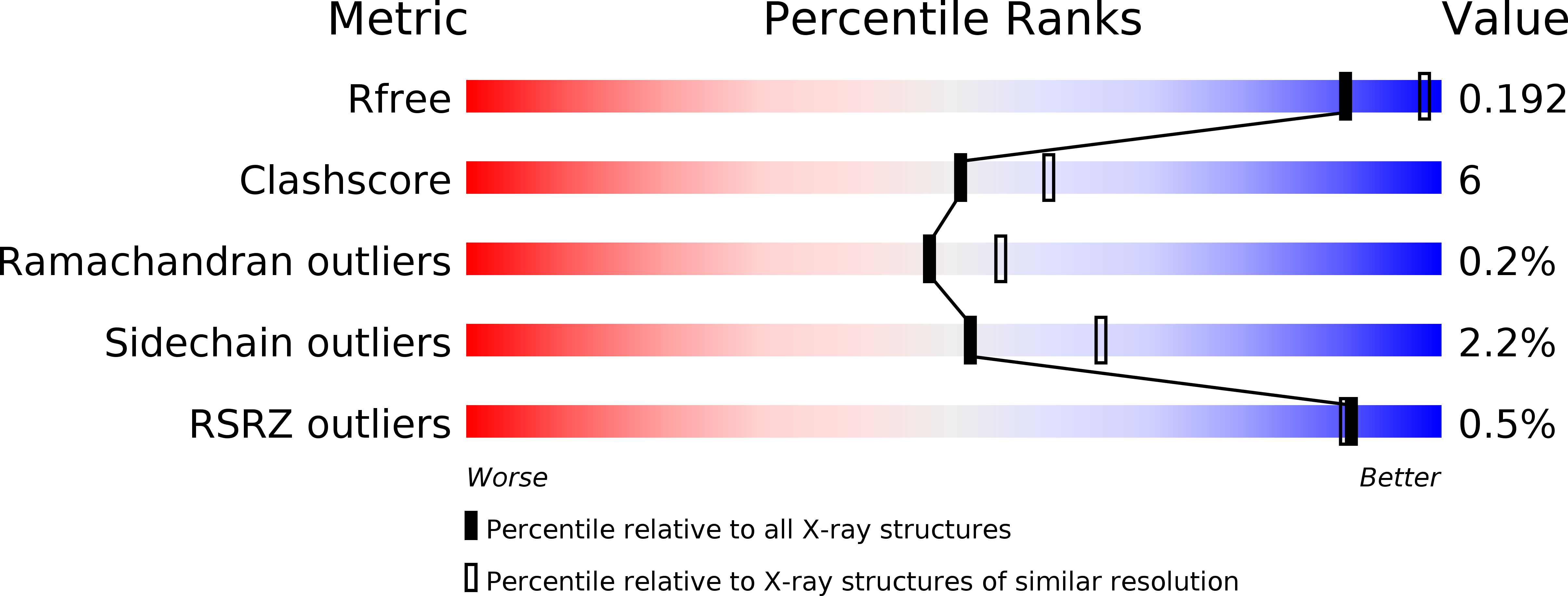
2.20 Å
R-Value Free:
0.23
R-Value Work:
0.18
Space Group:
C 1 2 1
Macromolecular Entities
Structures with similar UniProt ID
Protein Blast
Polymer Type:polypeptide(L)
Molecule:Beta-amylase
Gene (Uniprot):spoII
Chain IDs:A, B, C, D
Chain Length:516
Number of Molecules:4
Biological Source:Bacillus cereus
Ligand Molecules
Peptide-like Molecules
PRD_900001
PRD_900018
Primary Citation
Crystal Structures of beta-Amylase from Bacillus cereus var. mycoides in Complexes with Substrate Analogs and Affinity-Labeling Reagents
J.BIOCHEM.(TOKYO) 133 467 474 (2003)
PMID: 12761294 DOI: 10.1093/jb/mvg061

Abstact

The crystal structures of beta-amylase from Bacillus cereus var. mycoides in complexes with five inhibitors were solved. The inhibitors used were three substrate analogs, i.e. glucose, maltose (product), and a synthesized compound, O-alpha-D-glucopyranosyl-(1-->4)-O-alpha-D-glucopyranosyl-(1-->4)-D-xylopyranose (GGX), and two affinity-labeling reagents with an epoxy alkyl group at the reducing end of glucose. For all inhibitors, one molecule was bound at the active site cleft and the non-reducing end glucose of the four inhibitors except GGX was located at subsite 1, accompanied by a large conformational change of the flexible loop (residues 93-97), which covered the bound inhibitor. In addition, another molecule of maltose or GGX was bound about 30 A away from the active site. A large movement of residues 330 and 331 around subsite 3 was also observed upon the binding of GGX at subsites 3 to 5. Two affinity-labeling reagents, alpha-EPG and alpha-EBG, were covalently bound to a catalytic residue (Glu-172). A substrate recognition mechanism for the beta-amylase was discussed based on the modes of binding of these inhibitors in the active site cleft.

Legend

Protein

Chemical

Disease

Primary Citation of related structures
Feedback Form
Name
Email
Institute
Feedback