1IOO image
Deposition Date 2001-03-26
Release Date 2002-05-08
Last Version Date 2024-11-20
Entry Detail
PDB ID:
1IOO
Keywords:
Title:
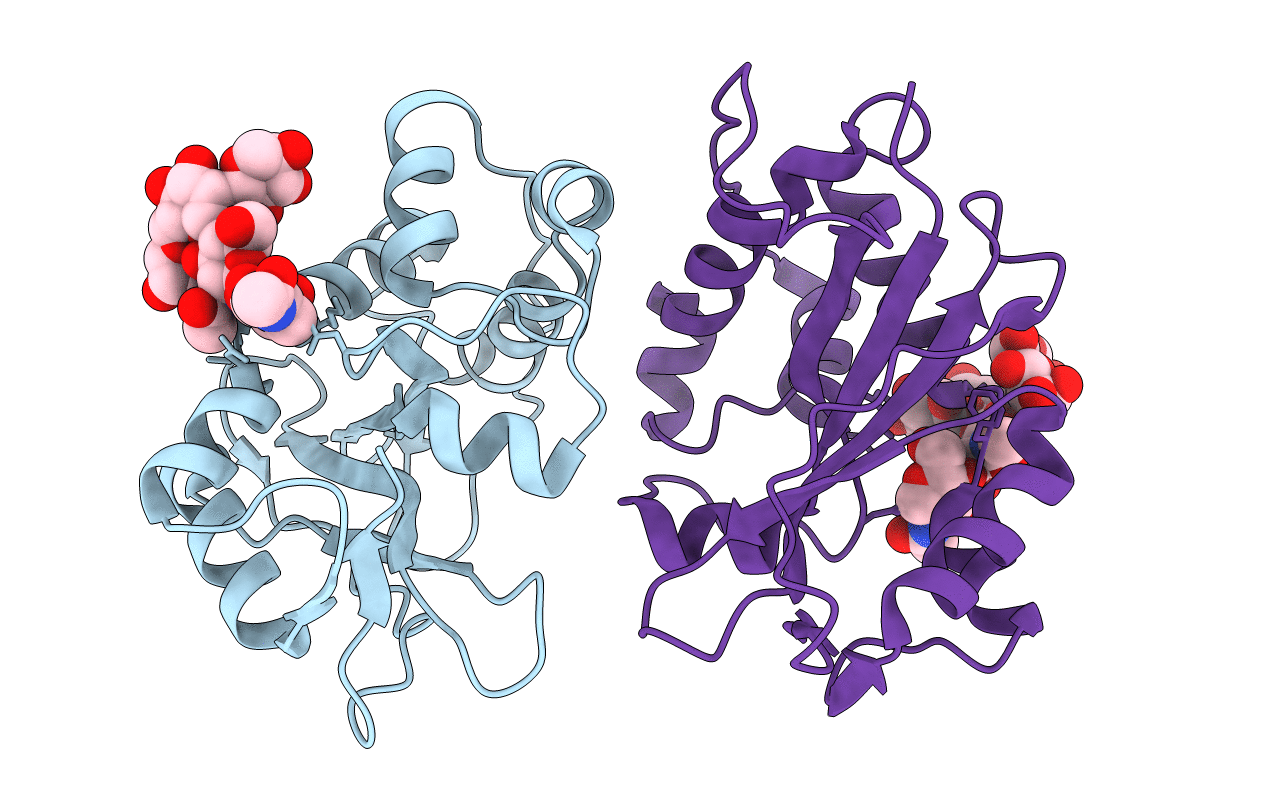
CRYSTAL STRUCTURE OF NICOTIANA ALATA GEMETOPHYTIC SELF-INCOMPATIBILITY ASSOCIATED SF11-RNASE
Biological Source:
Source Organism(s):
Nicotiana alata (Taxon ID: 4087)
Method Details:
Experimental Method:
Resolution:
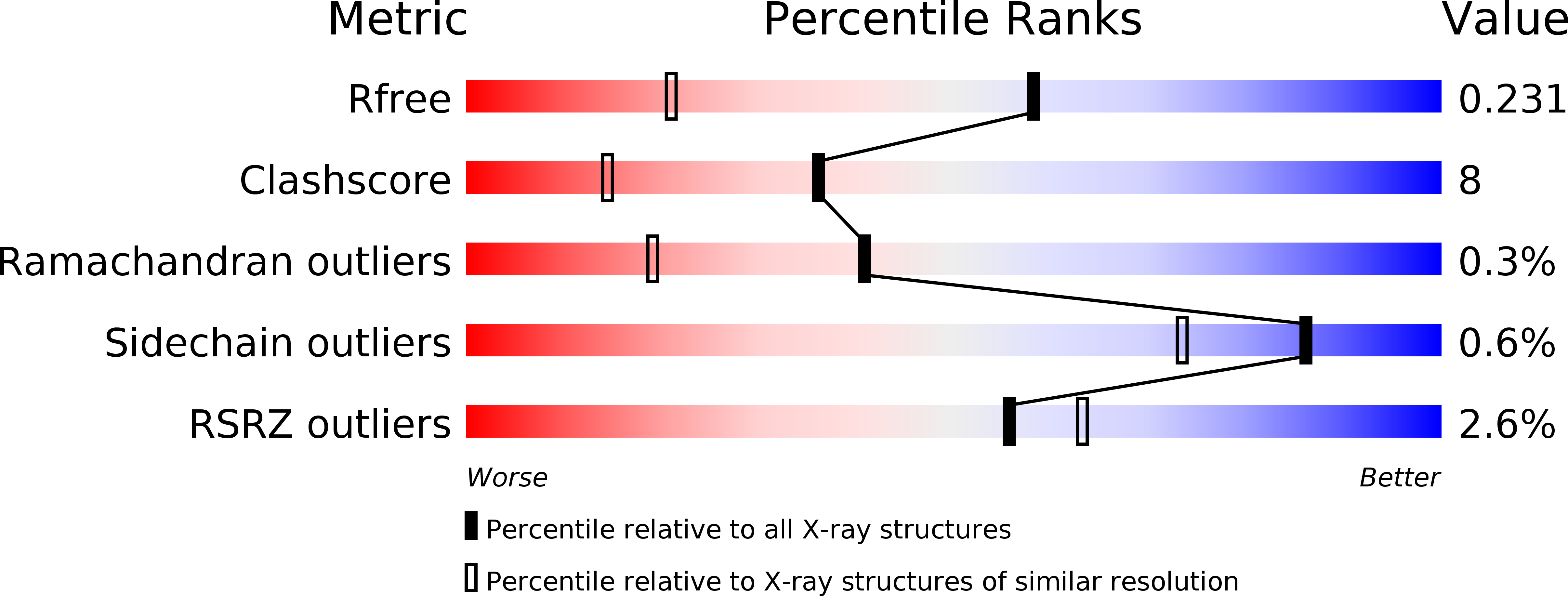
1.55 Å
R-Value Free:
0.21
R-Value Work:
0.18
Space Group:
P 1 21 1
Macromolecular Entities
Structures with similar UniProt ID
Protein Blast
Polymer Type:polypeptide(L)
Molecule:SF11-RNASE
Chain IDs:A, B
Chain Length:196
Number of Molecules:2
Biological Source:Nicotiana alata
Modified Residue
Compound ID Chain ID Parent Comp ID Details 2D Image
ASN B ASN GLYCOSYLATION SITE
Primary Citation
The 1.55 A resolution structure of Nicotiana alata S(F11)-RNase associated with gametophytic self-incompatibility.
J.Mol.Biol. 314 103 112 (2001)
PMID: 11724536 DOI: 10.1006/jmbi.2001.5127

Abstact

The crystal structure of Nicotiana alata (ornamental tobacco) S(F11)-RNase, an S-allelic glycoprotein associated with gametophytic self-incompatibility, was determined by X-ray diffraction at 1.55 A resolution. The protein has a tertiary structure typical of members of the RNase T(2) family as it consists of a variant of the (alpha+beta) fold and has eight helices and seven strands. A heptasaccharide moiety is also present, and amino acid residues that serve as the catalytic acid and base can be assigned to His32 and His91, respectively. Two "hypervariable" regions, known as HVa and HVb, are the proposed sites of S-allele discrimination during the self-incompatibility reaction, and in the S(F11)-RNase these are well separated from the active site. HVa and HVb are composed of a long, positively charged loop followed by a part of an alpha-helix and short, negatively charged alpha-helix, respectively. The S(F11)-RNase structure shows both regions are readily accessible to the solvent and hence could participate in the process of self/non-self discrimination between the S-RNase and an unknown pollen S-gene product(s) upon pollination.

Legend

Protein

Chemical

Disease

Primary Citation of related structures
Feedback Form
Name
Email
Institute
Feedback