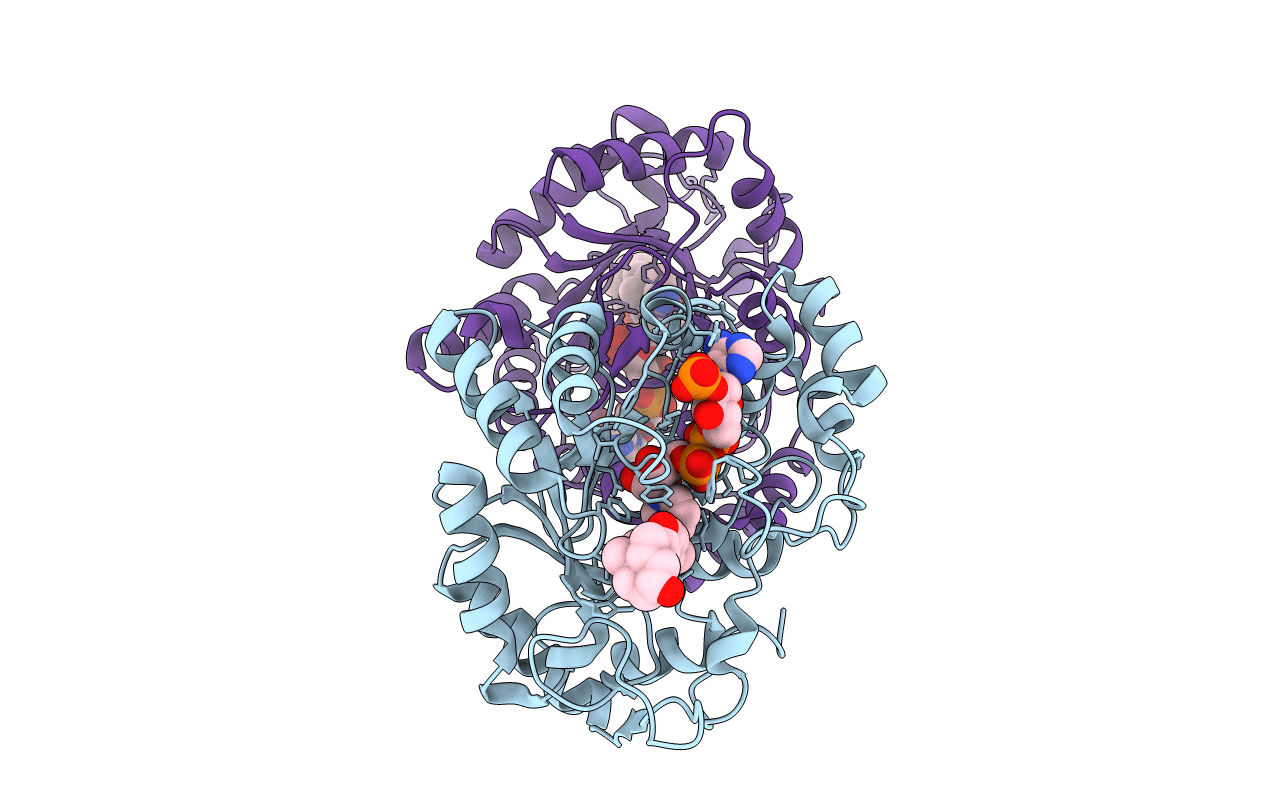
1IHI image
Deposition Date 2001-04-19
Release Date 2001-10-03
Last Version Date 2023-08-16
Entry Detail
PDB ID:
1IHI
Keywords:
Title:
Crystal Structure of Human Type III 3-alpha-Hydroxysteroid Dehydrogenase/Bile Acid Binding Protein (AKR1C2) Complexed with NADP+ and Ursodeoxycholate
Biological Source:
Source Organism:
Homo sapiens (Taxon ID: 9606)
Host Organism:
Method Details:
Experimental Method:
Resolution:
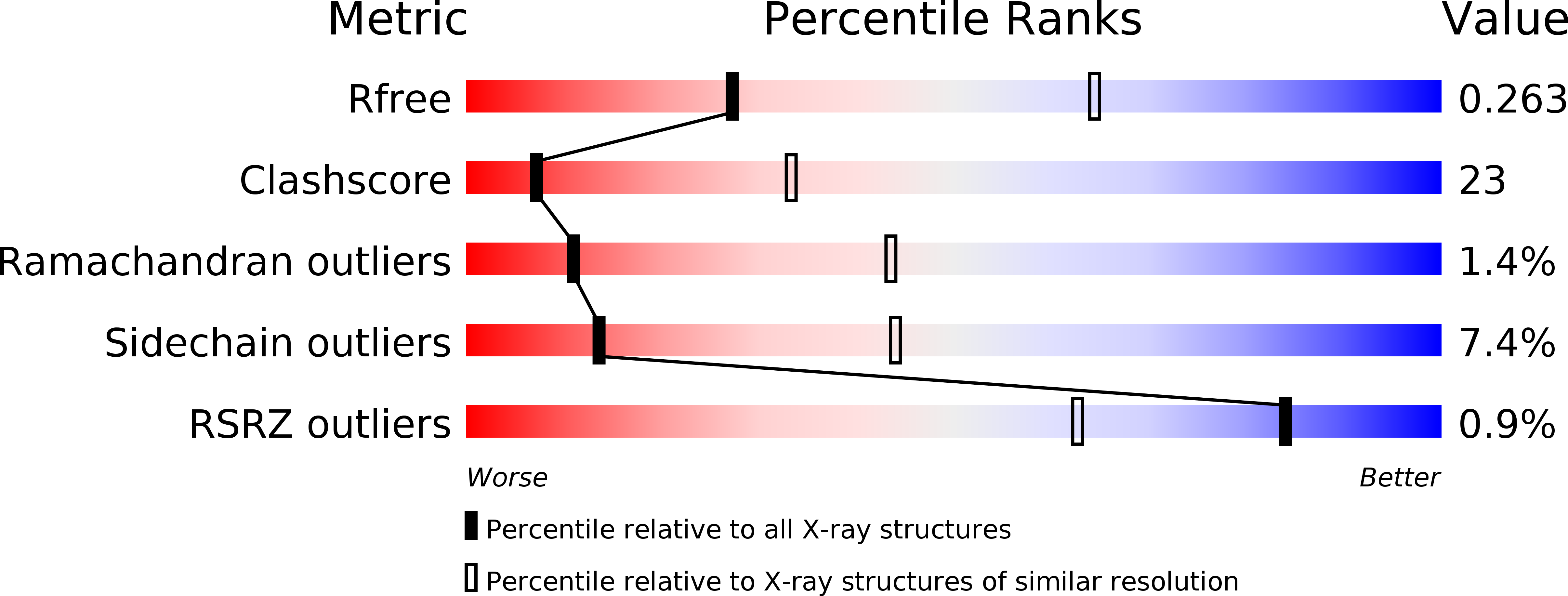
3.00 Å
R-Value Free:
0.27
R-Value Work:
0.22
R-Value Observed:
0.22
Space Group:
H 3 2
Macromolecular Entities
Structures with similar UniProt ID
Protein Blast
Polymer Type:polypeptide(L)
Molecule:3-ALPHA-HYDROXYSTEROID DEHYDROGENASE
Gene (Uniprot):AKR1C2
Chain IDs:A, B
Chain Length:323
Number of Molecules:2
Biological Source:Homo sapiens
Primary Citation
Crystal structure of human type III 3alpha-hydroxysteroid dehydrogenase/bile acid binding protein complexed with NADP(+) and ursodeoxycholate.
Biochemistry 40 10161 10168 (2001)
PMID: 11513593 DOI: 10.1021/bi010919a

Abstact

The crystal structure of human type III 3alpha-hydroxysteroid dehydrogenase (HSD)/bile acid binding protein (AKR1C2) complexed with NADP(+) and 3alpha,7beta-dihydroxy-5beta-cholanic acid (ursodeoxycholate) at 3.0 A resolution is presented. Thus, the three-dimensional structure has now been solved for a human HSD member of the aldo-keto reductase superfamily. AKR1C2 is implicated in the prostatic production of the potent androgen 5alpha-dihydrotestosterone and the hepatic transport of bile acids. It also catalyzes the formation of the neurosteroid 3alpha-hydroxy-5alpha-pregnan-20-one in the central nervous system, and its allosteric modulation by fluoxetine has been linked to the use of this drug for premenstrual dsyphoria. Like other members of the superfamily, AKR1C2 folds into an alpha/beta-barrel and binds NADP(+) in an extended conformation. The carboxylate of ursodeoxycholate binds to AKR1C2 in the oxyanion hole at the active site. More interestingly, the orientation of ursodeoxycholate is essentially "backwards" and "upside-down" from that observed for testosterone in the related rat 3alpha-HSD.NADP(+).testosterone ternary complex, where testosterone assumes the position of a 3-ketosteroid substrate. The orientation of ursodeoxycholate is thus similar to that expected of a 17beta-HSD substrate. The ternary structure explains the ability of AKR1C2 to catalyze 3alpha-, 17beta-, and 20alpha-HSD reactions. Comparison of the steroid binding pocket of AKR1C2 with that of rat 3alpha-HSD reveals significant differences in the positions of conserved and nonconserved loop residues, providing insights into the structural basis for the functional flexibility that is observed in all the human 3alpha-HSD isoforms but not in the rat isoform.

Legend

Protein

Chemical

Disease

Primary Citation of related structures
Feedback Form
Name
Email
Institute
Feedback